
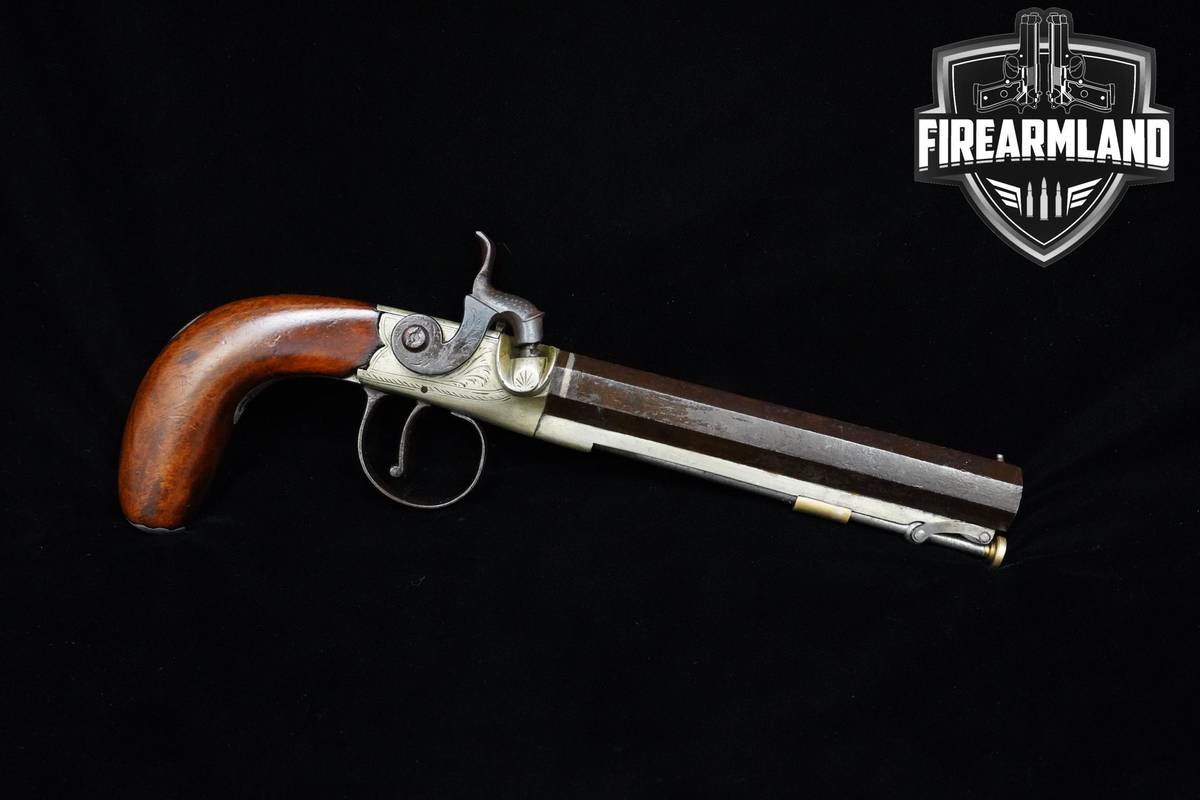
The T. Bolton & Co. Dueling Pistol from the early-to-mid 1800s is a remarkable piece of history and craftsmanship. This single-shot, .45 BPM black powder percussion firearm is not only a symbol of the dueling culture of the period but also a testament to the meticulous artistry and engineering of its time. With a blued steel finish, German silver accents, and a smooth walnut grip with metal inlays, this dueling pistol is an exquisite addition to any enthusiast's collection.
The overall condition of the pistol is good, showcasing some signs of prior use and handling which add to its authentic charm. Minor scratching, pitting, and edgewear are present on the barrel, along with light scratching and scuffing on the silver. The bore remains clean and well-maintained with only minor wear marks, ensuring the integrity of this historical piece is preserved.
Included in this sale is the T. Bolton & Co. Dueling Pistol itself, a masterpiece of early firearms engineering. Whether you are a collector, historian, or someone with a deep appreciation for fine craftsmanship, this dueling pistol offers an unparalleled glimpse into the past.
Manufactured in the United Kingdom, this dueling pistol features a 5.83" octagonal barrel, a single-shot capacity, and a percussion action. The front metallic bead and notched rear sight provide a functional and historically accurate aiming system. The blued finish complemented by German silver inlays highlights the elegant design typical of T. Bolton & Co.'s firearms. This pistol not only served in formal duels but also provided personal defense for gentlemen of the era, making it a piece rich with stories and historical significance.
Owning a T. Bolton & Co. Dueling Pistol is like holding a tangible piece of history. Its refined yet perilous past in dueling practices, combined with its intricate engineering, makes it a unique and highly regarded item among collectors and historians. This meticulously crafted piece is perfect for collection, historical reenactment, or educational display, standing as a testament to the cultural heritage and craftsmanship of the 19th century.