
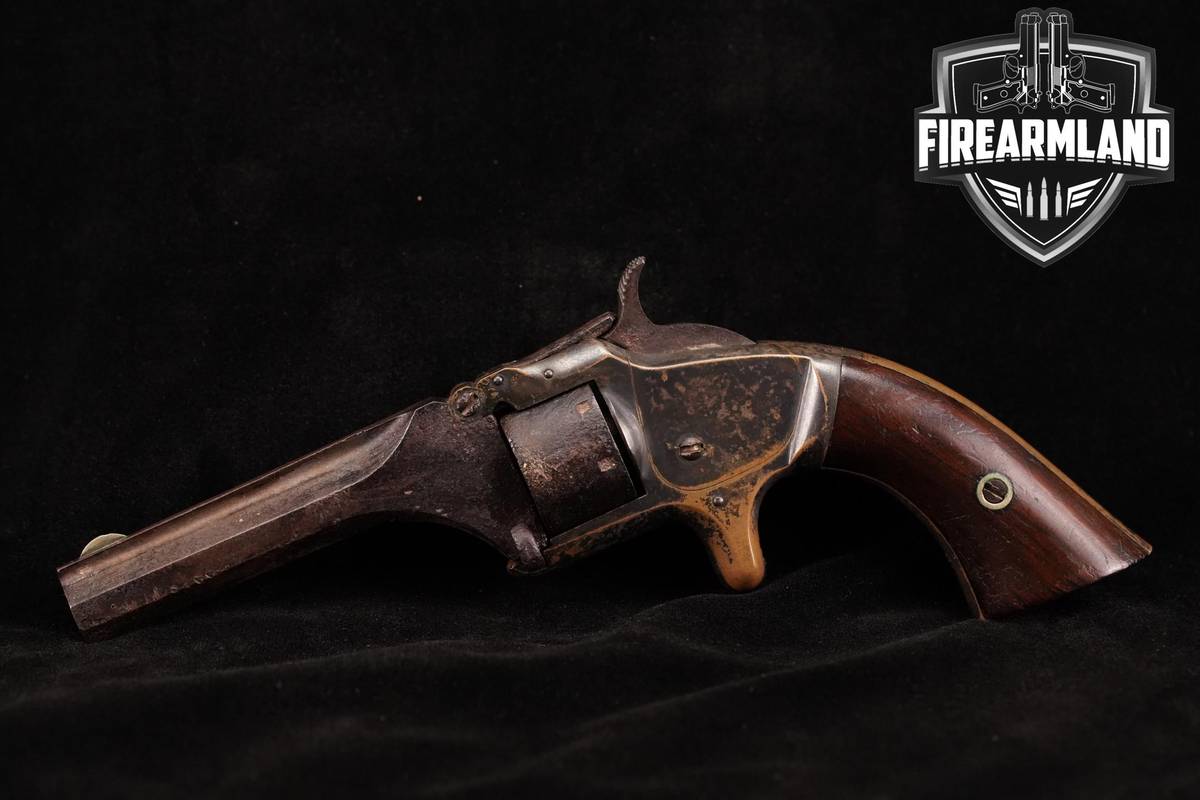
The Smith & Wesson Model 1, 2nd Issue, is a fascinating relic from the past that captures the spirit of American innovation in firearms. This revolver, chambered in .22 Short and manufactured in 1867, represents one of the earliest successful metallic cartridge revolvers. Its historical significance, coupled with its compact design and unique features, makes it an intriguing piece for collectors and enthusiasts. Despite its poor condition, with widespread scratching, blemishing, rust formations, and significant wear, this revolver stands as a testament to the pioneering days of cartridge firearms.
Although this revolver's condition is poor, with a locked tip-up mechanism, heavy patina, and oxidation on the metal surfaces, it offers an authentic glimpse into 19th-century gun manufacturing. The rosewood grips, although chipped and cracked, are a matching pair, providing a touch of elegance that withstands the wear of time. This Model 1 does not include any magazines, and the bore's condition reflects its age with noticeable dirt and corrosion. However, for a collector or restorer, these very aspects add to its charm and historical value.
The Smith & Wesson Model 1 is not merely a firearm; it is a piece of history that connects its owner to the evolution of personal defense and the beginnings of a legendary American firearms manufacturer. This single-action, hammer-fired revolver showcases the precision engineering of its era, featuring a distinctive octagonal barrel and a design that was popular during the post-Civil War period. Its tip-up barrel design was innovative for easy loading and unloading, and the patina finish tells tales of its historical journey.
Owning this revolver means more than just having an antique piece; it is about embracing a slice of American history and craftsmanship. It is a perfect addition for anyone passionate about antique firearms or interested in restoring a historically significant piece. Whether displayed as a collector's item or restored to its former glory, the Smith & Wesson Model 1, 2nd Issue, offers a compelling narrative of innovation and heritage.