
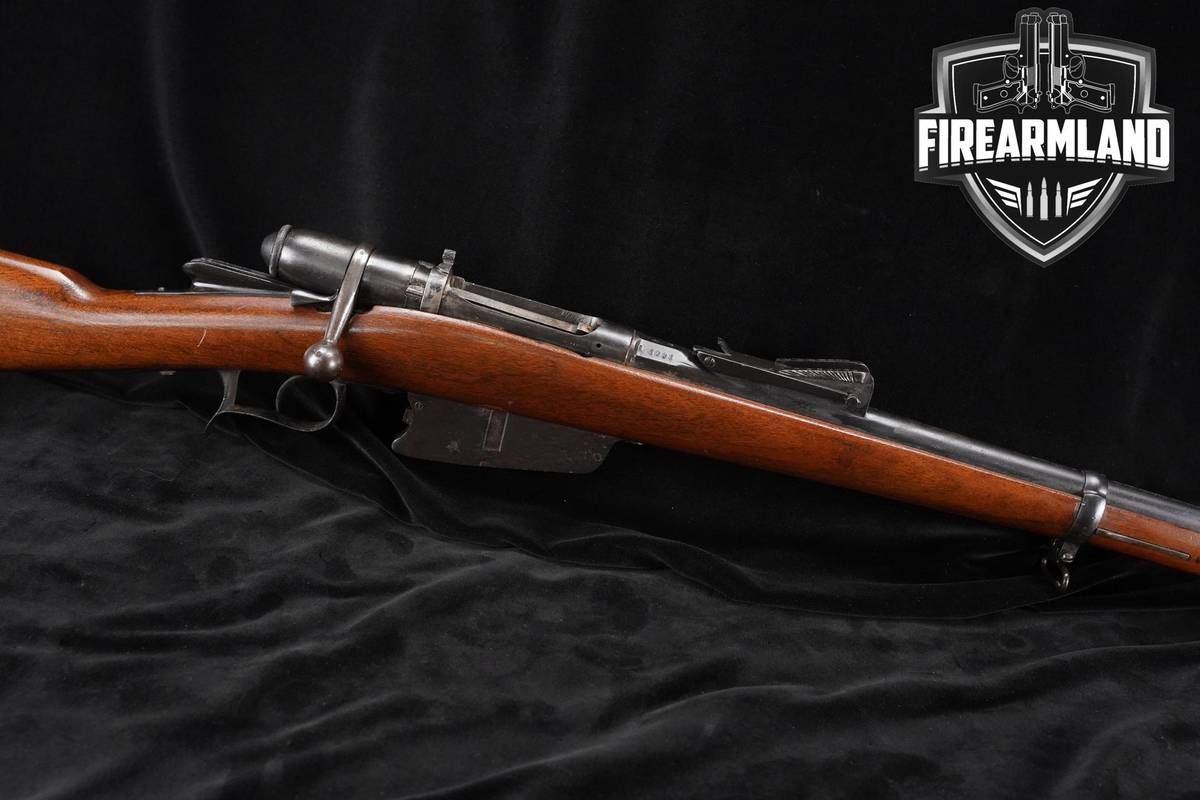
Torino Modello 1870/87/15 Vetterli-Vitali Bolt-Action Rifle in 6.5 Carcano, 34-Inch Barrel
Originally built at the Regia Fabbrica d’Armi di Torino in 1876, this full-size Vetterli-Vitali was later upgraded during World War I to fire modern 6.5 Carcano ammunition. The conversion added a sleeved 6.5 mm liner, a 6-round en-bloc clip system, and updated sights, making the rifle a tangible record of Italy’s shift from black-powder single shots to smokeless bolt actions.
Condition
Overall Condition: Fair – Extensive signs of prior use and handling.
Bore Condition: Fair – Generally clean, some residue or smudges, slight corrosion.
Bore Fouling: Mild Fouling – Light buildup of fouling or dirt.
Bore Rifling: Fair Rifling – Worn rifling, slight loss of definition.
Specific Condition Notes: The rifle shows minor to moderate scratching, scuffing, and pitting on the metal surfaces, with scattered blemishes in the wood. The bore is worn and displays areas of pitting.
What’s Included
- Torino Modello 1870/87/15 Vetterli-Vitali rifle (serial I 6091, bolt and receiver matching)
This rifle represents three distinct Italian ordnance updates. It began as an 1870 single-shot Vetterli, received a Vitali four-round box magazine in the 1880s, and finally underwent the 1915 Carcano conversion with a sleeved 6.5 mm barrel and a 6-round clip feed. Each stage is visible through inspector proofs, Torino oval cartouches, and the later WWI conversion markings.
The 34-inch forged carbon-steel barrel retains its original four-groove rifling, now adapted to the 6.5 Carcano twist rate of 1:9.4. A rust-blued receiver, matching bolt, and blued hardware maintain period-correct finishes while showing authentic service wear.
Iron sights include a barley-corn front and a ladder rear graduated to 2,000 meters—evidence of the long-range expectations of the era. The walnut stock features its oil finish, inspector cartouche, and a 13.25-inch length of pull.
Collectors will appreciate that this rifle remains a complete, matching-number example of Italy’s stepped modernization, linking black-powder origins to smokeless-powder service in the Great War.