
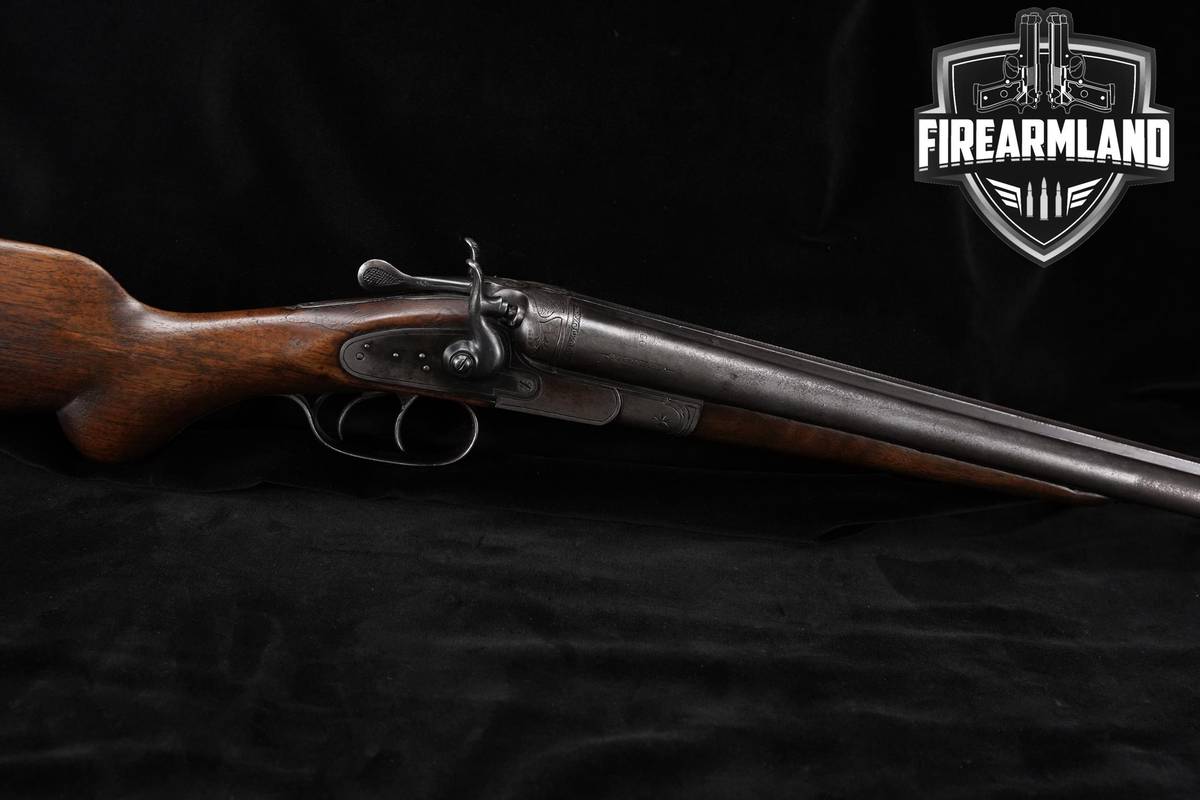
Eco G M.G. Stahl 16 Gauge Side-by-Side Shotgun | Pre-WWII German Guild Gun with 19-Inch Fluid-Steel Barrels & Pinkerton Railway Badge
Built in Suhl before World War II, this Eco G M.G. Stahl 16 gauge side-by-side pairs classic German guild craftsmanship with a unique piece of American history: a riveted Pinkerton Detective Agency Railway badge on the buttstock. Light scroll engraving, case-hardened steel, and matching serial numbers throughout underscore its period authenticity, while the compact 19-inch fluid-steel barrels and exposed rebounding hammers give it a distinctive, fast-handling profile.
Condition
Overall Condition: Good condition, showing some signs of prior use and handling.
Bore Condition: Fair – Generally clean, some residue or smudges, slight corrosion.
Bore Fouling: Mild Fouling – Light buildup of fouling or dirt.
Specific Condition Notes: The bores display scattered pitting consistent with age and prior black-powder use. Exterior metal shows honest wear in high-contact areas, and the wood has light handling marks but remains solid.
What’s Included
- Eco G M.G. Stahl 16 Gauge side-by-side shotgun with riveted Pinkerton Detective Agency Railway badge
This guild gun’s 19-inch M.G. Stahl fluid-steel barrels feature a matted rib with no front bead, offering a clear, glare-free sighting plane. German nitro, crowned, and “Nitro” proof marks on the flats verify smokeless-rated construction, while the “17 / 1” gauge stamp verifies its 16-gauge chambering.
The case-hardened receiver carries light border scroll engraving that continues onto the external hammers and tangs, adding understated elegance without compromising function. Double triggers allow traditional left-and-right barrel control, and the gun employs a non-selective extractor system for simple spent-shell removal.
Its 14.2-inch length of pull walnut stock sports a pistol grip, slim splinter forend, and factory sling swivels—features aimed at practical field carry. The oil finish remains smooth and well-preserved, highlighting straight grain and tight inletting around the action.
Mechanically, the break-action locks up firmly, and the external rebounding hammers engage cleanly. An absence of an automatic safety reflects period design preferences and presents the firearm in its original configuration.