
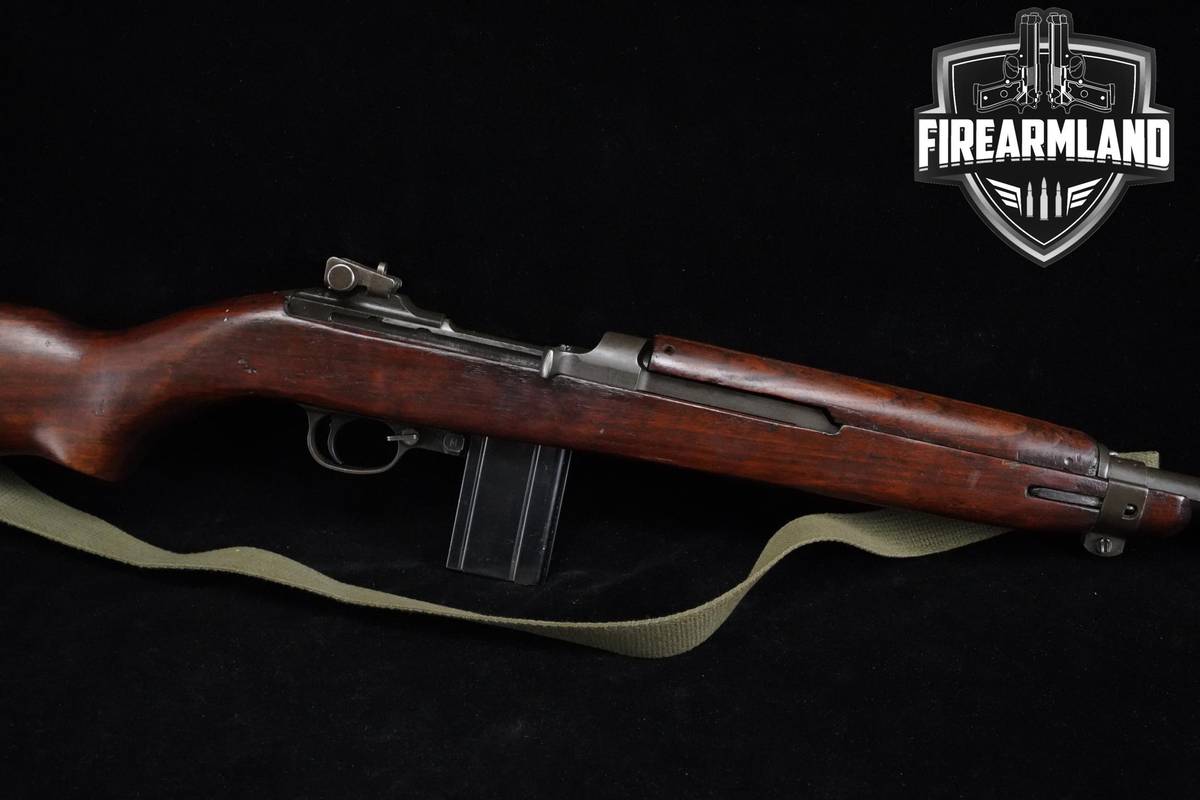
Inland Mfg 1944 M1 Carbine · .30 Carbine · WWII-Era Semi-Automatic Rifle
Produced in 1944 by Inland Division, this M1 Carbine represents one of the most prolific U.S. service rifles of World War II. Serial number 5,227,865 places it between January and August 1944 production, and it shows a transitional mix of parts—including the early Type I barrel band without bayonet lug and the upgraded Type II fully-adjustable rear sight. A rack number “4794526” is stamped on the walnut stock, underscoring its service history while retaining collectibility.
Condition
Overall Condition: Good condition, showing some signs of prior use and handling.
Bore Condition: Good – Clean, well-maintained, minor wear marks.
Bore Rifling: Good Rifling – Intact, well-defined lands and grooves.
Specific Condition Notes: The rifle is solid with scattered scratches and blemishes on the parkerized metal and walnut furniture. The bore is bright and shiny. The included magazine does not hold the bolt open after the last round.
What’s Included
- 1× 15-round straight GI steel magazine
- U.S. GI OD-green web sling (installed)
- GI oiler (serves as sling anchor, installed)
Inland Division produced over 2.6 million carbines during WWII, making it the largest contributor to the M1 program. This example retains its original 18-inch barrel and parkerized finish, providing the classic appearance collectors look for.
The walnut stock features a low-wood profile with an oval sling cut-out and a checkered steel butt-plate, matched to a two-rivet shallow-groove handguard. These period-correct furniture pieces display honest service wear without cracks or repairs.
Sighting equipment reflects a mid-war upgrade: a stamped Type II aperture rear sight with windage drum paired to the forged two-ear front blade. Together, they offer the improved adjustability soldiers requested in the field.
Mechanically, the carbine uses the standard gas-operated, rotating-bolt action that made the platform reliable and fast-handling. The 13-inch length of pull and light overall weight help explain why the M1 Carbine was favored for its maneuverability.
Collectors will appreciate the intact early Type I barrel band, which lacks the later bayonet lug and helps date the rifle to the first half of 1944.