
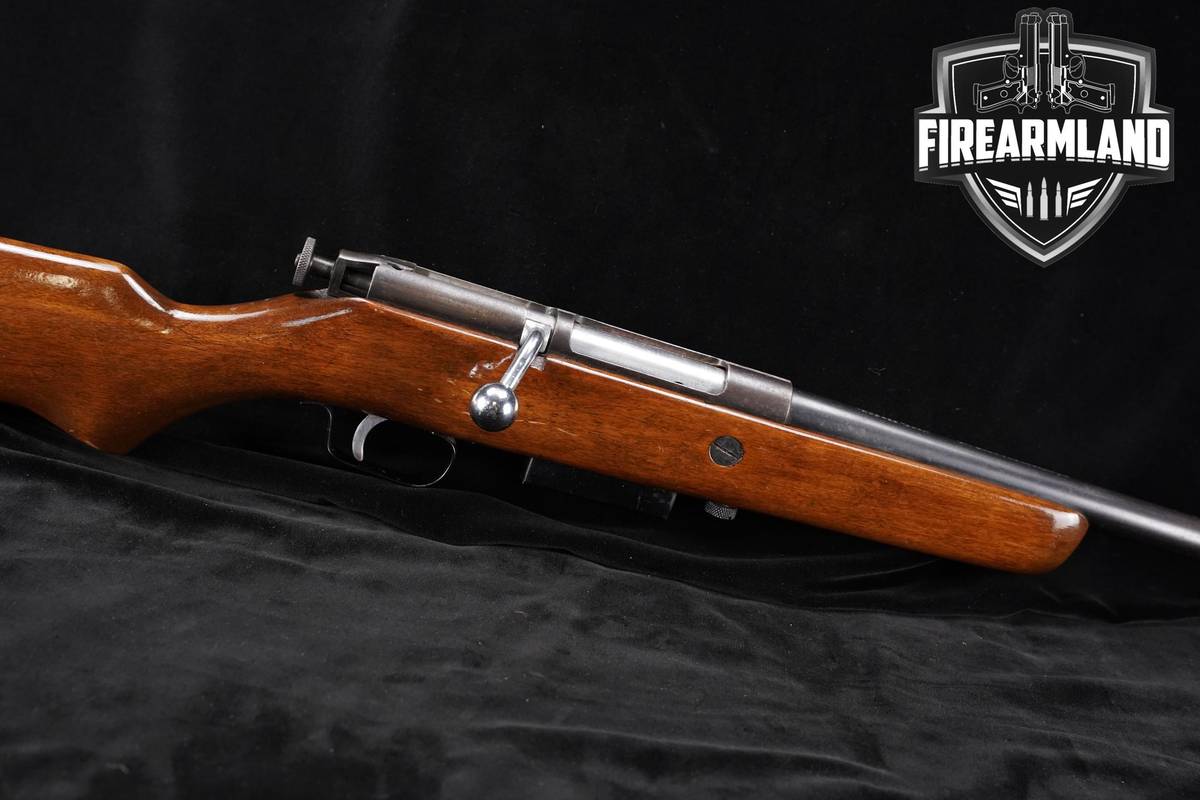
Mossberg Model 85 20 Gauge Bolt-Action Shotgun | 26-Inch Barrel, 1930s Production, Rare Collectible
Produced for only three years during the mid-1930s, the Mossberg Model 85 stands out as one of the earliest bolt-action shotguns to feature a detachable, top-loading magazine. This full-size 20 gauge example retains its original 26-inch carbon-steel barrel marked “PATENTS APPLIED FOR,” a detail prized by collectors tracking the first no-suffix production run. With its straightforward one-screw takedown system, walnut-finished hardwood stock, and pre-1968 non-serialized receiver, this Model 85 offers an authentic glimpse into Mossberg’s early shotgun engineering.
Condition
Overall Condition: Poor condition.
Bore Condition: Good – Clean, well-maintained, minor wear marks.
Specific Condition Notes: Markings from prior handling are visible on metal and wood surfaces. Rust and pitting are present across the exterior. The magazine spring and follower are not included.
What’s Included
- Mossberg Model 85 20 Gauge bolt-action shotgun (magazine spring and follower not present)
The Model 85 was introduced in 1934 as Mossberg’s first 20 gauge bolt-action shotgun, and production ended in 1937, making surviving examples uncommon. This short run, combined with the absence of a mandated serial number, gives each original Model 85 added historical appeal.
Its detachable 2-shot box magazine was advanced for the era, allowing quick reloads compared to fixed tubular designs. Although the magazine spring and follower are missing, the top-loading system itself remains intact.
The shotgun’s 26-inch carbon-steel barrel is chambered for both 2½-inch and 2¾-inch shells, providing flexibility for period-correct loads. The bore is bright and clean, supporting continued shootability once the magazine assembly is addressed.
A tang-mounted sliding safety, straight pistol-grip stock, and brass bead front sight deliver the simple handling characteristics typical of Mossberg’s utilitarian designs. The blued finish on the receiver and barrel reflects 1930s manufacturing standards, while the hardwood stock shows the original walnut-tone finish.