
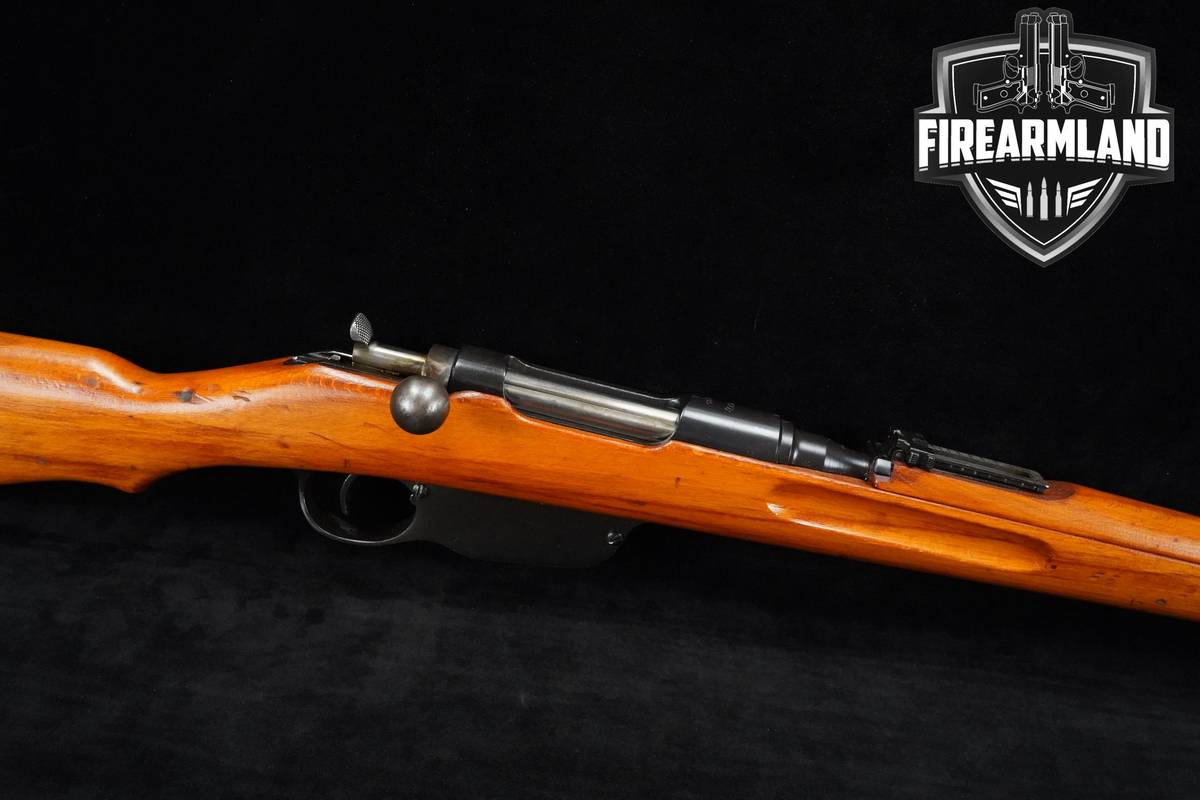
Steyr M95/30 Infantry Rifle – 1917 Straight-Pull 8x56mmR, Rare Long-Barrel Conversion, Matching Numbers
Built in 1917 at the famed Steyr works and later converted to the potent 8x56mmR “S” cartridge, this M95/30 retains its original 30.1-inch infantry barrel, making it far scarcer than the more common carbine cuts. Matching serial numbers across the barrel, receiver, bolt, and buttstock add collector appeal, while the Vienna “Wn 17” acceptance and spitzer “S” conversion stamps confirm authentic Austrian military history.
Condition
Overall Condition: Good condition, showing some signs of prior use and handling.
Bore Condition: Fair – Generally clean, some residue or smudges, slight corrosion.
Bore Rifling: Fair – Worn rifling, slight loss of definition.
Specific Condition Notes: Minor scratching, scuffing, and blemishes are present on the blued metal and hardwood stock. The bore shows areas of rust, yet the rifling remains visible and defined.
What’s Included
- Steyr M95/30 infantry rifle (matching-numbered)
This rifle represents one of the few full-length M95/30 conversions that escaped post-war shortening, preserving the original infantry profile and 30.1-inch carbon-steel barrel. The long sight radius pairs with the ladder rear sight graduated to 2400 meters, providing the precise sight picture intended for front-line Austro-Hungarian troops.
The straight-pull bolt action—nicknamed “Ruck-Zuck Gewehr” for its speed—allows rapid cycling while feeding from the distinctive five-round en-bloc clip system. Upon the last shot, the empty clip is ejected through the floorplate, returning the action to battery for quick reloading.
A hard-wearing hardwood stock with finger grooves, straight wrist, and full-length handguard retains its reddish-brown oil finish, complementing the blued steel receiver and barrel. Protective ears shield the barleycorn front sight, a feature valued by period soldiers and modern shooters alike.
Proofed in Vienna and later arsenal-stamped with the upright “S” to denote its spitzer conversion, this rifle bridges World War I production with interwar modernization—an appealing timeline for collectors seeking authentic, service-modified examples.