
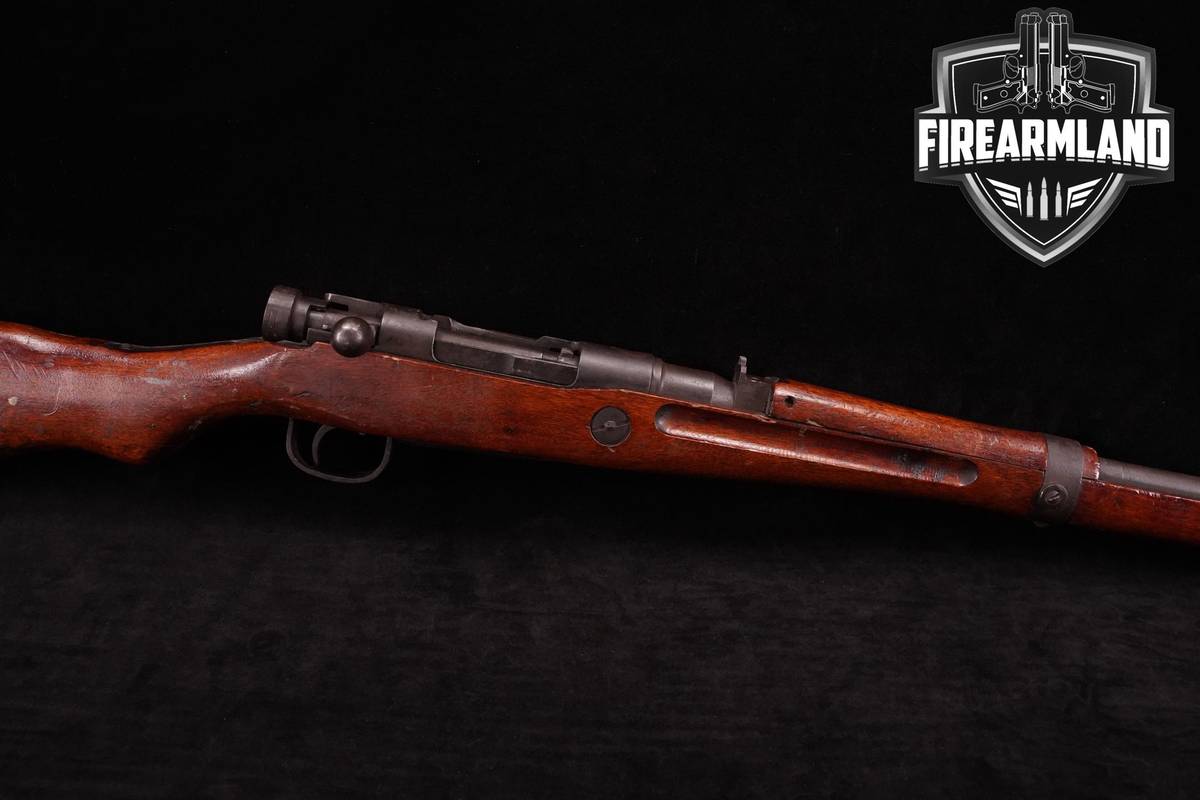
Kokura Arsenal Type 99 “Last Ditch” 7.7 Japanese Bolt-Action Rifle – Late-War WWII Collectible
Built at the Kokura Arsenal during the final months of World War II, this Type 99 “Last Ditch” short rifle represents Japan’s urgent late-war production. The rifle retains its simplified welded rear peep, crude square-post front sight, and chrome-lined 26-inch barrel chambered in 7.7 Japanese. Matching receiver markings confirm Kokura manufacture, and an aftermarket J. C. Higgins orange recoil pad replaces the original buttplate—adding a period-era American sporting touch to an already scarce wartime variant.
Condition
Overall Condition: Good condition, showing some signs of prior use and handling.
Bore Condition: Fair – Generally clean, some residue or smudges, slight corrosion.
Bore Fouling: Moderate Fouling – Lead or copper fouling with noticeable buildup.
Bore Rifling: Fair Rifling – Worn rifling, slight loss of definition.
Specific Condition Notes: The bore shows heavy corrosion. Several metal surfaces display areas of surface rust. The hardwood stock has assorted dents, dings, and handling marks consistent with field use.
What’s Included
- Kokura Arsenal Type 99 short rifle with aftermarket J. C. Higgins recoil pad
This “Last Ditch” specimen showcases the simplified wartime manufacturing shortcuts that distinguish late-production Type 99 rifles. The welded rear aperture and fixed crude front sight replaced the earlier adjustable assemblies to save time and materials, giving the rifle its unmistakable utilitarian look.
Unlike many late-war rifles, the original chrome-lined bore remains—an important feature designed to resist corrosion in humid Pacific climates. Although worn, it still demonstrates the Japanese focus on battlefield reliability.
The rifle’s two-piece hardwood stock retains side sling swivels and a ventilated handguard, highlighting the standard infantry configuration before post-war sporterization removed accessories like the dust cover, monopod, and cleaning rod.
An orange ventilated J. C. Higgins recoil pad, likely installed by a post-war owner, increases length of pull to 13 inches and signals the rifle’s brief civilian life while leaving the receiver, barrel, and arsenal marks untouched.