
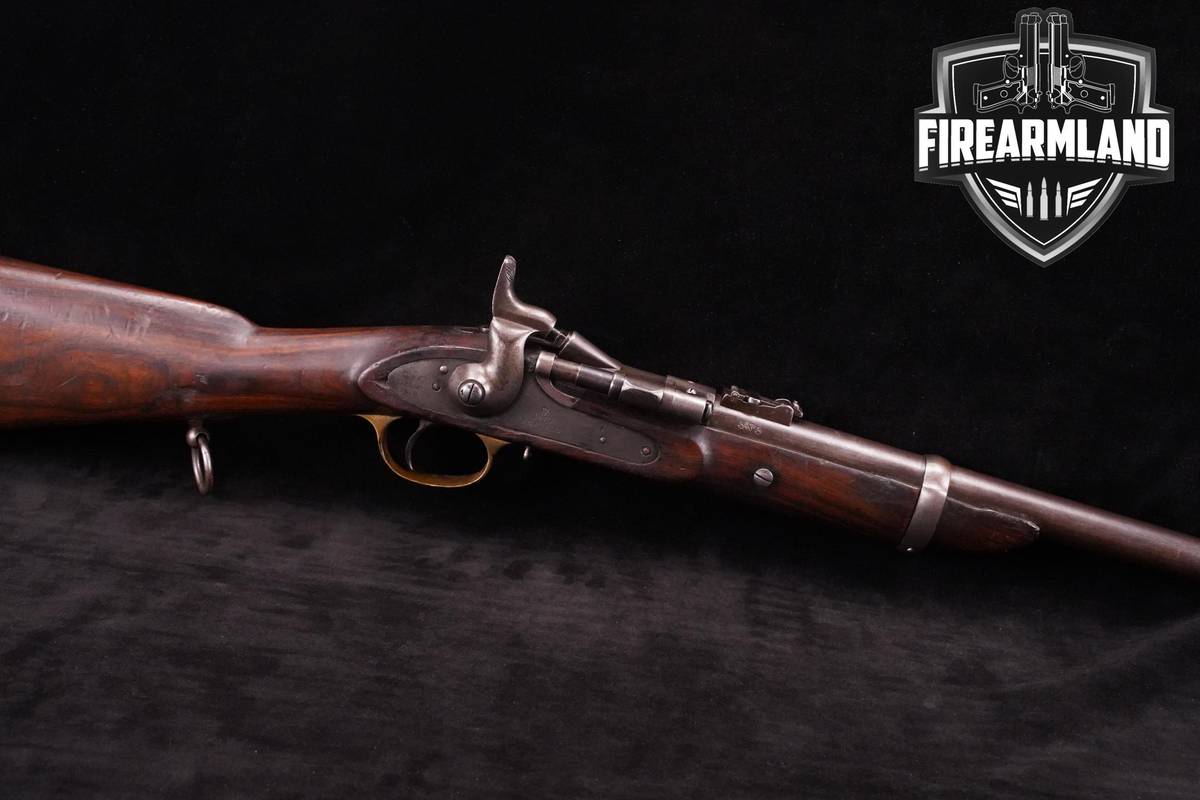
Royal Small Arms Factory Snider-Enfield Mark III Cavalry Carbine – 1870 .577 Snider, 19.5-Inch Barrel, British War Department-Marked Antique
Built at the Royal Small Arms Factory in 1870, this Mark III Snider-Enfield Cavalry Carbine represents the first center-fire shoulder arm officially issued to British cavalry units. The carbine’s shorter 19.5-inch steel barrel, sturdy walnut stock, and broad-arrow War Department proofs mark it as a purpose-built mounted arm produced during the inaugural year of full-scale Mk III production. Collectors value this variant for its transitional design that bridges percussion muskets and metallic-cartridge breechloaders.
Condition
Overall Condition: Good condition, showing some signs of prior use and handling.
Bore Condition: Good – Clean, well-maintained, minor wear marks.
Bore Rifling: Good Rifling – Intact, well-defined lands and grooves.
Specific Condition Notes: Minor to moderate scratching, scuffing, and blemishing are present on the metal surfaces and walnut stock, consistent with careful field use.
What’s Included
- RSAF Snider-Enfield Mark III Cavalry Carbine (.577 Snider)
This Mark III variant incorporates the final Snider improvements: a steel barrel for increased strength, an integral extractor that simplifies spent-case removal, and a positive side-locking latch for secure breech closure. These upgrades distinguish the Mk III from earlier conversions and make it the definitive Snider carbine.
The 19.5-inch barrel and compact full-stocked design were tailored to cavalry needs, offering easier handling from horseback while retaining the .577 Snider’s proven stopping power. Iron sights consist of a fixed blade front and a folding ladder rear graduated to 300 yards, reflecting typical engagement ranges of the era.
Broad-arrow “WD” and Enfield proof marks on the receiver and barrel confirm British War Department ownership and acceptance. The patina finish across the steel components underscores its 19th-century service life while preserving clear markings sought by collectors.
As an antique manufactured in 1870, this single-shot breechloader requires no FFL transfer under federal law. It offers a tangible link to the shift from muzzle-loading percussion arms to metallic-cartridge technology within the British Empire.