
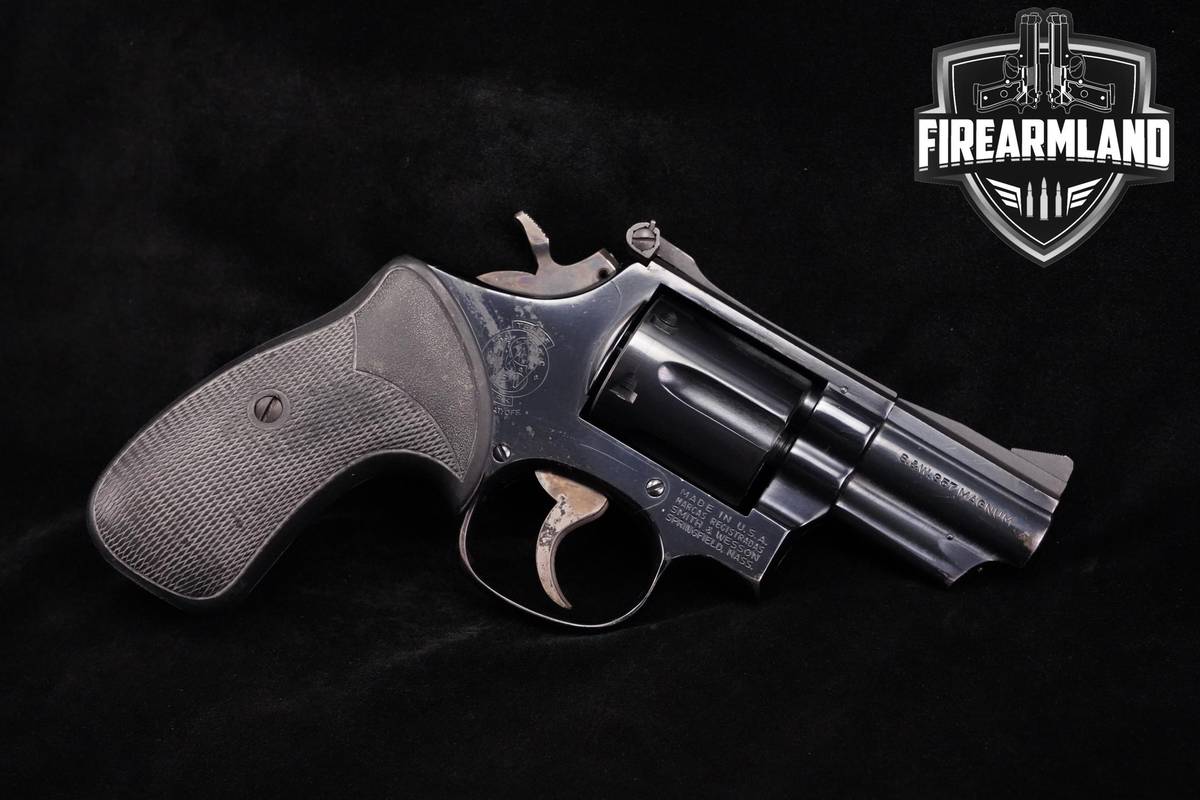
Smith & Wesson Model 19-4 Combat Magnum .357 Mag. Revolver, 2.5" Pinned Barrel & Recessed Cylinder (1980)
This 1980 Smith & Wesson Model 19-4 is the last K-frame Combat Magnum variant built with both a pinned barrel and recessed cylinder. The 2.5-inch round-butt configuration was popular with law-enforcement officers who wanted full .357 Magnum performance in a compact, fast-handling package. Finished in high-polish blue with color-case-hardened hammer and trigger, it also features an aftermarket one-piece checkered synthetic grip for a secure hold.
Condition
Overall Condition: Fair condition, showing extensive signs of prior use and handling.
Bore Condition: Good – Clean, well-maintained, minor wear marks.
Bore Rifling: Good Rifling – Intact, well-defined lands and grooves.
Specific Condition Notes: The action cycles smoothly and lockup remains tight. External surfaces display scattered scratches, blemishes, light pitting, and areas of finish loss consistent with regular duty carry.
What’s Included
- Smith & Wesson Model 19-4 Combat Magnum revolver
- Aftermarket one-piece checkered synthetic grip (installed)
Introduced as Bill Jordan’s Combat Magnum, the K-frame Model 19 balances magnum power with manageable size. This -4 revision retains the desirable gas ring on the cylinder and omits later internal locks and MIM parts, preserving the classic S&W action.
The pinned 2.5-inch carbon-steel barrel carries a serrated rib and a shrouded ejector rod. A ramp front sight with a serrated blade pairs with a micrometer-style adjustable rear sight, giving precise sight alignment despite the short barrel.
The blued carbon-steel frame houses a wide, smooth-faced trigger and an exposed hammer, both color case hardened. Safety features include a rebounding hammer and internal hammer block—hallmarks of Smith & Wesson’s proven double-action/single-action system.
Pinned-and-recessed K-frames closed an era in S&W production; many collectors seek these revolvers for their traditional manufacturing methods. With its compact barrel, factory high-polish finish, and period-correct 83K serial prefix, this 1980 example offers both usability and historical appeal.