
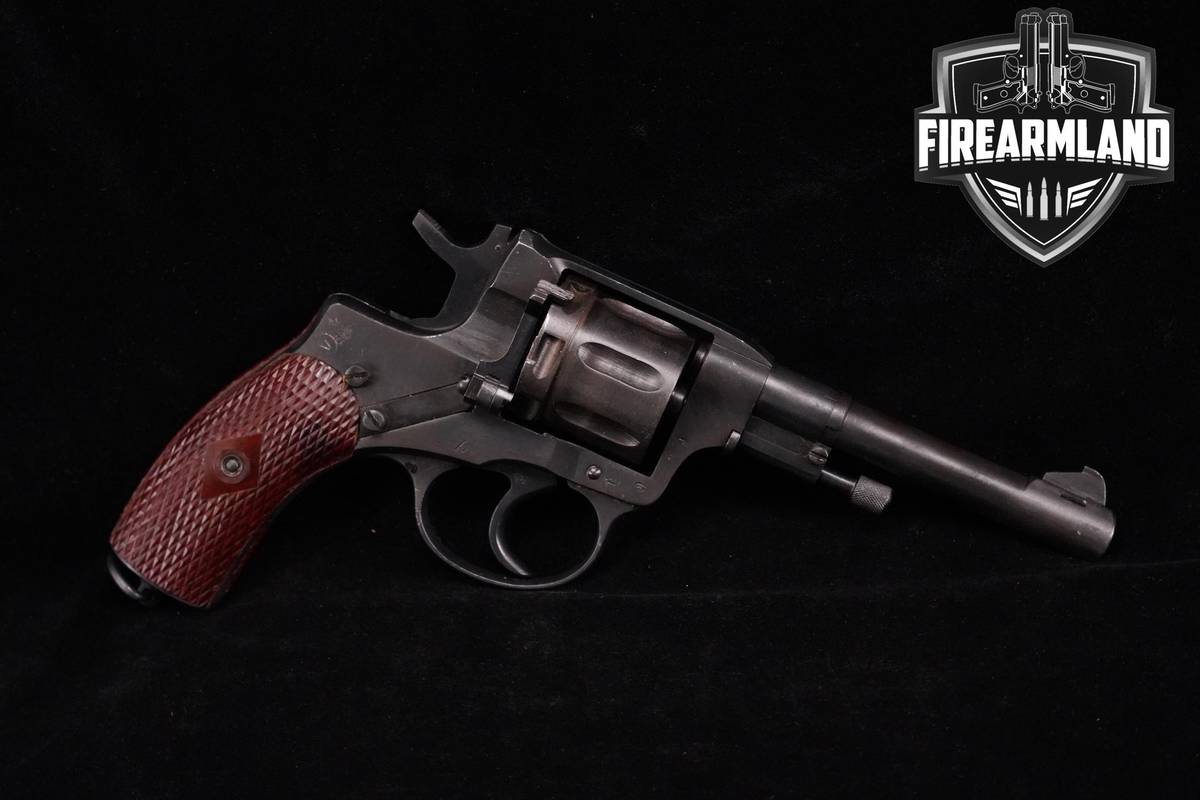
1914 Tula Nagant Model 1895 Officer's Double-Action Revolver, 7.62 Nagant, WWI Russian Gas-Seal
This 1914-dated Tula Nagant Model 1895 Officer’s Double-Action Revolver is a scarce World War I Russian sidearm distinguished by its gas-seal design, Imperial double-headed-eagle crest, and original charcoal-blued finish. Matching serial numbers and intact wartime markings enhance its appeal to military-history collectors.
Condition
Overall Condition: Very good condition, showing only light, superficial signs of prior handling or use.
Bore Condition: Good – Clean, well-maintained, minor wear marks.
Bore Rifling: Good Rifling – Intact, well-defined lands and grooves.
Specific Condition Notes: This revolver remains in great shape for its age.
What’s Included
- Holster
Built at the Tula Arsenal in 1914, this revolver left the factory at the outset of the Great War and carries the Imperial Russian double-headed-eagle crest on the frame. The Officer’s double-action variant was issued in limited numbers, making it appreciably rarer than the single-action troop model.
The signature Nagant gas-seal system advances the cylinder forward when cocked, sealing the gap between cylinder and barrel to maximize velocity and reduce flash. This example retains its original seven-shot fluted cylinder and lanyard ring, both features associated with frontline service pistols of the era.
All visible factory serial numbers on the frame and crane match. Additional period proofs include the star mark on the hammer spur and a later import stamp on the right-side frame, both crisp and legible.
The charcoal-blue finish on the carbon-steel frame, barrel, and cylinder remains even and attractive. Checkered walnut grips with diamond escutcheons provide a secure hold while preserving the classic Imperial aesthetic.
Fixed iron sights—rounded blade front and V-notch rear milled into the topstrap—complete the historically correct configuration. Overall, the revolver offers a well-preserved slice of Russian military history ready for a collection focused on early 20th-century arms.