
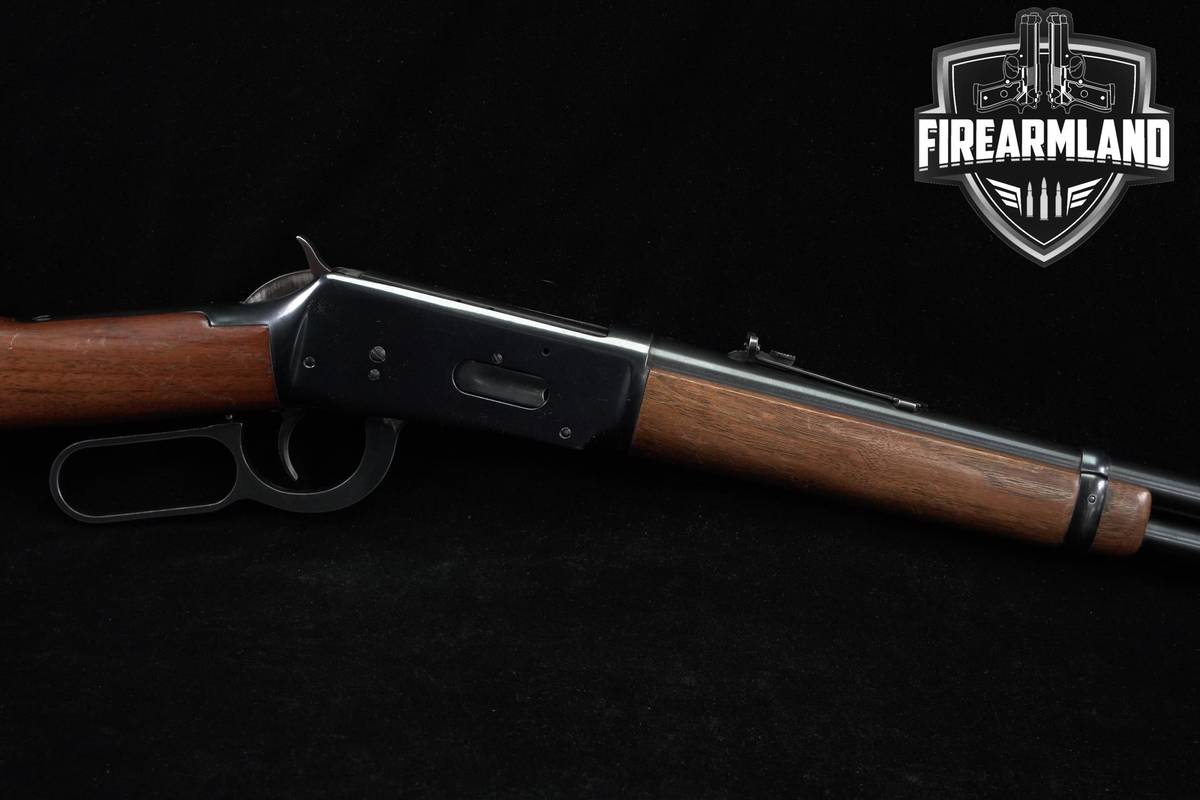
Winchester Model 94 Top-Eject .30-30 Carbine, 20" Barrel, 7+1 Capacity, Late-1980s Production
This New Haven–built Winchester Model 94 Top-Eject Carbine represents one of the final traditional configurations produced before the 1992 safety redesign and the plant’s 2006 closure. Manufactured in 1987–1988, it retains the forged-steel receiver, classic straight-grip walnut stock, and absence of a cross-bolt or tang safety. Collectors will appreciate its place in the Model 94 timeline—coming a decade after Winchester’s 1977 manufacturing updates yet still delivering the smooth, fast lever throw that made the 94 famous.
Condition
Overall Condition: Good – Shows normal handling wear with scratches and blemishes on metal and wood surfaces.
Bore Condition: Good – Bore is clean and shiny with minor wear; rifling remains crisp and well-defined.
Specific Condition Notes: Light rust and small areas of pitting are visible on some exterior metal components.
What’s Included
- Winchester Model 94 Top-Eject Carbine (.30-30, 20" barrel)
Serial number 4505246 confirms 1987–1988 production, placing this rifle among the last top-eject models built in Winchester’s historic New Haven facility before the cross-bolt safety was introduced. The classic top-eject design simplifies scope-free shooting and preserves the Model 94’s traditional profile.
The 20-inch round steel barrel is paired with a 7-round tubular magazine, giving the carbine its well-balanced feel and easy handling in the field. Factory iron sights consist of a hooded front post and semi-buckhorn rear, both adjustable for elevation.
Forged-steel receiver and blued finish maintain the rugged durability expected of a Winchester lever gun. Light rust and pitting noted in the condition section are cosmetic and do not affect function.
Furniture is straight-grip American walnut with matching fore-end, providing a classic look and comfortable 13.5" length of pull. The buttplate carries the Winchester logo, underscoring its factory originality.
A half-cock notch serves as the rifle’s safety feature, consistent with late-1980s Model 94 production and echoing the design philosophy that has defined the platform since well before 1977.