
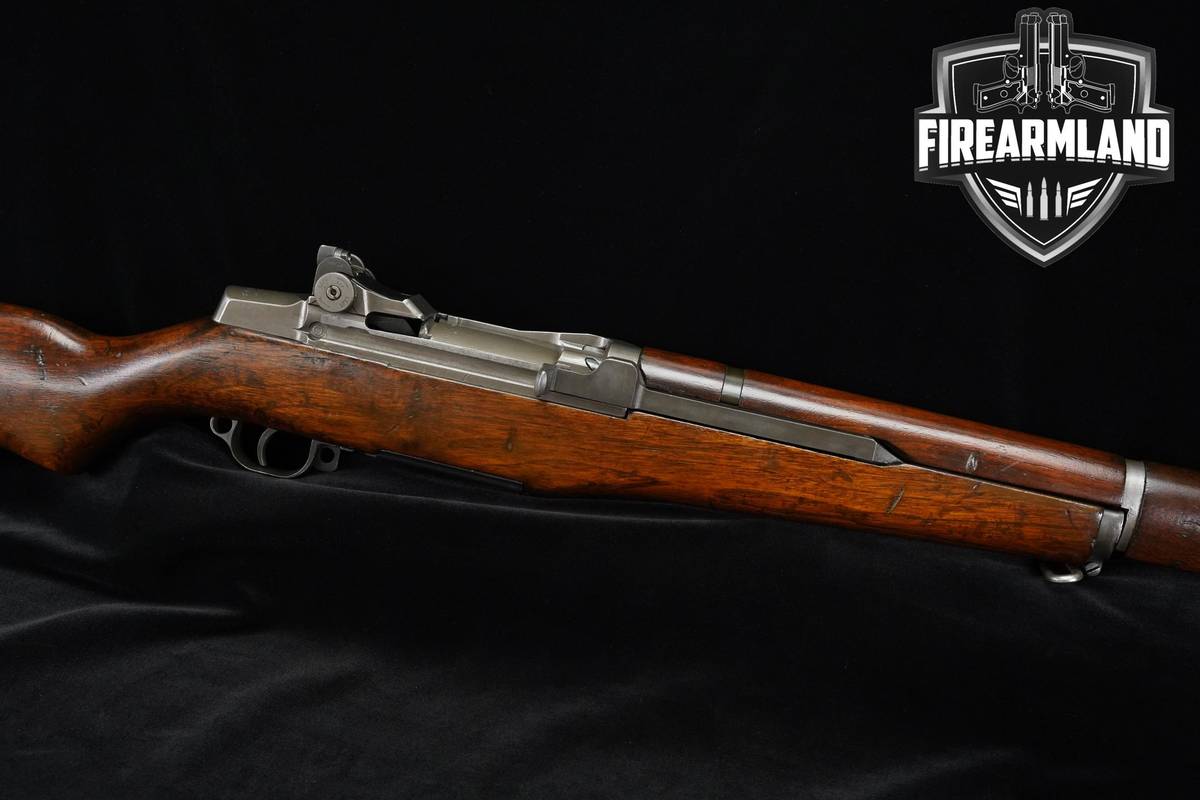
Harrington & Richardson M1 Garand .30-06 Semi-Automatic Rifle | Late-Production 1956 Receiver, Springfield 12-53 Barrel
This mid-1950s H&R M1 Garand pairs a late-production 5.77-million-range receiver from the final year of U.S. Garand manufacture (1956) with a Springfield Armory 12-53 replacement barrel installed during an arsenal rebuild. A National Match–marked follower rod hints at partial upgrade work, while crisp government proofs remain on both barrel and stock. Collectors will appreciate the authentic mix of components, the clean bore, and the rifle’s overall very good condition.
Condition
Overall Condition: Very good condition, showing only light, superficial signs of prior handling or use.
Bore Condition: Good – Clean, well-maintained, minor wear marks.
Bore Rifling: Good Rifling – Intact, well-defined lands and grooves.
Specific Condition Notes: Light scratches and small blemishes are present on the parkerized surfaces and walnut stock. The bore is clean, shiny, and free of pitting.
What’s Included
- M1 Garand en-bloc clip (8-round)
- M1 Garand combination cleaning tool with bore brush
Built by Harrington & Richardson under U.S. government contract, this rifle features the distinctive wide-foot H&R receiver contour and a parkerized gray-phosphate finish that remains even and original. The walnut stock, handguard set, and steel trap-door buttplate retain the correct semi-pistol-grip profile and display a clear circled “P” proof on the grip.
The Springfield Armory barrel, dated 12-53, carries the ordnance flaming-bomb stamp and mates tightly to the receiver. Four-groove, right-hand twist rifling is sharp, supporting the clean bore description and indicating minimal round count since refurbishment.
Sighting is handled by the standard Garand aperture rear sight, fully adjustable for windage and elevation, and a wing-protected blade front sight. The trigger-guard mounted pivot safety operates positively, and the gas-operated long-stroke piston action cycles the included 8-round en-bloc clip reliably.
A National Match–marked follower rod is installed, signaling partial accuracy enhancement common to arsenal-level upgrades performed during the late 1950s. Combined with the rifle’s tight lock-up and smooth action, this component adds functional value while keeping the rifle historically correct.