
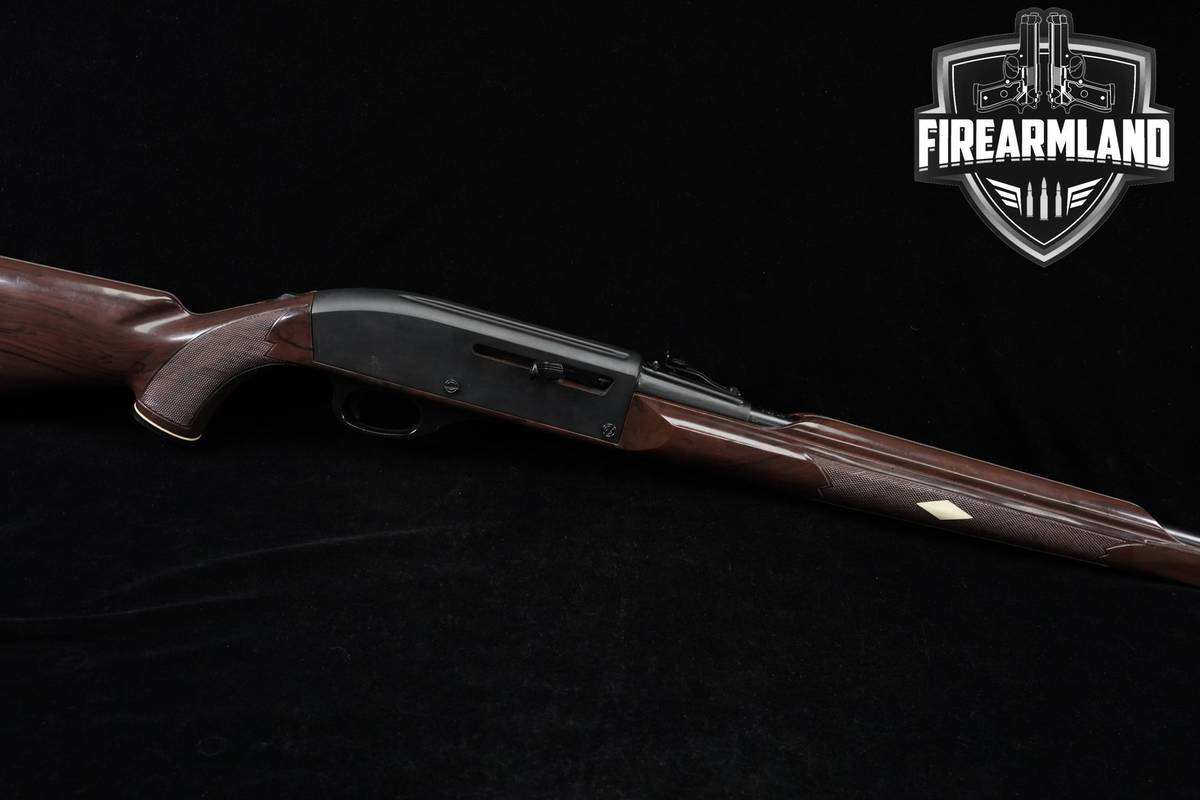
1967 Remington Nylon 66 Mohawk Brown .22 LR Semi-Automatic Rifle – Early Polymer Classic, 14-Round Tubular Magazine
Produced in 1967 during the first serialized run of Remington’s revolutionary polymer rifle, this Nylon 66 Mohawk Brown pairs a 19.5-inch chromoly barrel with a lightweight DuPont Zytel-101 nylon frame that keeps overall weight around 4 lb. Its integrated 14-round buttstock magazine, slick blowback action, and distinctive brown wood-grain swirl finish make it a standout example of one of the earliest mass-produced polymer-frame long guns.
Condition
Overall Condition: Good condition, showing some signs of prior use and handling.
Bore Condition: Fair – Generally clean, some residue or smudges, slight corrosion.
Rifling Condition: Good Rifling – Intact, well-defined lands and grooves.
Specific Condition Notes: Scratches and surface blemishes are visible on the stock and receiver cover, consistent with normal handling, but they do not affect function. The bore remains bright to the eye.
What’s Included
- Remington Nylon 66 Mohawk Brown .22 LR rifle
The Nylon 66 was one of the first rifles built around a synthetic frame, and this 1967 example showcases the concept in its original form. The stock and receiver are molded as a single nylon unit, eliminating the need for separate bedding and trimming weight without sacrificing strength.
Remington fitted a blued sheet-steel cover over the receiver, grooved for standard 3/8-inch tip-off scope mounts, while retaining functional iron sights—a hoodless ramped front blade with protective side wings and an elevation-adjustable rear leaf.
The fixed tubular magazine hidden in the buttstock feeds up to 14 rounds of .22 LR, keeping the fore-end slim and the balance neutral. A simple blowback action and cross-bolt safety round out its practical design.
Collectors appreciate Mohawk Brown for its contrasting white diamond grip inlay, white line spacers, fluted comb, and molded checkering. With over 1 million Nylon 66 rifles produced from 1959–1989, early serialized specimens like this one hold particular historical interest.