
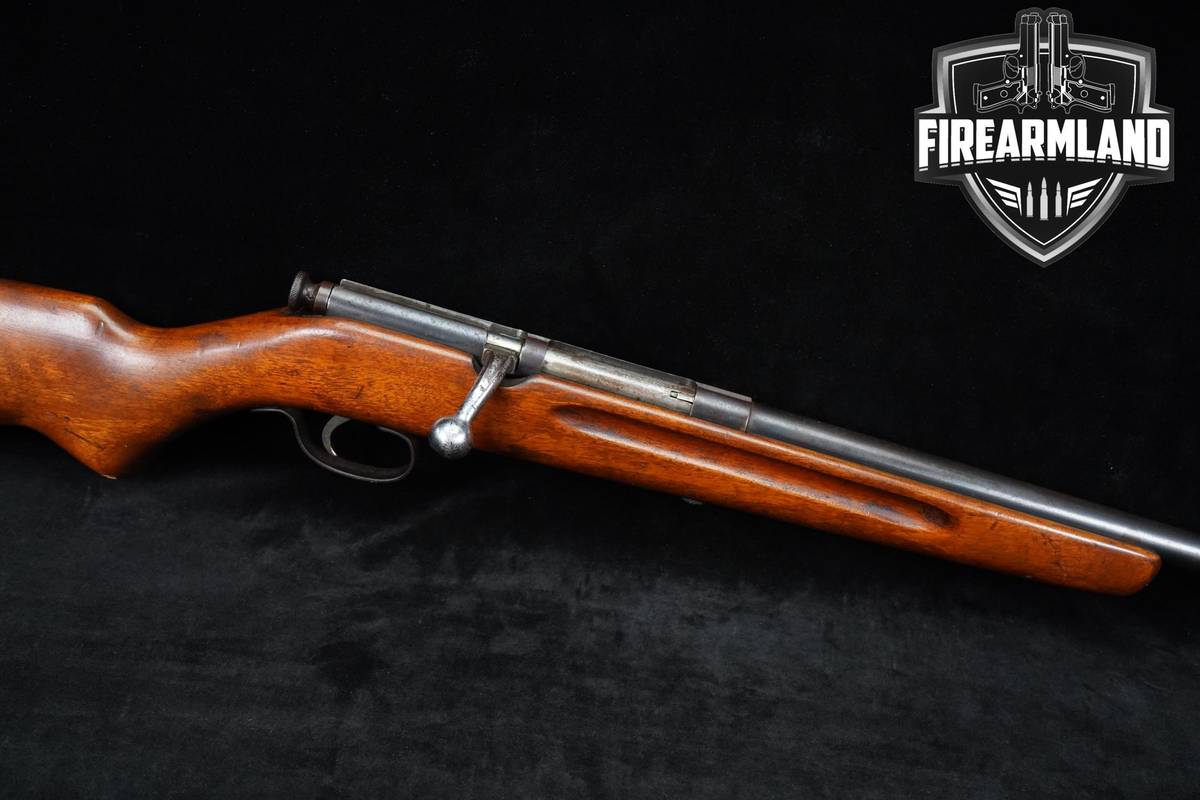
Stevens Ranger 101.5 (Model 37) Bolt-Action .410 Shotgun, Pre-WWII Production
Built between 1936 and 1942 by J. Stevens Arms Co. for Sears, this Ranger-branded Model 37 represents one of the earliest mass-market bolt-action .410 shotguns. It features a 24-inch fixed cylinder bore barrel, blued carbon-steel construction, and hardwood furniture with a finger-groove fore-end. Surviving examples are becoming harder to find because many were used heavily as youth trainers, making this piece an appealing acquisition for collectors seeking authentic pre-WWII American shotguns.
Condition
Overall Condition: Fair – Extensive signs of prior use and handling.
Bore Condition: Fair – Generally clean with some residue or smudges and slight corrosion.
Specific Condition Notes: The top of the trigger is worn smooth, allowing the bolt to close without the trigger being pulled. A qualified gunsmith should repair this issue before the shotgun is fired. Exterior metal and wood surfaces show noticeable scratches, blemishes, and handling wear consistent with long-term use.
What’s Included
- Stevens Ranger 101.5 (Model 37) bolt-action .410 shotgun
This Model 37 uses a simple single-shot bolt action that cocks on close and incorporates both a striker knob safety and a bolt-handle safety notch, reflecting the straightforward design ethos of the era.
The 24-inch barrel is cut with a fixed cylinder bore, making it suitable for short-range small-game hunting or pest control when chambered for either 2½-inch or 3-inch .410 shells. A brass bead front sight pairs with a shallow receiver-top groove to provide a clean, unobstructed sight picture.
Hardwood furniture includes a semi-pistol-grip stock and finger-groove fore-end, both finished in traditional oil. The 13.25-inch length of pull suits a wide range of shooters and hints at the gun’s original role as a youth trainer.
Because pre-1968 production shotguns were not required to carry serial numbers, this firearm is appropriately unnumbered, underscoring its place in early 20th-century manufacturing. Its straightforward construction and Sears catalog heritage offer a tangible link to an era when affordable, utilitarian firearms brought sporting traditions to a broad American audience.