
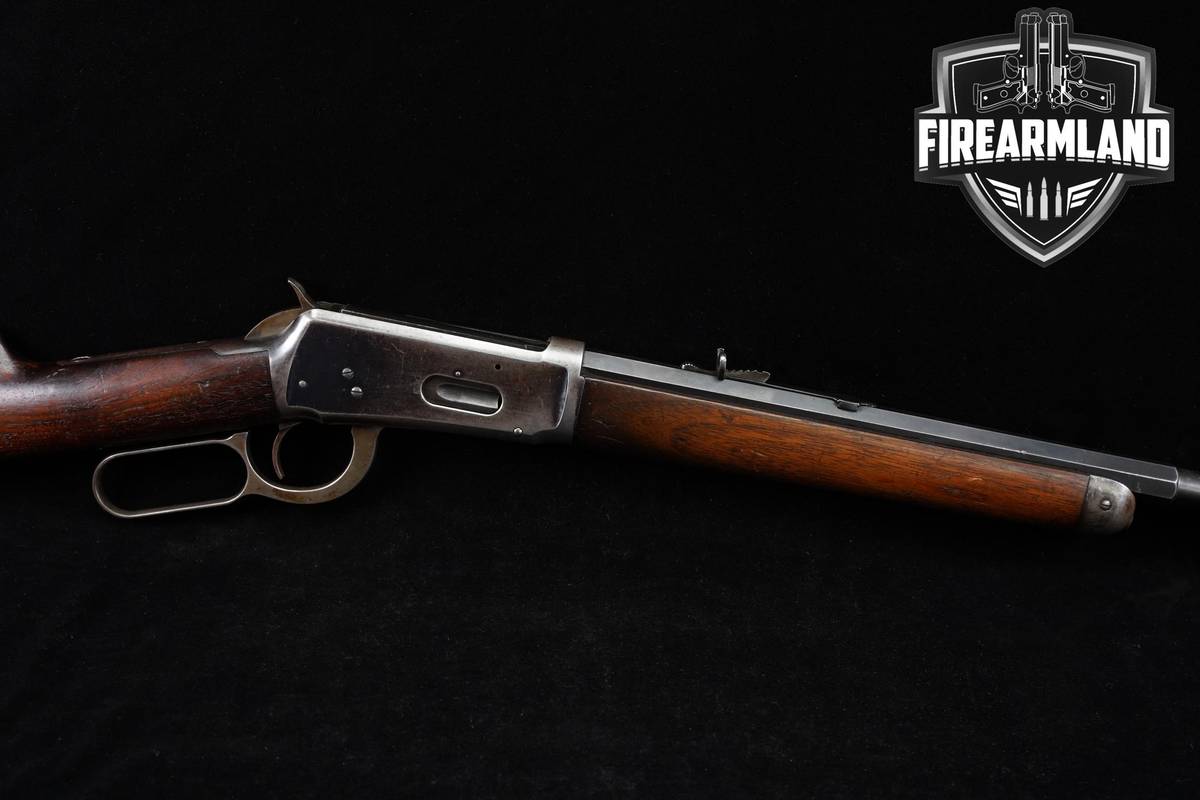
Winchester Model 1894 Sporting Rifle .38-55 Win., 26" Half Octagonal Barrel, 1900 Production, Half-Length Magazine
This 1900-manufactured Winchester Model 1894 Sporting Rifle pairs John M. Browning’s iconic lever-action design with a special-order half-length tubular magazine and a 26-inch half octagonal barrel. Chambered in the classic .38-55 Winchester, it represents one of the earliest sporting rifles built specifically for smokeless powder, making it a standout piece for collectors seeking authentic turn-of-the-century craftsmanship.
Condition
Overall Condition: Good – Shows some signs of prior use and handling.
Bore Condition: Good – Clean, well-maintained, minor wear marks.
Bore Rifling: Good Rifling – Intact, well-defined lands and grooves.
Specific Condition Notes: Metal surfaces display scattered scratches and blemishes, with light rust and pitting in isolated areas. The walnut stock is solid, exhibiting normal handling marks consistent with age.
What’s Included
- Winchester Model 1894 Sporting Rifle (.38-55 Win.) with 26" half octagonal barrel and factory half-length tubular magazine
Produced in 1900 (serial number in the 1912xx range), this rifle falls squarely within the desirable early-production era of the Model 1894. Its half-length magazine was a special-order feature, reducing weight while preserving the rifle’s classic lines.
The 26-inch half octagonal barrel offers increased rigidity and a traditional aesthetic that collectors appreciate. Coupled with the .38-55 chambering, it provides the ballistic performance that made the Model 1894 a favorite among hunters of the period.
Retaining the original top-eject, locking-bolt lever-action system, the rifle cycles smoothly and maintains the handling characteristics that cemented Winchester’s reputation. Iron sights consist of a dovetailed blade front and a semi-buckhorn rear with a step elevator for precise elevation adjustments.
The straight-grip walnut stock, crescent steel buttplate, and blued steel receiver stay true to the Sporting Rifle configuration. Overall, this piece offers a well-preserved example of Browning’s breakthrough design for smokeless powder at the dawn of the 20th century.