
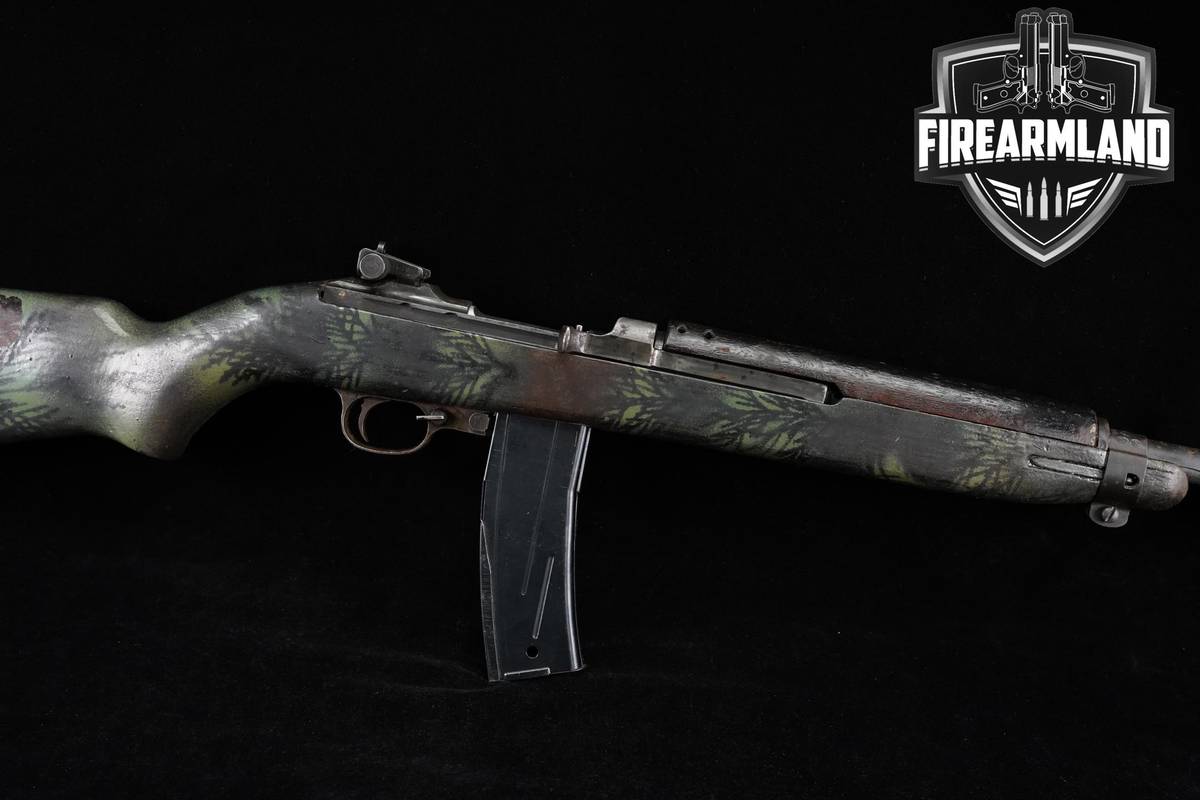
IBM M1 Carbine .30 Carbine Semi-Automatic Rifle – WWII-Era, Scarce IBM Receiver, Custom Camouflage Stock
This IBM-manufactured M1 Carbine comes from one of the rarest production runs of the iconic WWII platform—only about 5.8 % of wartime carbines were built by IBM. It wears its history with a mid-1943 Type I barrel band, a later arsenal-installed adjustable rear sight, and a Parkerized finish, while sporting modern touches like a camouflage-painted stock and an installed barrel-mounted Picatinny rail. Collectors will appreciate the correct 3.79 million-range serial number that places this carbine firmly in the August 1943–May 1944 IBM block, while shooters will value the clean, serviceable bore and 30-round magazine capacity.
Condition
Overall Condition: Fair – Shows extensive signs of prior use and handling.
Bore Condition: Fair – Generally clean, some residue or smudges, slight corrosion.
Specific Condition Notes: The wooden stock has been over-painted in a green and black camouflage pattern and exhibits scattered scratches and blemishes. Light rust and pitting are visible on several metal surfaces. Despite the exterior wear, the bore remains bright and functional.
What’s Included
- IBM M1 Carbine with camouflage-painted wooden stock and installed barrel-mounted Picatinny rail
- One 30-round GI-pattern curved steel magazine
This carbine’s receiver and barrel are carbon steel with a wartime manganese Parkerized finish that retains a classic service look while providing durable corrosion resistance. The low-wood stock configuration improves grip access around the operating slide and showcases the custom camouflage refinish.
Mechanical features stay true to the U.S. military design: a smooth-running semi-automatic action, push-button magazine release, and flip-type safety. The 18-inch barrel preserves original ballistics and balances well with the full-size stock, delivering a 13-inch length of pull.
Sighting is handled by the as-installed adjustable aperture rear sight paired with the wing-protected fixed front post. The later rear sight combined with the early Type I barrel band highlights the mix of wartime and post-war rebuild parts typical of service-returned carbines.
An aftermarket Picatinny rail segment secured to the barrel opens options for a light or other accessory without altering the receiver, adding contemporary utility to this historically significant firearm.