
Koishikawa Arsenal Type 46 Long Rifle in 8x50mmR Siamese — Rare Pre-WWI Bolt Action with Sliding Dust Cover
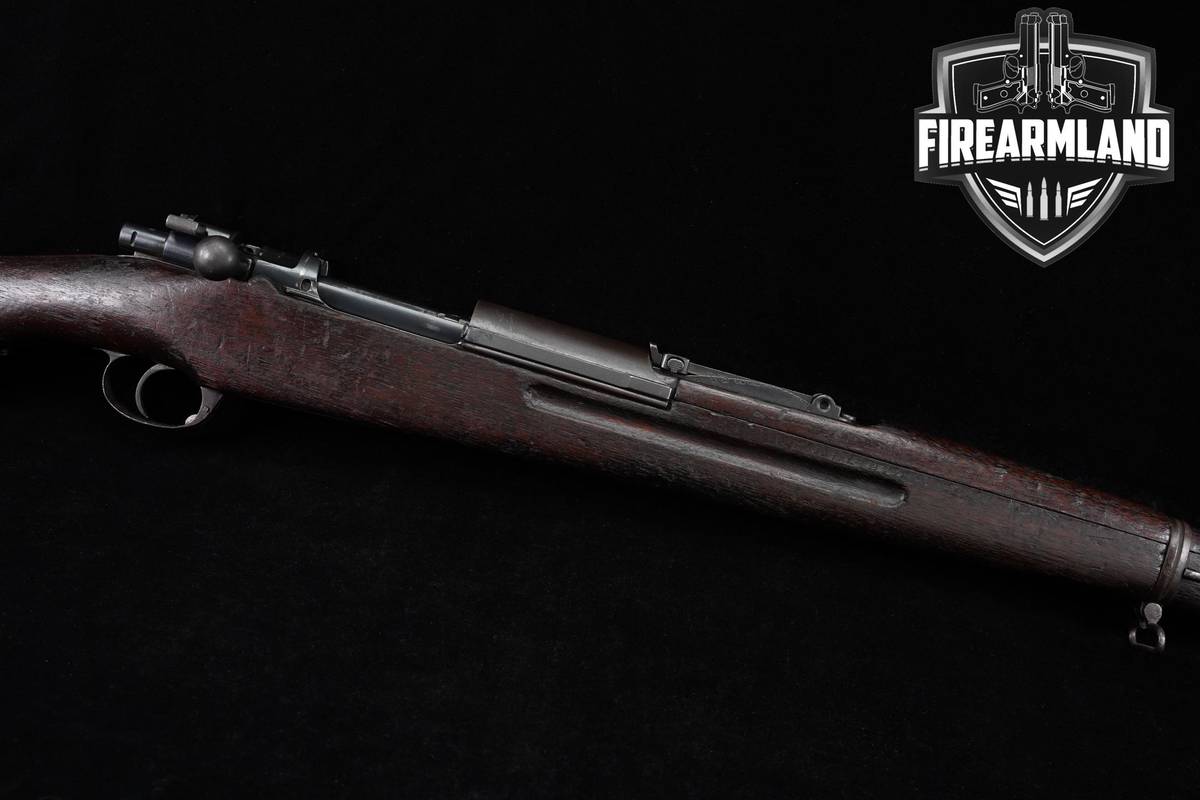
This scarce Koishikawa Arsenal Type 46 long rifle is one of roughly 20,000 contract guns built for the Kingdom of Siam before World War I. Chambered for the uncommon 8×50mmR Siamese cartridge, it blends Mauser 98 mechanics with an Arisaka-style cylindrical dust cover that sets it apart from other early 20th-century service rifles. Matching numbers on the bolt and receiver, an intact R.S. 121 crest, and white-painted Thai rack markings add collector appeal to this full-length teak-stocked rifle.
Condition
Overall Condition: Fair condition, showing extensive signs of prior use and handling.
Bore Condition: Fair – generally clean with some residue or smudges and slight corrosion.
Rifling Condition: Fair – rifling is worn with slight loss of definition.
Action Condition: Functions correctly.
Stock Condition: Fair – widespread scratches and blemishes are present.
What’s Included
- Koishikawa Arsenal Type 46 long rifle (matching bolt and receiver)
Produced at Tokyo’s Koishikawa Arsenal for export to Siam, this rifle represents a unique intersection of Japanese manufacturing and Thai military requirements. The sliding cylindrical dust cover—distinct to Siamese contracts—protects the action from debris while cycling and remains fully intact on this example.
The full-length teak stock features a right-side grasping groove and retains white-painted Thai characters and matching painted serial on the butt. These field markings, along with the sharp R.S. 121 crest stamp, help verify its original Siamese service and enhance historical value.
With a 29-inch steel barrel and ladder rear sight graduated in Thai numerals, the Type 46 was intended for long-range volley fire typical of its era. The Mauser-based five-round internal magazine feeds the rimmed 8×50mmR cartridge, a caliber produced solely for Siam.
Although cosmetically worn, the rifle remains functionally sound. Collectors interested in early Asian military arms or rare Mauser derivatives will appreciate its low production numbers, distinctive features, and pre-WWI provenance.