
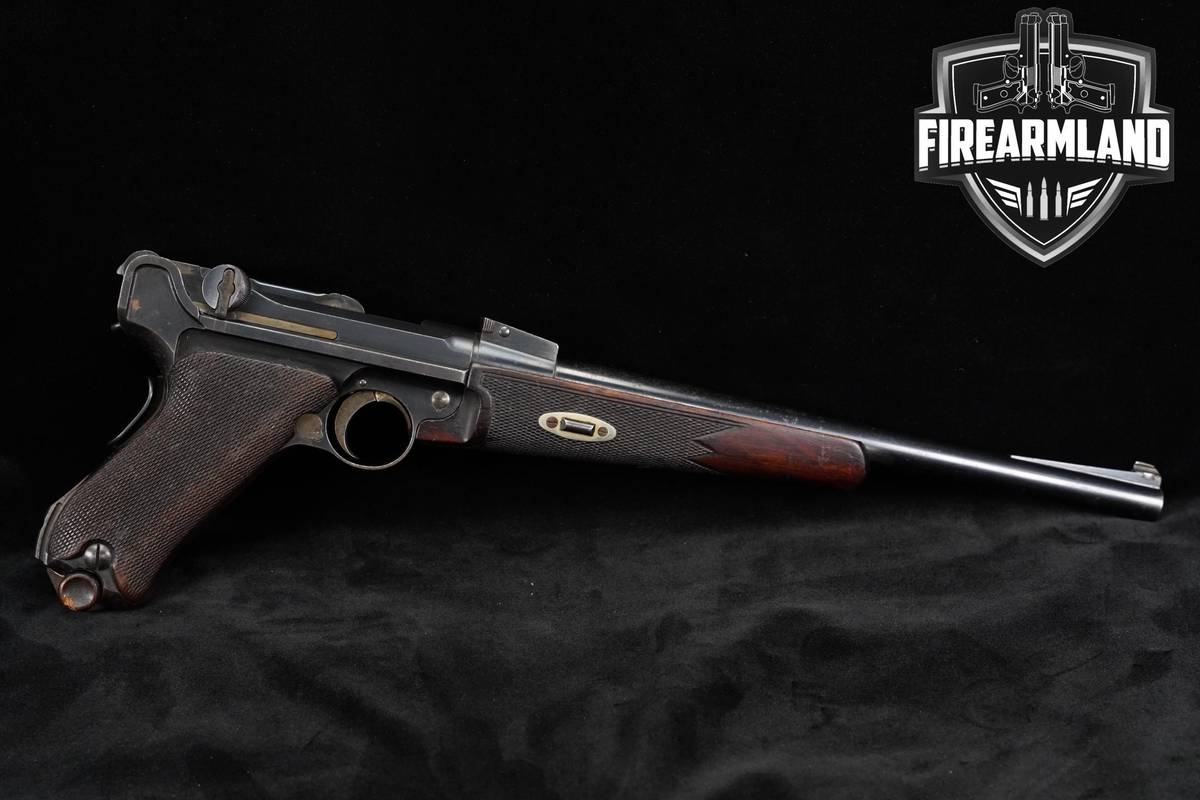
DWM Model 1902 Luger Sporting Carbine 9mm, 11.75" Barrel, Rare Early-Production Semi-Auto Pistol
This DWM Model 1902 Luger Sporting Carbine is one of fewer than 2,000 built and is a scarce factory 9mm example from the early 1900s. It features the long 11.75-inch barrel, checkered walnut fore-end, and adjustable 300-metre tangent rear sight that set the Sporting Carbine apart from standard Lugers. A rust-blue and straw-hardened commercial finish, stock lug, and early steel magazine with wooden base further underscore its collector appeal.
Condition
Overall Condition: Poor condition.
Bore Condition: Good - Clean, well-maintained, minor wear marks.
Bore Rifling: Good - Intact, well-defined lands and grooves.
Specific Condition Notes: The pistol shows scattered scratches, blemishes, and areas of rust with light pitting. Serial numbers are mismatched, including a visible “75” on the toggle link. The action sometimes fails to go fully into battery and binds when closed.
What’s Included
- 1x 8-round early DWM steel magazine with concentric-ring wooden base
Produced circa 1902–1904, this Sporting Carbine represents an early commercial push to offer Luger performance in a carbine-length format. The 11.75-inch barrel improves sight radius while preserving the pistol’s toggle-lock profile, making it a unique crossover for shooters and historians alike.
The rust-blue finish, straw-colored small parts, and finely checkered walnut grip panels and fore-end reflect DWM’s deluxe commercial standards of the era. Despite external wear, these original finishes remain visible, offering an authentic early-20th-century presentation.
The adjustable tangent rear sight is factory graduated from 100 to 300 metres, pairing with a ramped front sight tipped by a dovetailed nickel-silver blade for precise elevation control. A factory-cut stock lug is in place should a period shoulder stock be sourced.
Mechanically, the pistol retains its short-recoil toggle-lock action and manual safety, though the noted binding underscores its status as a collectible in need of mechanical attention before live use. For collectors focused on rarity and historical significance, the mismatched numbers and visible “75” offer additional research potential.