
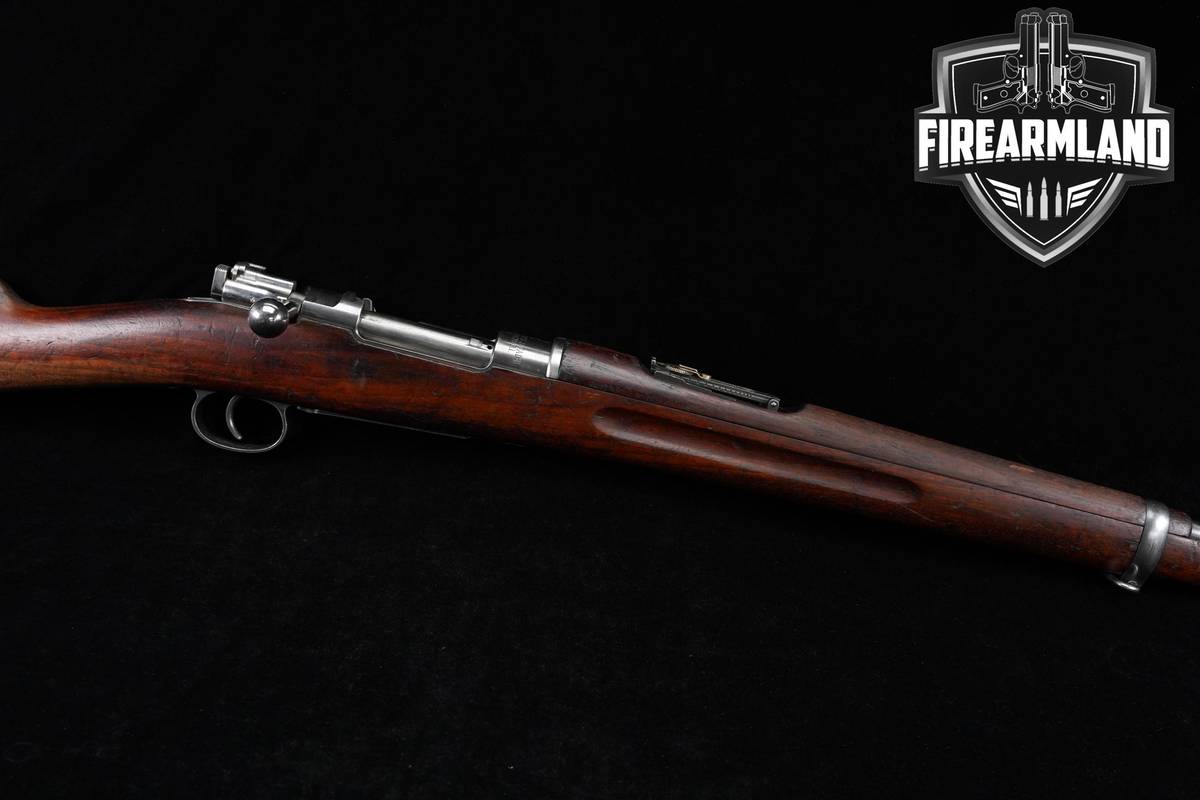
Carl Gustafs Stads Gevär m/38 Type I Conversion 6.5x55 Swedish Bolt-Action Rifle – 1912 Manufacture
Built on a 1912 Carl Gustaf m/96 receiver and later converted to the shorter m/38 pattern, this Swedish Mauser combines early-war craftsmanship with the handier profile collectors look for. A straight bolt handle, precision SM-sikte m/55 micrometer rear sight, and original brass stock disk underscore its authentic military configuration. Swedish ordnance steel, renowned for its strength and finish quality, rounds out a rifle that balances historical value with shootable performance.
Condition
Overall Condition: Good condition, showing some signs of prior use and handling.
Bore Condition: Good – clean, well-maintained, minor wear marks.
Bore Rifling: Good – intact, well-defined lands and grooves.
The metal surfaces retain much of their military blued finish with scattered handling marks. The walnut stock shows typical service dings yet remains solid, with finger-groove grasping slots still well defined. The bore is bright and promises solid accuracy for its age.
What’s Included
- Carl Gustafs Stads Gevär m/38 Type I bolt-action rifle
Manufactured at Carl Gustafs Stads Gevärsfaktori in 1912, this rifle began life as a long m/96 before arsenal conversion to the m/38 standard. The 24-inch barrel gives shooters a balanced blend of velocity and maneuverability, while keeping the original 6.5x55 Swedish chambering known for mild recoil and accuracy.
The SM-sikte m/55 rear sight offers precise, dial-adjustable elevation and windage—an upgrade over earlier leaf sights—making it well suited for range work. Up front, an un-hooded squared post on a raised base preserves the classic sight picture favored by Swedish marksmen.
Collectors will note the intact crown proof on the receiver rail and the brass stock disk detailing bore condition and unit zeroing data, both desirable hallmarks of an unaltered Swedish service rifle. Bottom sling swivels and a 14-inch length of pull walnut stock complete the traditional infantry setup.
With its high-grade steel receiver, strong five-round internal magazine, and bright bore, this m/96-38 Type I conversion stands out as a historically correct example that remains fully range-ready.