
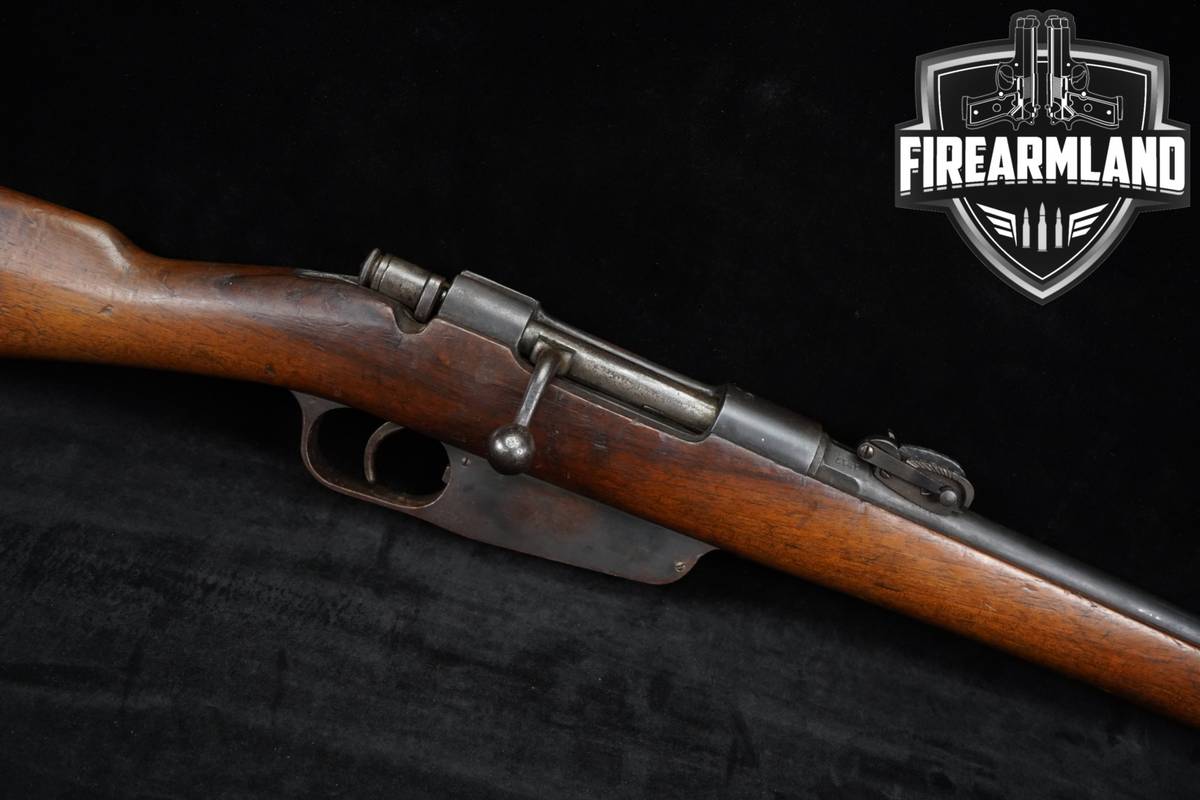
1917 Brescia Arsenal Moschetto Modello 91 TS 6.5 Carcano Bolt-Action Carbine, 17.7 in Barrel
This WWI-era Moschetto Modello 91 per Truppe Speciali (TS) short carbine was manufactured in 1917 by the Regia Fabbrica d'Armi di Brescia. Chambered in 6.5 Carcano with a 17.7 in barrel, it retains its TS configuration and period markings, with no postwar FAT refurbishment stamps observed. Capacity is listed as single-shot as configured.
Condition
Overall Condition: Fair condition, showing extensive signs of prior use and handling.
Bore Condition: Fair - Generally clean, some residue or smudges, slight corrosion.
Bore Rifling: Good Rifling - Intact, well-defined lands and grooves.
Specific Condition Notes: There are visible signs of wear and handling with scattered scratches and blemishes. Areas of surface rust and finish loss are present. No stripper clip is included.
What’s Included
- Brescia Arsenal Moschetto Modello 91 per Truppe Speciali (TS) rifle
Built for specialized troops, this TS variant features the compact 17.7 in barrel and full-length carbine stock that define the model. It was produced by Brescia during WWI and is chambered for the 6.5 Carcano cartridge in a bolt-action layout with a steel receiver.
The rifle uses the Carcano Mannlicher-type en-bloc clip system and has a split-bridge receiver with a straight bolt handle. The octagonal barrel shank flats are present, and the sights are a fixed blade front with protective ears paired to a folding/ramped rear leaf with range graduations. Capacity is single-shot as configured.
Military fittings include a transverse bayonet lug integral to the nosecap, a side butt sling bar with a bottom front swivel, and the correct full-length stock without an upper handguard. The stock is hardwood with a 12.5 in length of pull.
Markings include "BRESCIA" on the top barrel flat and the "1917" date on the right barrel flat. An AT-prefix serial is present on the left barrel flat with a matching number on the butt. Oval inspector/proof cartouches are visible on the receiver ring and barrel flats, and no postwar FAT refurbishment stamps were observed.