
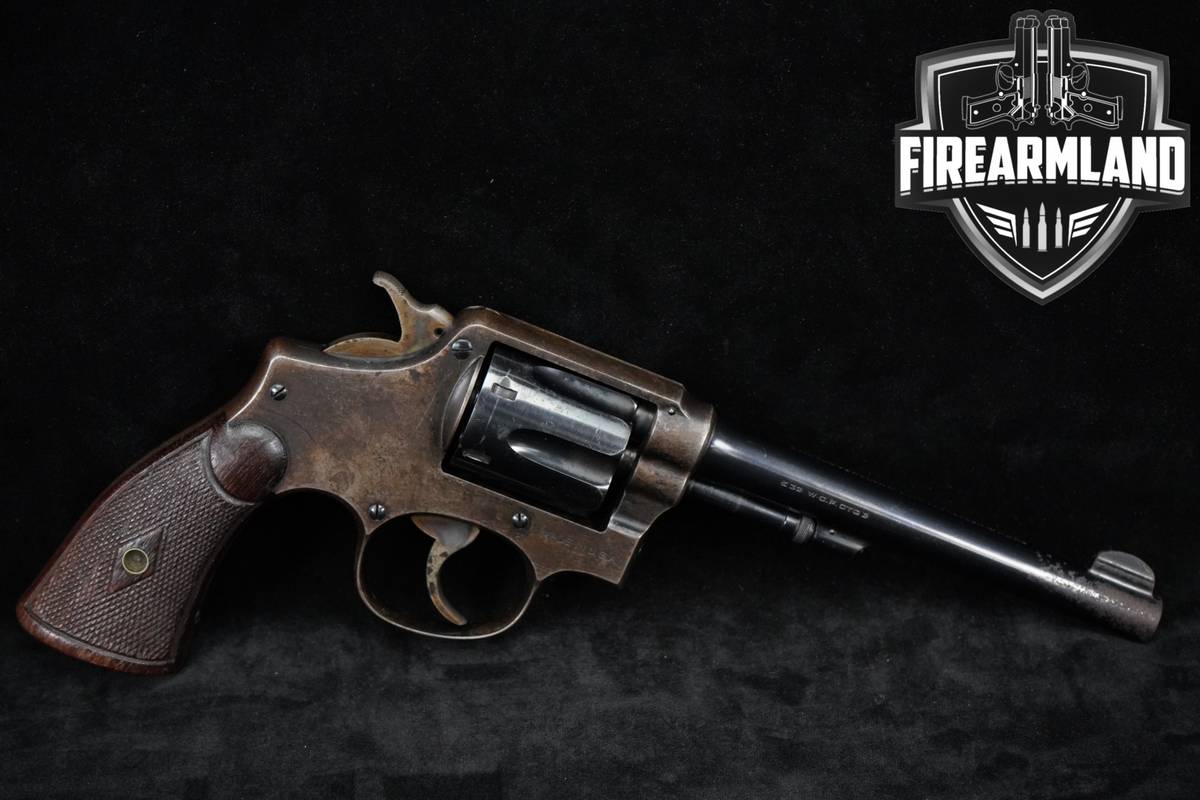
Smith & Wesson .32-20 Hand Ejector Model of 1905 4th Change, 6-inch Blued DA/SA Revolver (1922)
This 1922 Smith & Wesson .32-20 Hand Ejector Model of 1905, 4th Change, pairs a 6-inch tapered round barrel with classic K-frame construction and a blued finish. It features transitional factory markings, the pre-1927 mushroom ejector-rod knob, and matching assembly numbers on key parts. Chambered in the less common .32-20 Win., it falls above the documented heat-treated cylinder threshold for .32-20 K-frames, adding desirable period-correct details for knowledgeable buyers.
Condition
Overall Condition: Fair condition, showing extensive signs of prior use and handling.
Bore Overall Condition: Fair - Generally clean, some residue or smudges, slight corrosion.
Bore Rifling: Good Rifling - Intact, well-defined lands and grooves.
Specific Condition Notes: The revolver remains structurally solid. Rust and pitting are present on metal surfaces. Scratches and blemishes are visible. The bore presents clean and shiny.
What’s Included
- Smith & Wesson .32-20 Hand Ejector Model of 1905, 4th Change revolver
Built on the K-frame Hand Ejector platform, this double-action/single-action revolver is configured with a 6-inch tapered, round carbon-steel barrel and a six-shot cylinder. The blued carbon-steel construction is complemented by a color case-hardened hammer and smooth-face, color case-hardened trigger.
Period features include the pre-1927 mushroom-style ejector-rod knob and transitional factory markings: the barrel is roll-marked ".32 W.C.F. CTG" and the frame carries the "MADE IN U.S.A." stamp. Its production falls above the documented heat-treated cylinder threshold for .32-20 K-frames.
Sighting is straightforward and robust, with a fixed half-moon front blade and a square-notch rear milled into the topstrap. The exposed hammer has a checkered spur for positive control.
The checkered walnut service stocks have the diamond around the screw escutcheon and a medallion disc, matching the revolver’s blued finish and traditional lines. Matching assembly numbers are present on the yoke, yoke cut, and rear of the cylinder. Made in the United States and dated to 1922, it represents a notable .32-20 chambering within the Model of 1905 4th Change series.