
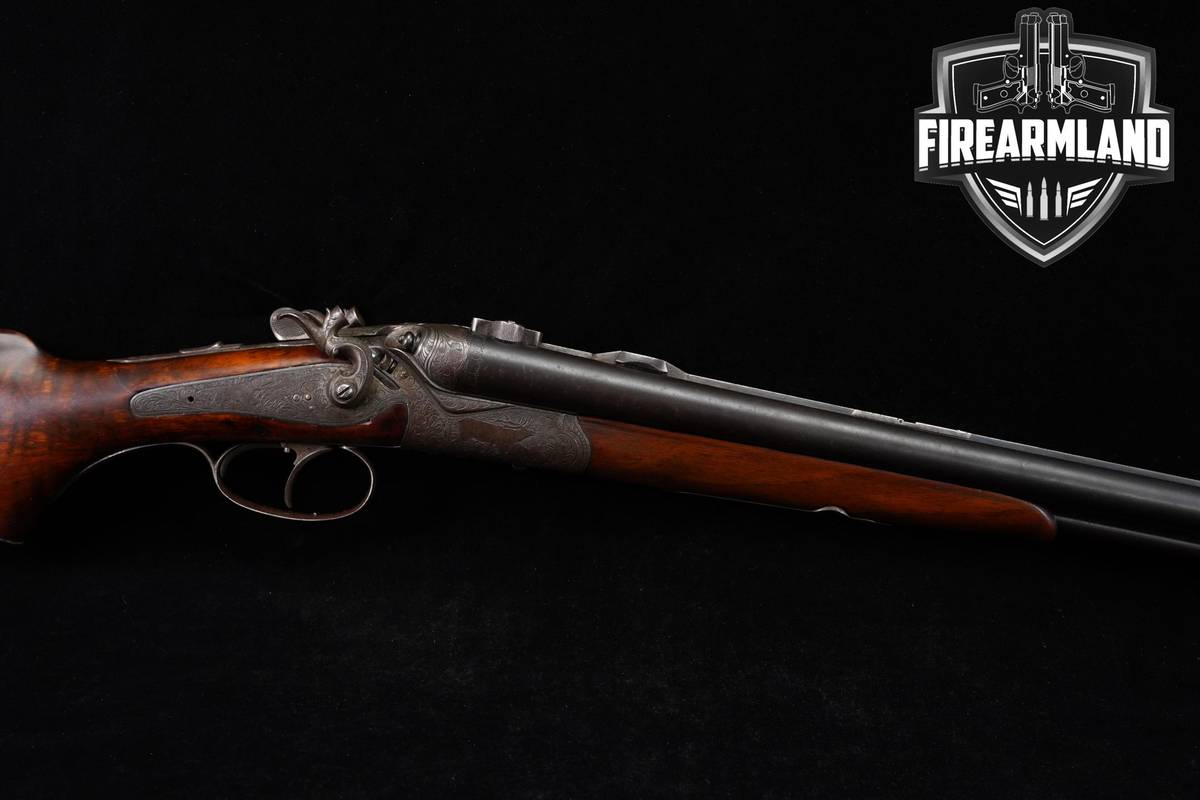
Flusstahl Krupp Essen Drilling, 16 Gauge over 8.8 mm/72, 26.5 in Barrels, Engraved German Hammer Sidelock
This German three-barrel hammer drilling pairs two 16-gauge barrels over a single rifled barrel marked 8.8 mm/72, built with Krupp Essen fluid-steel barrels. It features double Kersten top locking with twin rib extensions and fine scroll engraving with roe deer game scenes on the action panels. Proofed for smokeless powder during the 1912–1939 era, it carries classic German markings and traditional sidelock, double-trigger operation.
Condition
Overall Condition: Poor condition.
Bore Overall Condition: Poor - Noticeable dirt, stains, significant corrosion or damage.
Bore Rifling: Poor Rifling - Rifling heavily worn or filled with fouling or debris.
Specific Condition Details: This firearm is not functional. The hammers are locked into place and cannot be actuated. The rifle is able to be assembled and disassembled. The stock has a large crack.
What's Included
- Flusstahl Krupp Essen Drilling combination gun (16 Gauge over 8.8 mm/72, 26.5 in barrels)
This three-barrel hammer drilling is configured with two 16-gauge shotgun barrels over a single rifled barrel marked 8.8 mm/72. The 26.5 inch Krupp fluid-steel barrels are set under a matted top rib, and the action uses a double Kersten top lock with twin rib extensions for secure engagement.
The break-action, external-hammer sidelock layout is paired with double triggers. Sighting is traditional, with a small front bead and a standing rear sight base near the breech. Capacity is three rounds.
The walnut stock includes a right-hand raised cheekpiece and a splinter forend, with sling swivels installed. It wears a checkered steel buttplate marked Winchester Repeating Arms Co. The length of pull measures 14.0.
Engraving includes fine scrollwork and roe deer game scenes on the action panels. German smokeless proof marks are present, including Nitro; Crown over U, S, W, and G; circled 16; 16/1; 8.8 mm over 72; K.m.G. N 13gr; Fluss(stahl) Krupp Essen; W K; and the serial group noted as EK 218 v k. Country of origin is Germany, with production in the 1912–1939 era.