
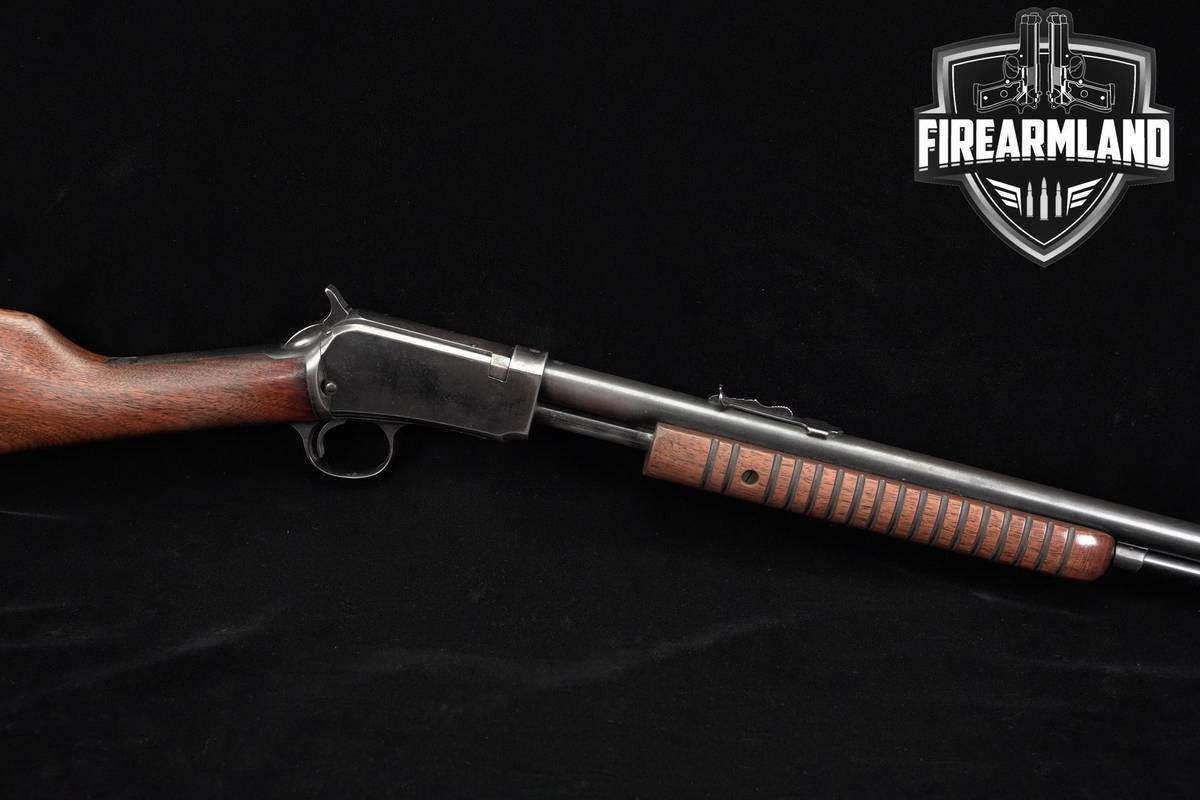
Winchester Model 62A .22 S/L/LR Pump-Action Takedown Rifle, 23-Inch Barrel, Blued Steel/Walnut (1950s)
This Winchester Model 62A is a classic American pump-action .22 from the 1950s, notable for its takedown design, blued steel construction, and walnut stock. It features a 23-inch barrel, top ejection, and a tubular magazine with a removable inner tube. Matching serial markings on the lower tang and receiver and a likely 1954 production date add collector interest.
Condition
Overall Condition: Good condition, showing some signs of prior use and handling.
Bore Condition: Good - Clean, well-maintained, minor wear marks.
Bore Rifling: Good Rifling - Intact, well-defined lands and grooves.
Specific condition notes: The metal shows extensive finish wear. The wood furniture has numerous dents and scratches. There is light pitting across the receiver.
What’s Included
- Winchester Model 62A .22 S/L/LR pump-action rifle
The Model 62A uses Winchester’s takedown system with a large slotted screw, allowing the rifle to separate into major components for transport and maintenance. It has top ejection and an external hammer, paired with a long, grooved slide handle that defines the model’s classic handling characteristics.
Feeding is via a tubular under-barrel magazine with a removable inner tube. Capacity is 15+1, and this example has the standard loading port rather than the triangular gallery cut, aligning it with typical sporting configuration.
Sighting equipment consists of a dovetailed front blade and a barrel-mounted rear leaf with a stepped elevator, giving precise, repeatable adjustments along the barrel plane. The 23-inch steel barrel and blued finish complement the walnut stock’s straight grip and straight comb.
The stock is capped with a black, checkered hard-rubber buttplate bearing the Winchester logo. Length of pull measures 13.0 inches, and the overall construction reflects mid-century Winchester manufacture in the United States.
Based on the serial range, this rifle was likely produced in 1954. Matching serial markings appear on the lower tang and the underside/front of the receiver, a detail appreciated by collectors of period Winchester rimfires.