
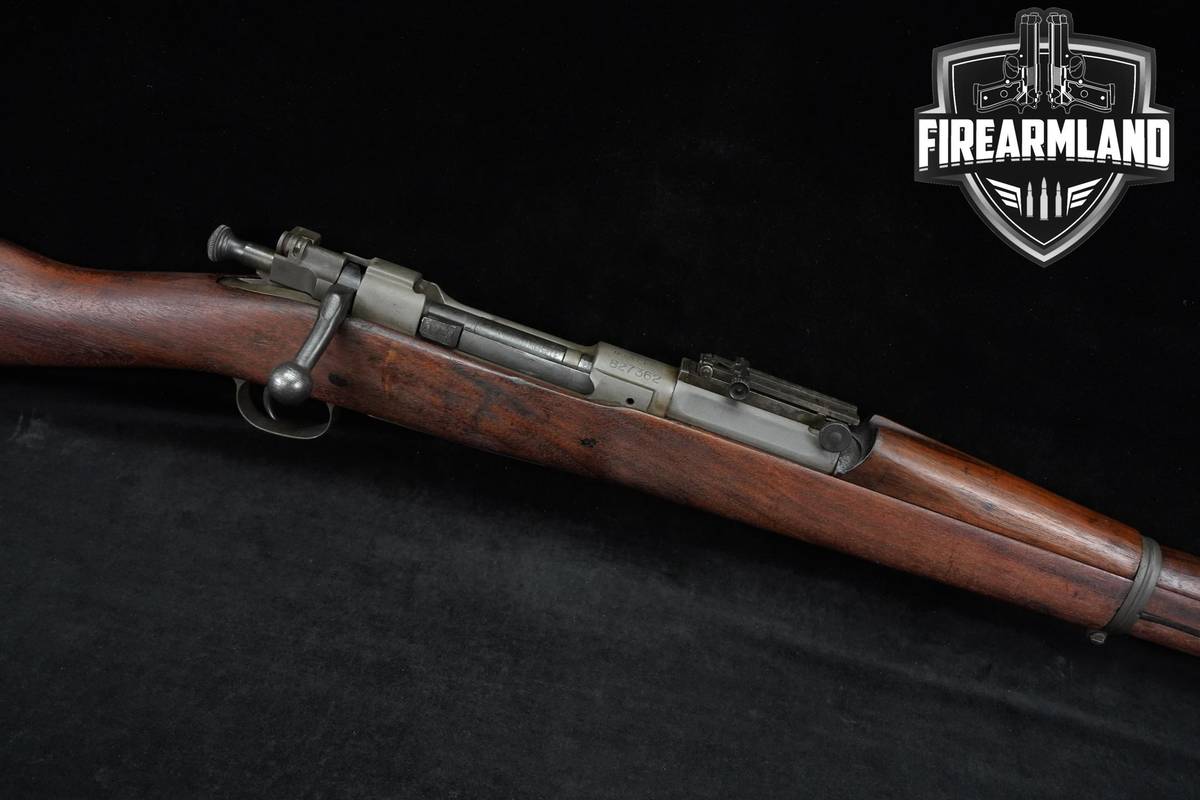
Springfield Armory Model 1903 .30-06 Bolt-Action Rifle, 24 in Barrel, 1918 WWI Production
This 1918 Springfield Armory Model 1903 is a WWI-era .30-06 bolt-action rifle with a 24-inch barrel and forged-steel receiver. Its serial number falls above 800,000, aligning with the improved double heat-treated receivers prized by many collectors. It also features the arsenal-added left-side gas-relief port (Hatcher hole), M1905 pattern ladder rear sight, and period-correct hardwood furniture with inspection proofs.
The rifle retains classic M1903 characteristics: an internal 5-round magazine designed for stripper-clip loading, milled bands and hardware, and a pinned-blade front sight on a fixed base. Markings include the U.S. Springfield Armory receiver legend, a circled P firing proof on the wrist, and an H stamp on the bayonet lug. The bore condition and rifling are both noted as good.
Condition
Overall Condition: Good condition, showing some signs of prior use and handling.
Bore Condition: Good - Clean, well-maintained, minor wear marks.
Bore Rifling: Good Rifling - Intact, well-defined lands and grooves.
Specific Condition Notes: Some wear and scuffs are present from prior use and handling. The safety does not engage the third position to lock the bolt.
What’s Included
- Springfield Armory Model 1903 .30-06 bolt-action rifle
Receiver markings read "U.S. SPRINGFIELD ARMORY MODEL 1903," consistent with 1918 production in the United States. The serial range is above 800,000, corresponding to the double heat-treated receivers associated with this later WWI period. A left-side gas-relief port (Hatcher hole) indicates a subsequent arsenal retrofit intended for added gas venting.
The rifle is chambered in .30-06 with a 24-inch barrel and an internal 5-round magazine configured for stripper-clip loading. The action is bolt-operated, with a forged-steel receiver. The length of pull measures 12.75 inches.
Sighting equipment includes a barrel-mounted M1905 ladder rear sight with windage and elevation adjustments and a pinned-blade front sight. Hardware is milled, with a nose cap/bayonet lug present. Sling swivels and a separate stacking swivel are fitted to the bands, reflecting standard military configuration of the era.
The stock is a full-length hardwood unit with a straight grip and a separate upper handguard, matching the rifle’s WWI configuration. Inspection and proof marks include a circled P on the wrist and an H stamp on the bayonet lug, adding clear period identification to this collectible example.