
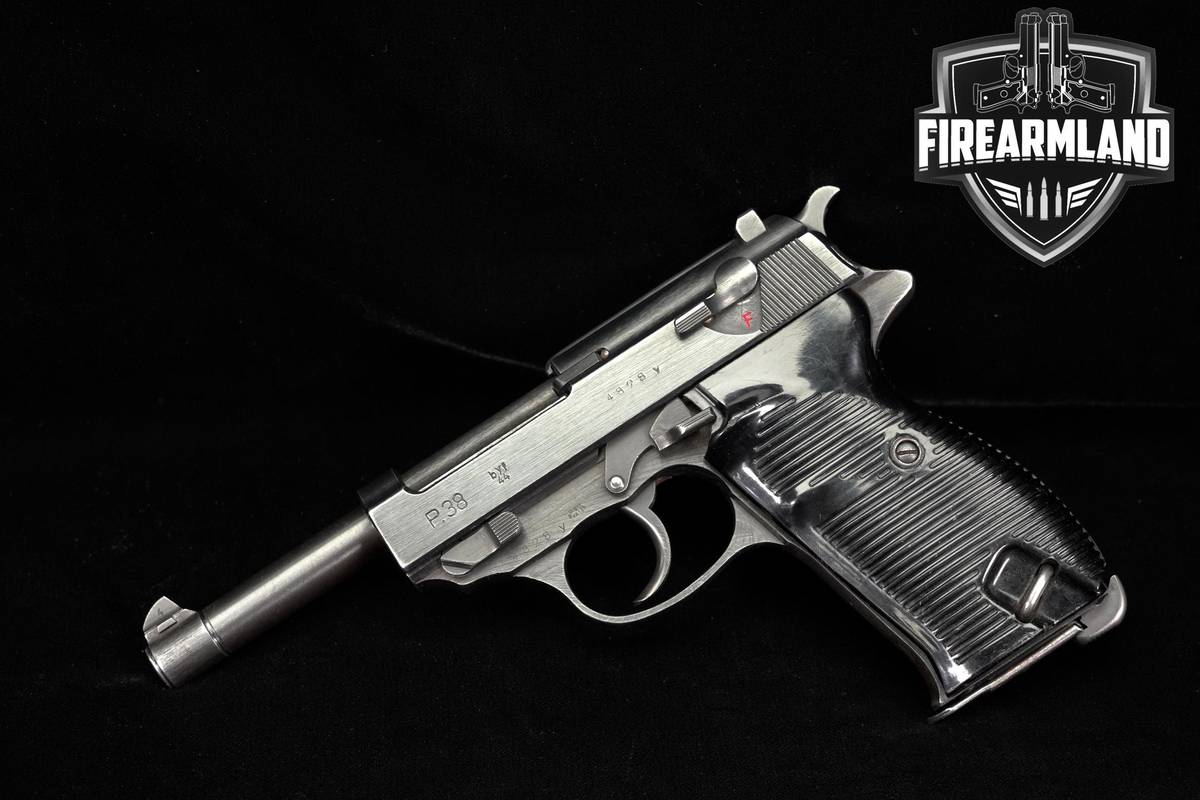
Mauser P.38 byf 44 9mm Luger WWII Pistol, Matching Numbers, WaA135, Blued, 4.9 in Barrel
Mauser P.38 marked with the wartime byf 44 code and E/WaA135 acceptance, made in 1944. This German WWII example has matching serial numbers on the slide, frame, and locking block, a blued carbon-steel construction, and ribbed black phenolic grips. It retains the correct standard P.38 barrel and core P.38 features, presenting as a solid, well-preserved wartime pistol.
Condition
Overall Condition: Very good condition, showing only light, superficial signs of prior handling or use.
Bore Condition: Excellent - Clean, mirror finish, no signs of wear.
Bore Rifling: Excellent Rifling - Sharp lands and grooves.
Specific Condition Notes: Light marks, small dents, and typical handling wear are present, consistent with wartime or postwar examples that saw normal use. The metal shows minor finish wear and faint scratches from carry and storage over the decades. The bore is clean and clear with no pitting, fouling, or significant roughness. The slide-mounted safety does not engage.
What’s Included
- Mauser P.38 byf 44 9mm Luger pistol
- One 8-round steel single-stack P.38 magazine
This is a Mauser wartime-production P.38 identified by the byf 44 code and E/WaA135 acceptance marks. It was manufactured in Germany in 1944 and retains its blued finish over carbon-steel construction, ribbed black phenolic (Bakelite-type) grips, and a lanyard loop at the grip base.
Key matching serial numbers are present on the slide, frame, and locking block. The barrel is the normal, standard pattern for the P.38 and measures 4.9 inches. Chambered in 9mm Luger, it uses the P.38 short-recoil locking-block system with an 8+1 capacity.
The slide features the P.38 open-top design, a slide-mounted safety/decocker, and a loaded-chamber indicator. Sights are fixed, with a driftable front blade marked with height code "4" and a rear notch integral to the slide. An external spur hammer completes the classic P.38 layout.
The bore condition is excellent with a clean, mirror finish and sharp rifling. Overall, this byf 44 example combines correct wartime markings, matching-numbered major components, and the core mechanical features that define the WWII-era P.38.