
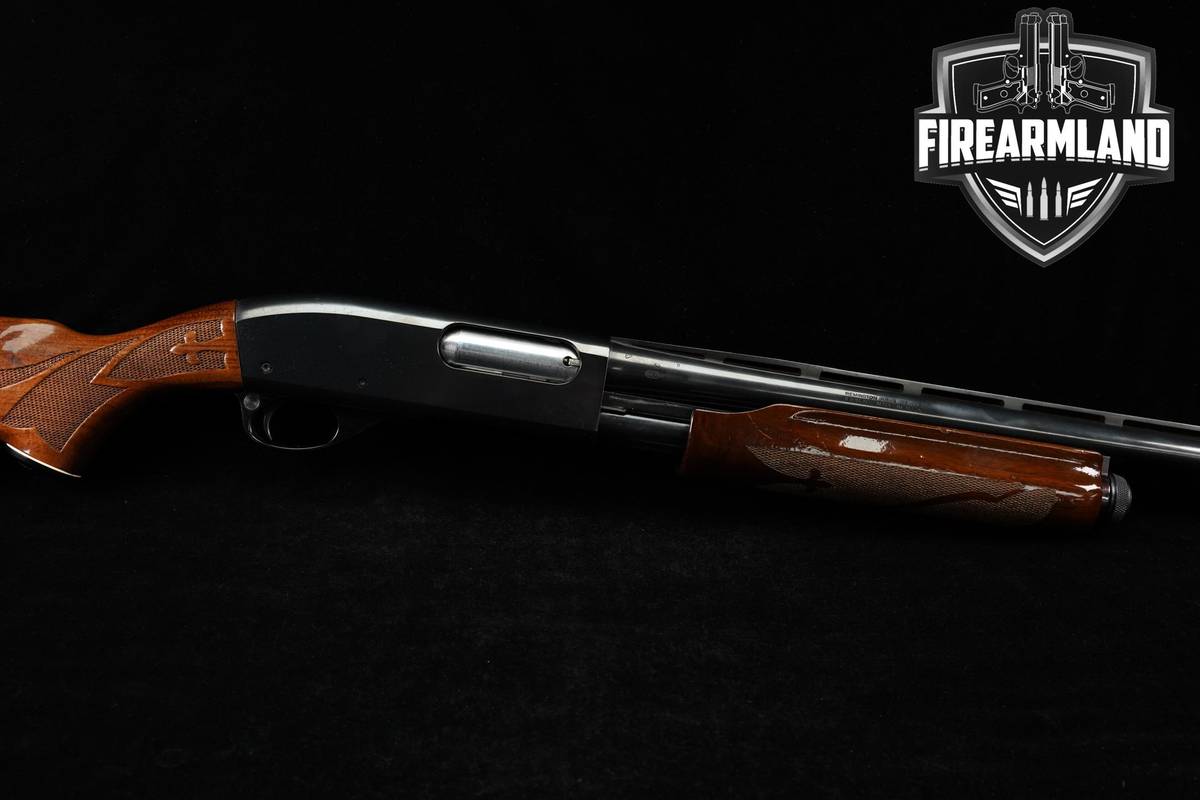
Remington Model 870 Wingmaster 12 Gauge, 28-inch Vent Rib Barrel, 2 3/4-inch Chamber, High-Polish Blue
This Remington 870 Wingmaster is a classic American-made field gun with desirable Wingmaster fit and finish. It features a 28-inch ventilated rib barrel with a single silver bead, high-polish blued steel throughout, and gloss walnut furniture with pressed fleur-de-lis checkering. The receiver carries the Wingmaster rollmark, and the barrel shows the Ilion, N.Y. address and star-marked "12 GA. FOR 2 3/4 IN.
SHELLS" designation. Its V-suffix receiver denotes a 12-gauge, 2 3/4-inch configuration, with V-prefix production associated with the late 1970s to early 1980s.
Condition
Overall Condition: Good condition, showing some signs of prior use and handling.
Bore Condition: Excellent - Clean, mirror finish, no signs of wear.
Specific Condition Notes: The receiver shows areas of pitting. The magazine tube and stock have noticeable scratches.
What’s Included
- Remington Model 870 Wingmaster 12 Gauge shotgun with 28-inch ventilated rib barrel
The 28-inch field barrel is topped with a ventilated rib and a single silver bead for a clean, traditional sight picture. The barrel is clearly marked "12 GA. FOR 2 3/4 IN. SHELLS" with a preceding star symbol, and carries the Remington Arms Co., Inc., Ilion, N.Y. address.
The receiver and barrel wear a high-polish blued finish over steel, complemented by a chrome-finished bolt. The shotgun uses right-side ejection with a bottom loading port and a knurled magazine cap for straightforward field handling. Capacity is 4+1.
The walnut stock and fore-end present Remington’s Wingmaster styling cues, including pressed fleur-de-lis checkering, a black grip cap with white-line spacer and flying-bird medallion, and a Remington-branded brown ventilated recoil pad with a white-line spacer. Length of pull measures 13.75 inches.
Model markings include the Remington Wingmaster Model 870 rollmark on the receiver. The V-suffix receiver denotes the 12-gauge, 2 3/4-inch configuration, with V-prefix production commonly associated with the late 1970s to early 1980s.