
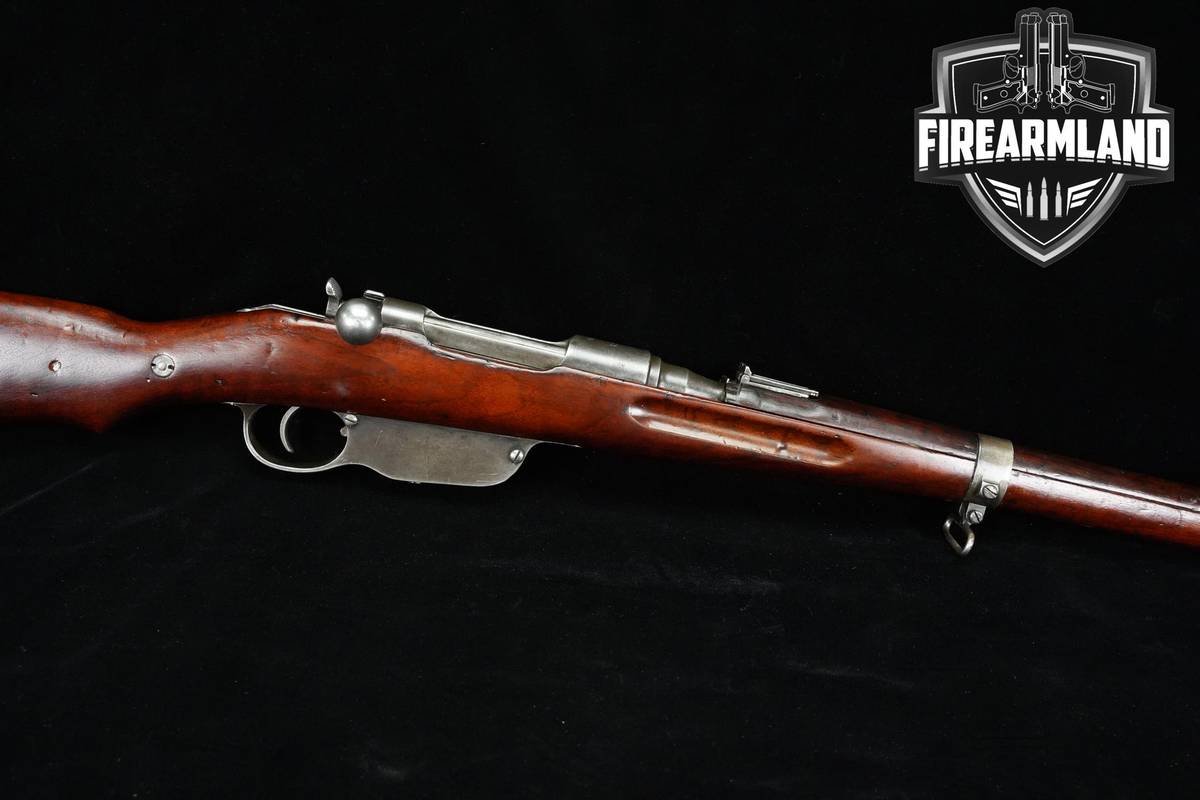
Mannlicher-Steyr M95 Stutzen S-Conversion 8x56mmR Straight-Pull, 19.8 in Barrel, 1918 Austrian WWI Short Rifle
Steyr-made M95 Stutzen short rifle with arsenal S conversion to 8x56mmR, accepted in Vienna in 1918 and marked "STEYR M95" on the receiver. This WWI-era Austrian example retains the full Stutzen configuration with bayonet lug, stacking hook, and full-length handguard. It uses the Mannlicher en-bloc system (clip not included) and features a hooded front sight, tangent ladder rear sight, and left-side sling swivels.
Condition
Overall Condition: Good condition, showing some signs of prior use and handling.
Bore Condition: Good - Clean, well-maintained, minor wear marks.
Rifling: Good Rifling - Intact, well-defined lands and grooves.
Specific Condition Notes: There are scratches and blemishes present. The receiver, some controls, and the barrel bands show areas of finish loss. The hardwood stock has scratches and blemishes throughout. The bore is clean and shiny. The bolt is non-matching to the receiver and barrel.
What’s Included
- Mannlicher-Steyr M95 Stutzen short rifle (arsenal S conversion to 8x56mmR)
This Steyr-made M95 Stutzen is a WWI-era short rifle with a 19.8-inch barrel, receiver marked "STEYR M95," and Vienna acceptance "Wn [eagle] 18" with additional "K" inspection marks. It reflects 1918 production and Austrian origin, aligning with late-war acceptance.
The rifle underwent the arsenal S conversion to 8x56mmR, paired with the original straight-pull action. It uses the Mannlicher en-bloc clip system; the clip is not included. As listed, the rifle is set up with a 1-round capacity because it lacks the en-bloc clip required for feeding.
It retains the Stutzen pattern features: a full-length handguard and a distinctive nosecap with bayonet lug and stacking hook. The stock is oil-finished hardwood with finger grooves and left-side sling swivels, and the length of pull measures 13.25 inches.
Sighting equipment consists of a hooded front sight and a tangent rear sight with a ladder. The configuration is consistent with period service features and complements the compact Stutzen profile.
Additional collecting notes include a non-matching bolt to the receiver and barrel, and faint unit or rack markings on the buttstock. These attributes align with service use while preserving identifiable markings and configuration details.