
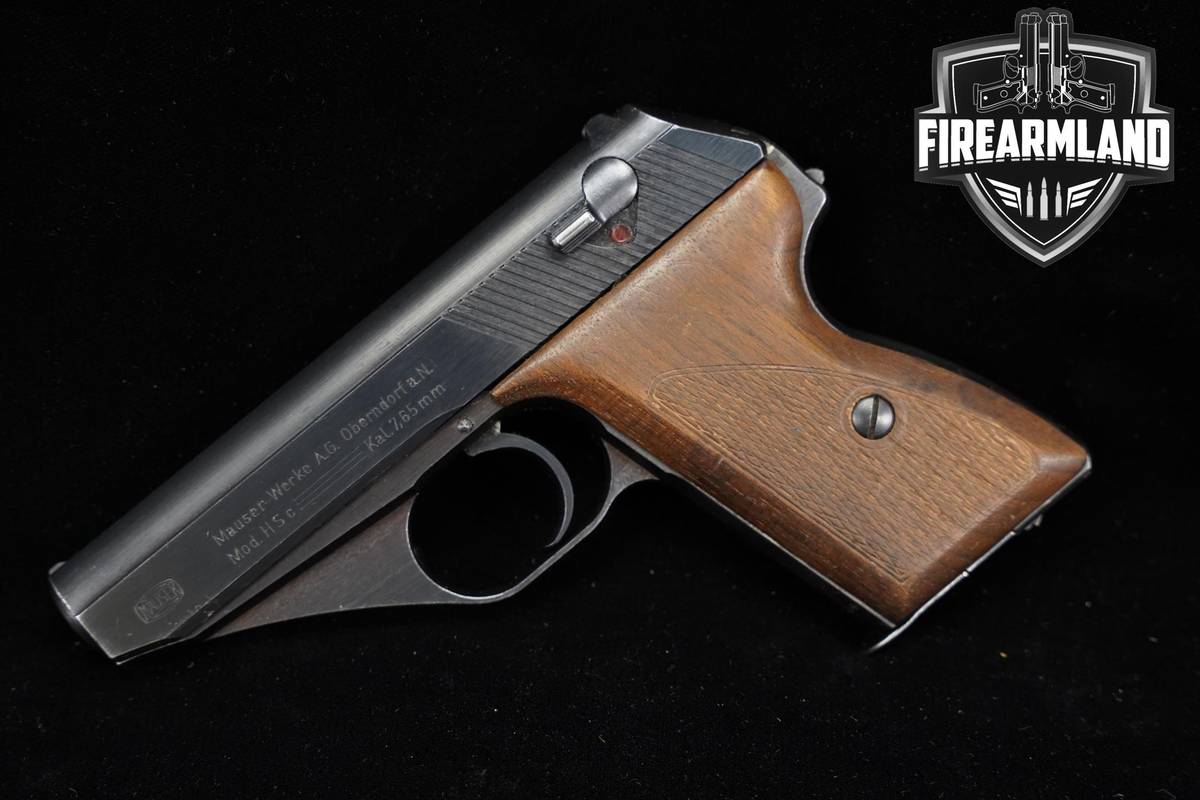
Mauser HSc .32 ACP Army-Accepted Fifth Variation (eagle/WaA135), WWII 1944, Blued, 3.2" Barrel, 8+1
This Mauser HSc is an Army-accepted Fifth Variation pistol from 1944, chambered in .32 ACP and built in Germany during WWII. It carries the eagle/WaA135 acceptance mark and the correct three-line left slide legend for this variation. The compact, blued-steel DA/SA design features the HSc’s fixed barrel with concentric recoil spring and hallmark wartime features, making it a notable example of a late-war service-accepted HSc.
Condition
Overall Condition: Good condition, showing some signs of prior use and handling.
Bore Overall Condition: Good - Clean, well-maintained, minor wear marks.
Bore Rifling: Good Rifling - Intact, well-defined lands and grooves.
Specific Condition Details: The pistol has experienced some minor finish blemishing. There are scratches present as well. Minor pitting is present. The bore is clean and shiny.
What’s Included
- Mauser HSc .32 ACP pistol
- 2x 8-round steel single-stack magazines (flat-base)
- Leather flap holster with external spare-magazine pouch
This Army-accepted Fifth Variation HSc carries the eagle/WaA135 mark on the left trigger-guard web and the correct three-line left slide legend associated with late-war production. Its production falls within the Fifth Variation serial block of 887,856-951,629, and the serial number is stamped on the front strap as expected for this variant.
The pistol is a compact .32 ACP with a fixed barrel and concentric recoil spring in a straight blowback system. It uses a DA/SA trigger with a manual safety and magazine disconnect, along with a heel-type magazine catch. There is no external slide stop, and the slide wears diagonal rear serrations.
Construction is all steel with a blued finish on the frame, slide, and receiver, paired with checkered wooden grip panels. Sighting is straightforward and durable, consisting of a fixed front blade and an integral rear notch.
Capacity is 8+1 with the included steel single-stack magazines. The 3.2" barrel and compact size make it a representative wartime HSc configuration, and the acceptance marks and configuration details align with 1944 Army-accepted production.