
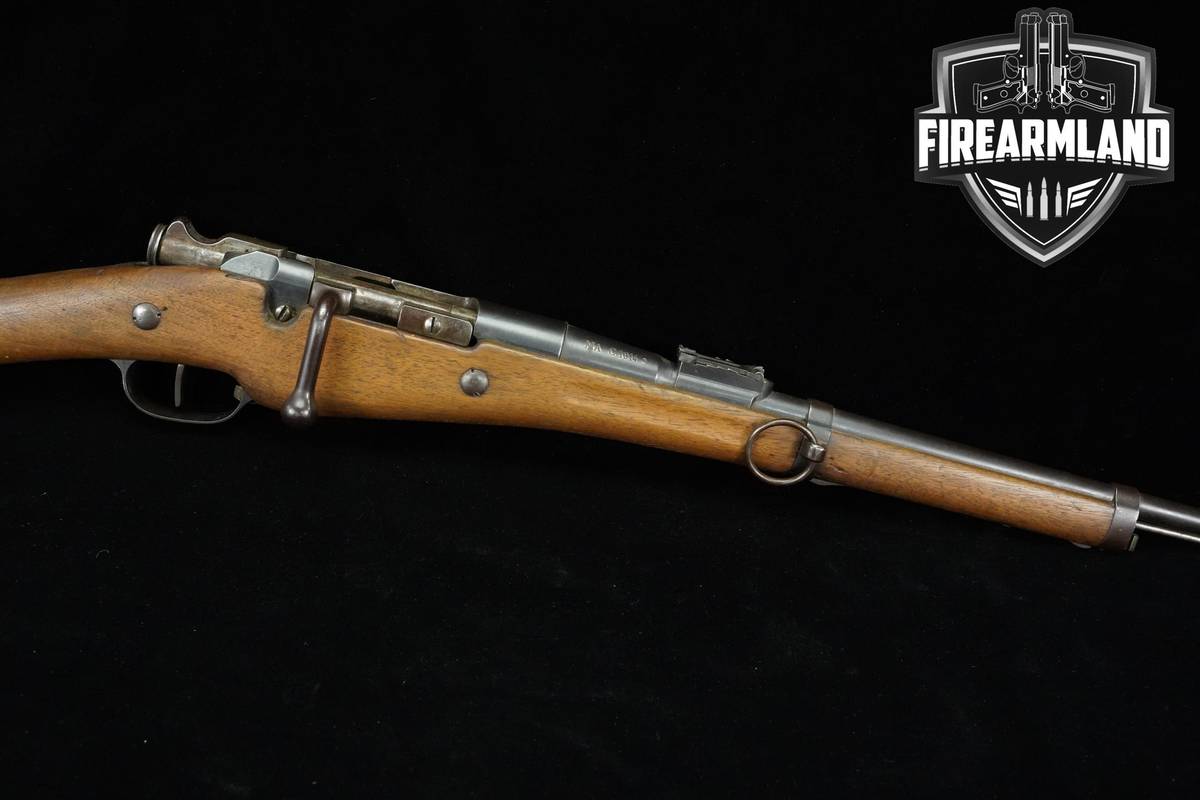
Châtellerault Mle 1892 MD Mousqueton d’Artillerie 8mm Lebel Bolt-Action Carbine, 18.5 in Barrel (France, 1913)
This French Mle 1892 MD artillery carbine is a 1913-dated example with clear Châtellerault arsenal markings, matching serials on key components, and its original pre-M16 flush internal magazine configuration. It features an 18.5 in barrel, blued steel receiver, one-piece full-length hardwood stock, and several correct small parts including the stacking ring and steel buttplate left in the white. Notably, no "N" conversion stamp is observed.
Condition
Overall Condition: Fair condition, showing extensive signs of prior use and handling.
Bore Condition: Good - Clean, well-maintained, minor wear marks.
Bore Rifling: Good Rifling - Intact, well-defined lands and grooves.
Specific Condition Notes: There are notable handling and use marks throughout. The bore presents well for its age.
What's Included
- Châtellerault Mle 1892 MD Mousqueton d’Artillerie rifle (as described)
Receiver markings read "Châtellerault MLE 1892 MD," with the barrel shank stamped "MA C 1914." Inspector and controller marks are present, including three circled inspector letters above the left-side serial and a small controller mark on the barrel shank. Country of origin is France.
This carbine retains the original pre-M16 flush internal magazine and uses a Mannlicher-type en-bloc charger feed system. The one-piece, full-length hardwood stock and protective handguard are intact, and the steel buttplate remains in the white. Overall finish is blued on the steel receiver and components.
Sighting equipment includes a rectangular post front and a short tangent/ramp rear sight with a sliding cursor, consistent with the model’s service configuration. Barrel length is approximately 18.5 in, and the length of pull measures 12.75 in.
Collector-relevant details include matching serials on the receiver and triggerguard with matching bolt components, a correct stacking ring on the forward/middle barrel band, and the absence of an "N" conversion stamp. These features, combined with intact arsenal markings, underscore its period-correct configuration.