
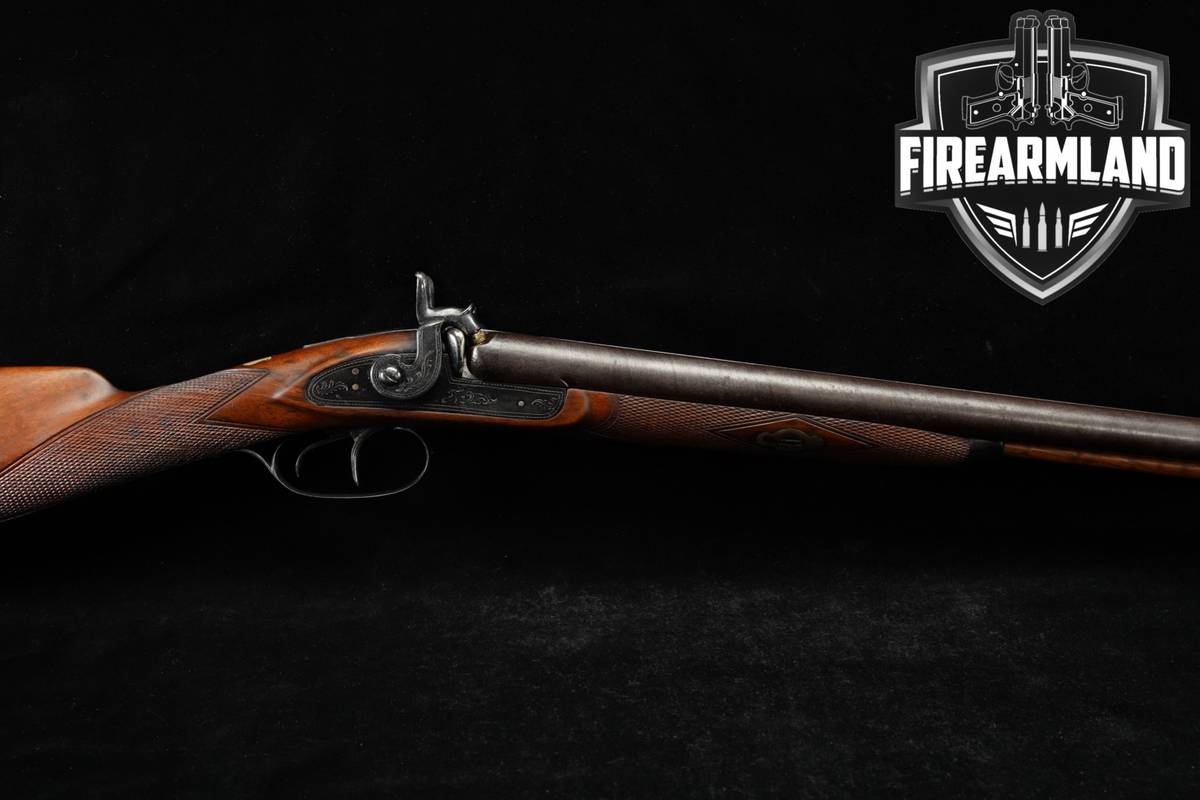
Belgian 12 Gauge Side-by-Side Percussion Muzzleloader, 32" Damascus Barrels, Engraved, Antique
This antique Belgian side-by-side percussion shotgun stands out with its 32" Damascus barrels, back-action locks, and classic double-trigger layout. Attributed to Liège trade manufacture with no maker's name visible, it features scroll/foliate engraving and an English-style checkered walnut stock with an inlaid white-metal shield. It is a well-configured 12 gauge percussion double that combines desirable period features with an attractive traditional profile.
Condition
Overall Condition: Good condition, showing some signs of prior use and handling.
Bore Condition: Good - Clean, well-maintained, minor wear marks.
Specific Condition Notes: The wood presents nicely with mild scuffs, light wear, and small areas of chipping. The receiver finish is flaking, and mild to moderate pitting is visible. The top rib shows an attempted etched marking made with multiple punch marks.
What's Included
- Belgian 12 Gauge side-by-side percussion muzzleloading shotgun
This side-by-side double-barrel percussion shotgun uses back-action locks with external spur hammers and double triggers, delivering a period-correct setup popular in mid-19th-century Belgian trade guns. The trigger guard is steel, engraved, and fitted with a long tang, complementing the engraved lockplates and furniture.
The 32" Damascus/twist barrels are a highlight, with a raised solid top rib and a full-length under-rib. Each breech carries a percussion bolster and nipple, and the gun is configured for two shots. The damascus barrels provide the distinctive patterning associated with traditional twist construction.
The woodwork follows an English influence, with a straight walnut stock and hand-cut checkering at the wrist. A slender, checkered forend with a metal tip is retained by two transverse wedge keys with escutcheons, while a steel buttplate with a long top tang anchors the rear. Length of pull measures 14.25".
Scroll and foliate engraving appears on the lockplates and furniture, adding period character. The gun is attributed to Liège (Belgium) trade manufacture, with no maker's name visible and serial number exempt, aligning with common practices for trade-produced percussion doubles of the era.