
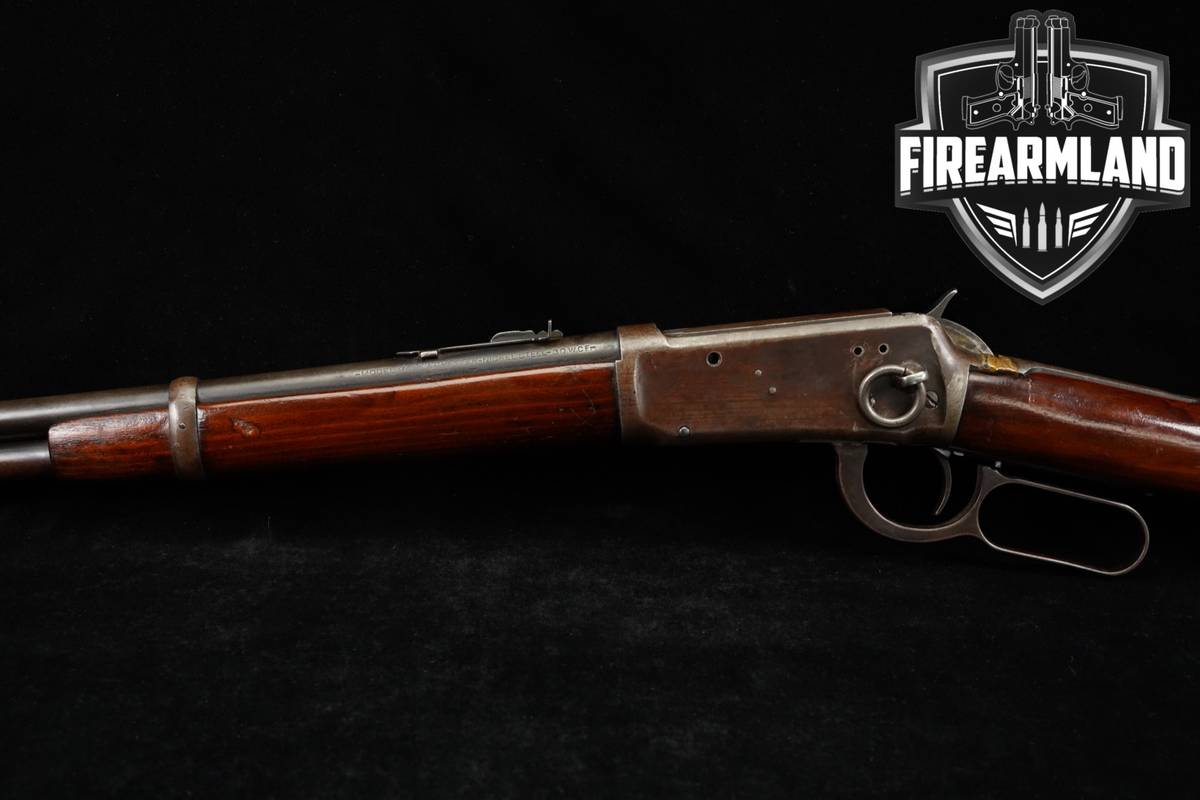
Winchester Model 1894 Saddle Ring Carbine .30-30, 20-Inch Nickel Steel Barrel, 1911 Pre-WWI Top-Eject
This 1911 Winchester Model 1894 Saddle Ring Carbine is a pre‑WWI .30-30 with classic carbine configuration and desirable transitional rollmarks. It features a 20-inch round Nickel Steel barrel, a top-eject receiver, and a full-length tubular magazine to the muzzle. The stock is straight-grip walnut with a steel carbine buttplate, and the barrel and receiver wear a blued finish.
Condition
Overall Condition: Fair condition, showing extensive signs of prior use and handling.
Bore Overall Condition: Fair - Generally clean, some residue or smudges, slight corrosion.
Bore Rifling: Fair Rifling - Worn rifling, slight loss of definition.
Specific Condition Notes: There are signs of repair to the tang; it appears to have been brazed back together. Scratches, scuffs, and dents are present throughout.
What's Included
- Winchester Model 1894 Saddle Ring Carbine rifle
This carbine retains the saddle ring and stud on the receiver, reflecting its traditional field-carry configuration. It uses a standard lever loop and a full-length tubular magazine with a stated 6+1 capacity. The receiver is the classic top-eject type with no holes on the top, maintaining the original 1894 profile.
The barrel and tang markings are the sought-after transitional style: the barrel reads "MODEL 94 - WINCHESTER - NICKEL STEEL - 30 W.C.F." while the upper tang is marked "MODEL 1894 - WINCHESTER." The Nickel Steel barrel denotes Winchester’s smokeless-era alloy and is paired with a blued finish.
Sighting equipment is the correct carbine setup: a front sight blade on the front barrel band and an adjustable rear sight with an elevator. Two small plugged holes on the left receiver wall are consistent with period receiver sight mounting and are cleanly finished.
The straight-grip walnut carbine stock with steel carbine buttplate delivers the familiar 1894 carbine handling, with a 13.0-inch length of pull. Manufactured by Winchester Repeating Arms Co. in New Haven, Connecticut, this example dates to 1911, solidly within the pre‑WWI era.