
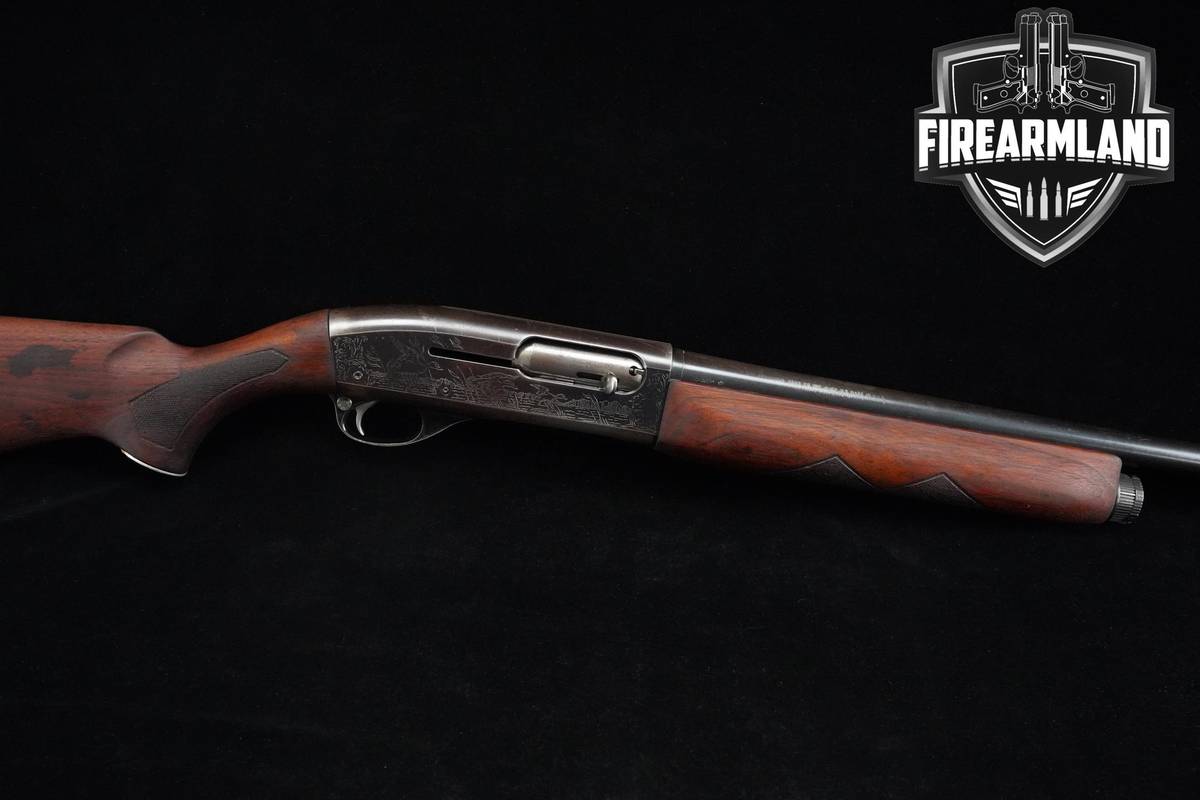
Remington Sportsman-58 12 Gauge Semi-Auto Shotgun, Factory-Engraved Upland Scene, 2 3/4 Inch Chamber, Plain Barrel with Fixed Modified Choke
This Remington Sportsman-58 stands out as Remington’s first gas-operated autoloading shotgun, produced in the 1956–1963 era. It features factory roll engraving with an upland hunting scene of dogs and birds on a blued steel receiver, a plain barrel with a fixed Modified choke, and classic checkered walnut-tone wood. An aftermarket round coin inlay is set into the underside of the buttstock, adding a distinctive touch to this 12 gauge, 2 3/4 inch chambered example.
Condition
Overall Condition: Fair condition, showing extensive signs of prior use and handling.
Bore Overall Condition: Good - Clean, well-maintained, minor wear marks.
What’s Included
- Remington Sportsman-58 12 Gauge semi-automatic shotgun
Introduced in 1956 and discontinued in 1963, the Sportsman-58 marked Remington’s move to a gas-operated autoloading design. Approximately 271,000 were produced in the USA, and the model later gave way to the Model 1100. Designers credited for the platform are L.R. Crittendon, P.R. Haskell, and E.W.
Hailston.
The action is gas-operated and semi-automatic with right-side ejection. It uses a round bolt handle and a knurled magazine/forend cap for straightforward handling and maintenance. The receiver is steel with a blued finish, matching the overall blued exterior.
Chambered in 12 gauge with a 2 3/4 inch chamber, this shotgun has a plain barrel (no rib) and a fixed Modified choke. A single front bead provides a clean and simple sighting reference.
The receiver is factory roll-engraved with an upland hunting scene featuring dogs and birds. Furniture includes a walnut-tone checkered pistol-grip stock with a Remington-logo hard buttplate and a long checkered wood forend. An aftermarket round coin inlay is installed on the underside of the buttstock.
Dating for this era of production uses Remington’s two-letter barrel date code. The shotgun has a visible serial on the receiver consistent with factory practice of the period.