
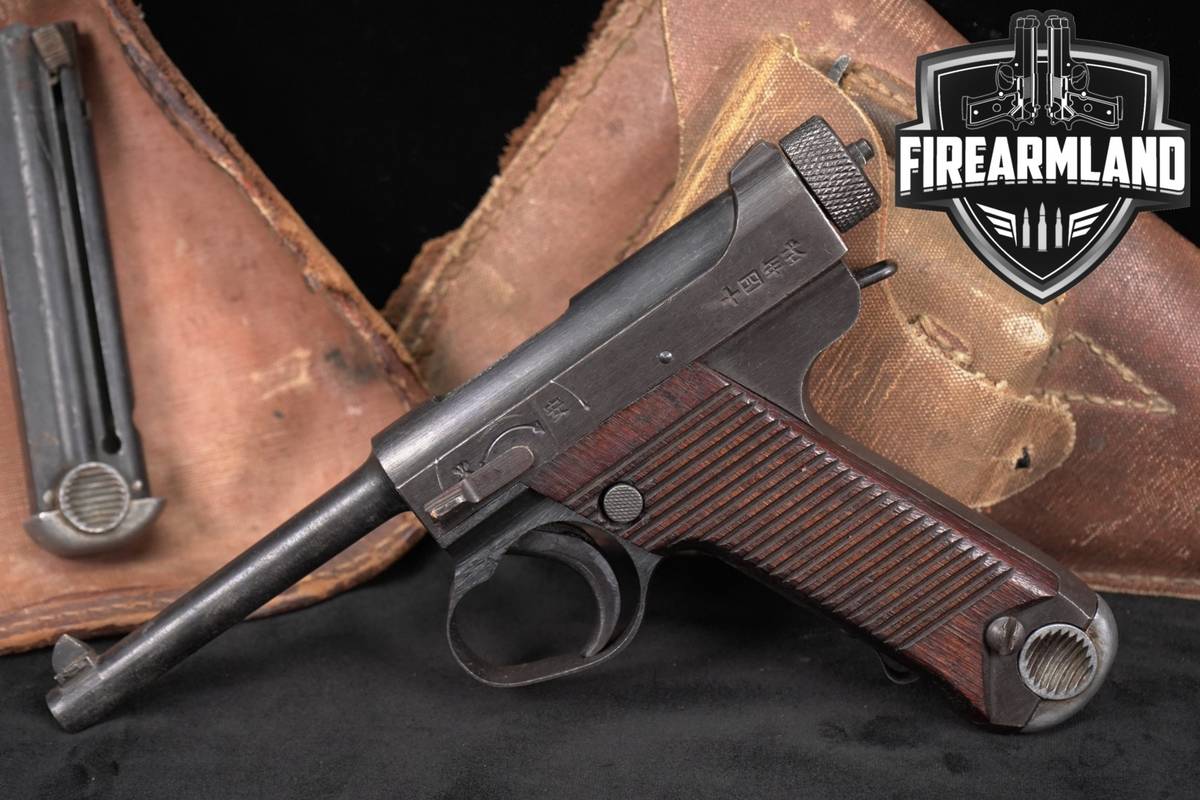
Nagoya Arsenal Type 14 Nambu 8x22mm, Late-War 1944 Toriimatsu, 4.6 in Barrel, WWII Japanese Pistol with 2 Magazines and Holster
This Nagoya Arsenal (Toriimatsu) Type 14 Nambu is a late-war, July 1944 production pistol identified by its enlarged oblong trigger guard and correct Toriimatsu factory markings. It retains clear Japanese model and date legends, includes two proper Type 14 magazines with large circular knurled base plugs, and comes with a period canvas/rubberized fabric clamshell holster with leather trim. A full-size WWII Japanese sidearm chambered in 8x22mm Nambu, it presents a distinctive set of original features from this production period.
Condition
Overall Condition: Good condition, showing some signs of prior use and handling.
Bore Condition: Good - Clean, well-maintained, minor wear marks.
Bore Rifling: Good Rifling - Intact, well-defined lands and grooves.
Specific Condition Notes: The pistol shows notable finish loss with areas of pitting and rust. The chamber is clean, and the rifling appears sharp and shiny.
What's Included
- Type 14 Nambu canvas/rubberized fabric clamshell flap holster with leather trim with external spare-magazine sleeve
- Two 8-round Type 14 Nambu steel magazines with large circular knurled base plugs
- Case
Produced at the Nagoya Arsenal Toriimatsu factory in Showa 19.7 (July 1944), this late-pattern Type 14 features the enlarged oblong trigger guard associated with wartime updates. It uses the one-piece upper receiver and barrel with an integral fixed rear notch, consistent with this period of manufacture.
The right side of the receiver carries the Japanese model legend "十四年式" alongside the Showa 19.7 date stamp. Additional marks include the kana series mark "ロ" and the Nagoya Arsenal Toriimatsu factory emblem, providing clear provenance as a WWII Japanese service pistol.
Chambered in 8x22mm Nambu, the pistol is short-recoil, locked-breech, and striker-fired. It has a knurled rear cocking knob, a left-side manual safety, and a left-side push-button magazine release. Sighting is via fixed iron sights with a front blade and a rear notch. The steel frame and receiver are paired with wood grip panels featuring horizontal grooves.