
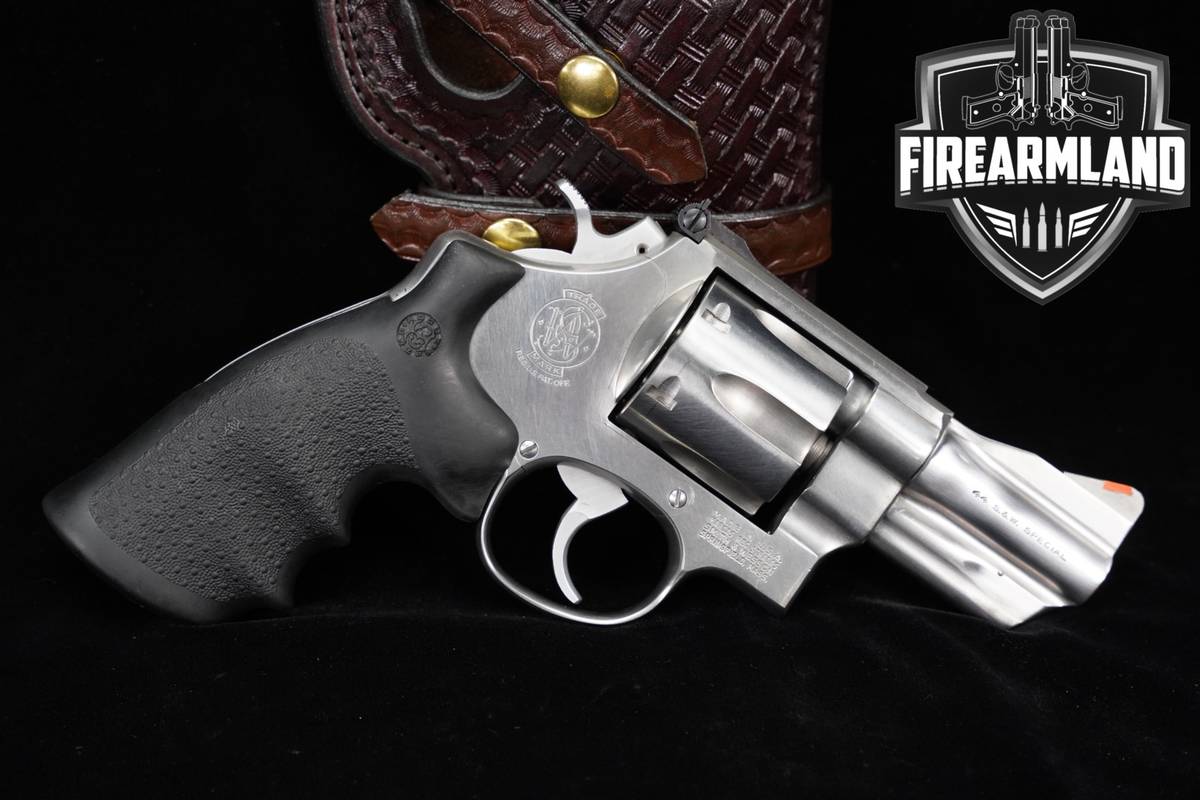
Smith & Wesson Model 624 .44 Special, 3-Inch Stainless DA/SA Revolver (1985–1986) – Adjustable Sights, 6-Shot
This Smith & Wesson Model 624 is a full-size, stainless .44 Special revolver with a desirable 3-inch barrel from the mid-1980s. It pairs a satin/brushed stainless finish with DA/SA operation, a smooth-face trigger, and a six-shot fluted cylinder. Micrometer-adjustable rear sights and a pinned red/orange ramp front sight round out a feature set that appeals to shooters and collectors alike.
Condition
Overall Condition: Very good condition, showing only light, superficial signs of prior handling or use.
Bore Overall Condition: Excellent - Clean, mirror finish, no signs of wear.
Bore Rifling: Excellent Rifling - Sharp lands and grooves.
Specific Condition Notes: The revolver shows minor signs of prior use, and the cylinder chambers are clean.
What’s Included
- Basketweave leather holster with dual snap-strap retention
The 3-inch barrel is stainless steel with an underlug/ejector-rod shroud and a serrated rib/topstrap. This compact barrel length, commonly associated with mid-1980s distributor runs (provenance not confirmed), contributes to the model’s appeal within the 624 lineup.
The revolver operates in double-action/single-action and features a smooth-face trigger and exposed hammer. Its six-shot fluted cylinder has non-recessed chambers and a knurled ejector rod, all finished to match the satin/brushed stainless look of the frame and barrel.
Sighting equipment includes a pinned red/orange ramp front and a micrometer-adjustable rear with a white-outline notch. These iron sights provide a well-defined picture that complements the revolver’s .44 Special chambering.
Markings and details include the large S&W trade mark crest on the left sideplate, model designation on the yoke cut, and assembly numbers observed on the yoke cut. Production dates are 1985–1986, and the revolver was made in the United States.
Collector note: An "F" stamp is present on the rear face of the cylinder. This mark appears in collector discussions related to Smith & Wesson’s 1985 safety notice; however, it is not a definitive indicator of inspection status.