
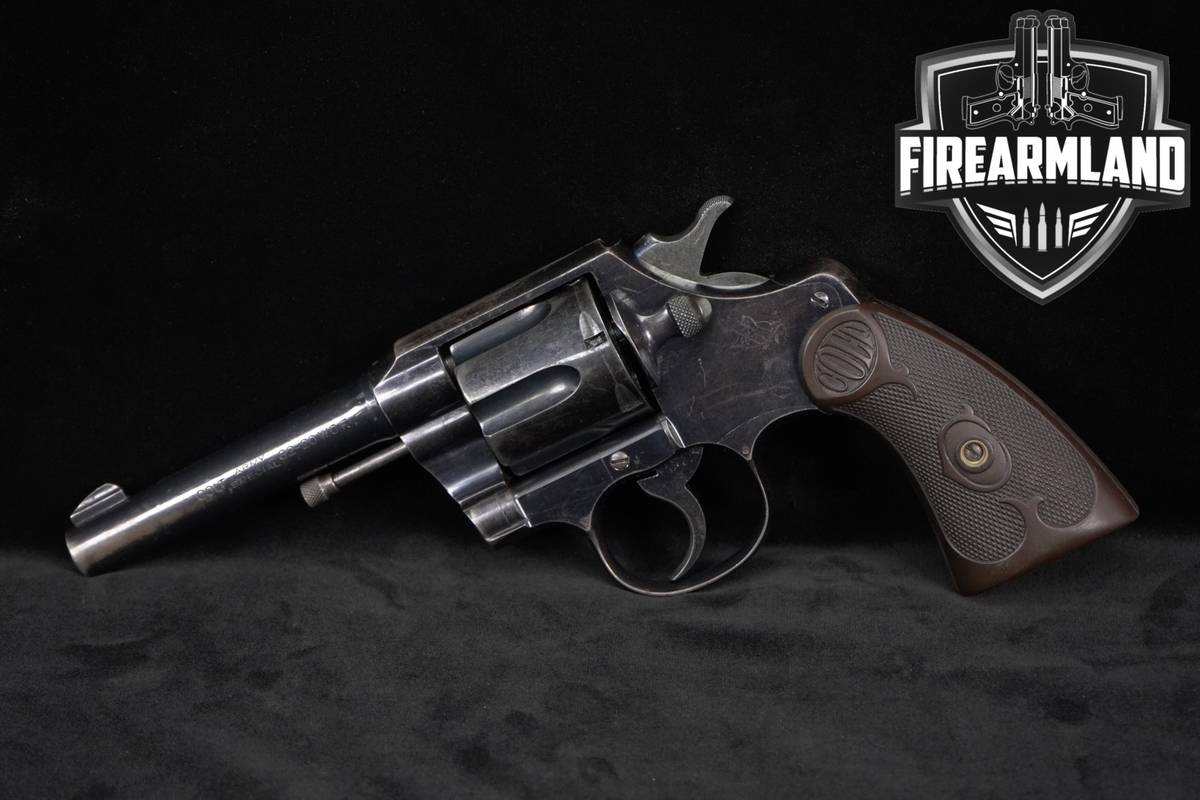
Colt Army Special .32-20 Revolver, 4.5 Inch Barrel (1911) - Blued E-Frame, Six-Shot DA/SA
Early 1911 production Colt Army Special chambered in .32-20 Win., featuring a measured 4.5 inch barrel length noted as a non-catalog length for this model. This E-frame, six-shot DA/SA revolver carries period-correct markings, factory hard-rubber stocks, and blued carbon-steel construction. A transitional design that later evolved into the Official Police, it offers desirable early features and clear model-specific rollmarks.
Condition
Overall Condition: Fair condition, showing extensive signs of prior use and handling.
Bore Overall Condition: Good - Clean, well-maintained, minor wear marks.
Bore Rifling: Good Rifling - Intact, well-defined lands and grooves.
This firearm is in solid shape, especially considering its age. Expect scratches, blemishes, and areas of finish wear. Small, infrequent spots of pitting are present on the finish. The bore is clean and shiny, and the rifling shows some blemishing.
What's Included
- Colt Army Special .32-20 revolver
This Army Special is an E-frame Colt double-action/single-action revolver with a six-shot fluted cylinder, unshrouded ejector rod, and a square-butt grip frame. It incorporates Colt's positive internal safety system, a smooth-faced trigger, and an exposed hammer with a checkered spur.
The revolver is built on carbon-steel components with a blued finish across the frame, cylinder, barrel, and receiver. It wears factory checkered hard-rubber stocks molded with the 'COLT' oval logo and decorative 'C' scroll.
Sighting is via fixed iron sights: a half-moon blade up front and a U-notch groove cut into the top strap at the rear. The measured barrel length is 4.5 inches, a non-catalog length reported for this model.
Markings include a barrel-top address with patent dates, the .32-20 W.C.F. rollmark on the barrel, and the Rampant Colt logo on the left frame. The serial number location was observed on the crane/yoke. Manufactured in 1911, this model represents the transitional design that preceded Colt's renaming of the line to Official Police in 1927.