
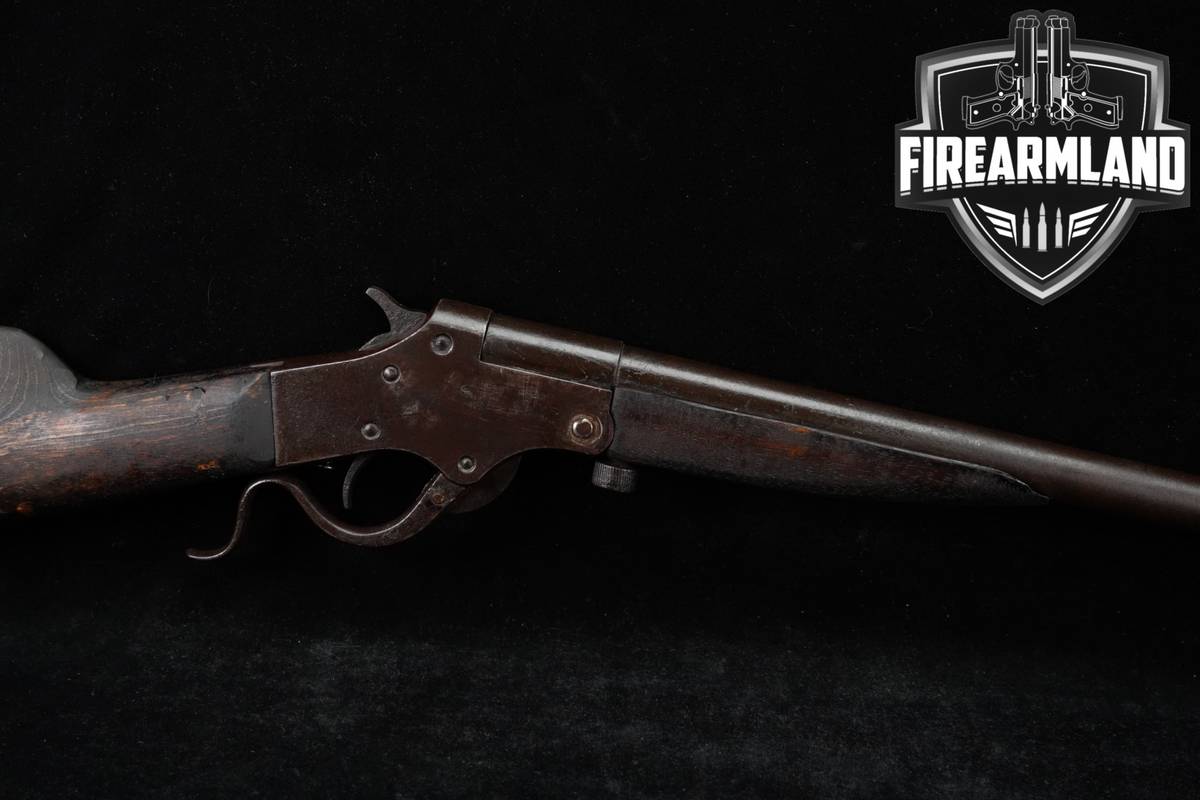
J. Stevens A. & T. Co. Tip-Up .44 Shot Single-Shot, 26-Inch Smoothbore, Antique (1888–1895)
This antique J. Stevens A. & T. Co. Tip-Up is a U.S.-made, single-shot .44 Shot smoothbore produced between 1888 and 1895.
It features the maker's Chicopee Falls address on the receiver, a 26-inch round barrel marked "44-SHOT," and the classic tip-up action operated by an S-curved under-lever integrated with the trigger guard. Its external hammer with a checkered spur, single trigger, and extractor round out a period-correct configuration that appeals to collectors of early Stevens firearms.
Condition
Overall Condition: Poor condition.
Bore Condition: Fair - Generally clean, some residue or smudges, slight corrosion.
Specific Condition Notes: The action is bound and the hammer cannot be brought to the rear. The under-lever opens the action normally. The metal shows widespread finish wear with patina, along with scratches and blemishes throughout. The stock's set screw has been replaced with a hardware screw.
What’s Included
- J. Stevens A. & T. Co. Tip-Up single-shot rifle in .44 Shot
Built in Chicopee Falls, Massachusetts, this Tip-Up carries the receiver marking "J. STEVENS A. & T. CO., CHICOPEE FALLS, MASS., U.S.A." and the barrel is plainly stamped "44-SHOT." The production window of 1888–1895 places it firmly in the early Stevens Arms & Tool era and qualifies it as an antique.
The action is the hallmark tip-up/hinged design, operated by an S-curved under-lever that is integrated with the trigger guard. It uses a single trigger with an external hammer featuring a checkered spur, and it includes an extractor. Capacity is one round.
The 26-inch round smoothbore barrel is configured for .44 Shot and retains its original form. Up front, a splinter forend is secured by a single underside/belly screw into the barrel lug, complemented by a knurled hinge fastener at the pivot.
The stock set includes a straight-grip, uncheckered hardwood butt with a plain wooden buttplate held by two screws. Length of pull measures 13.0 inches. An internal assembly marking with an H-suffix was observed (assembly number followed by “H”), which can be useful for parts and period identification.