
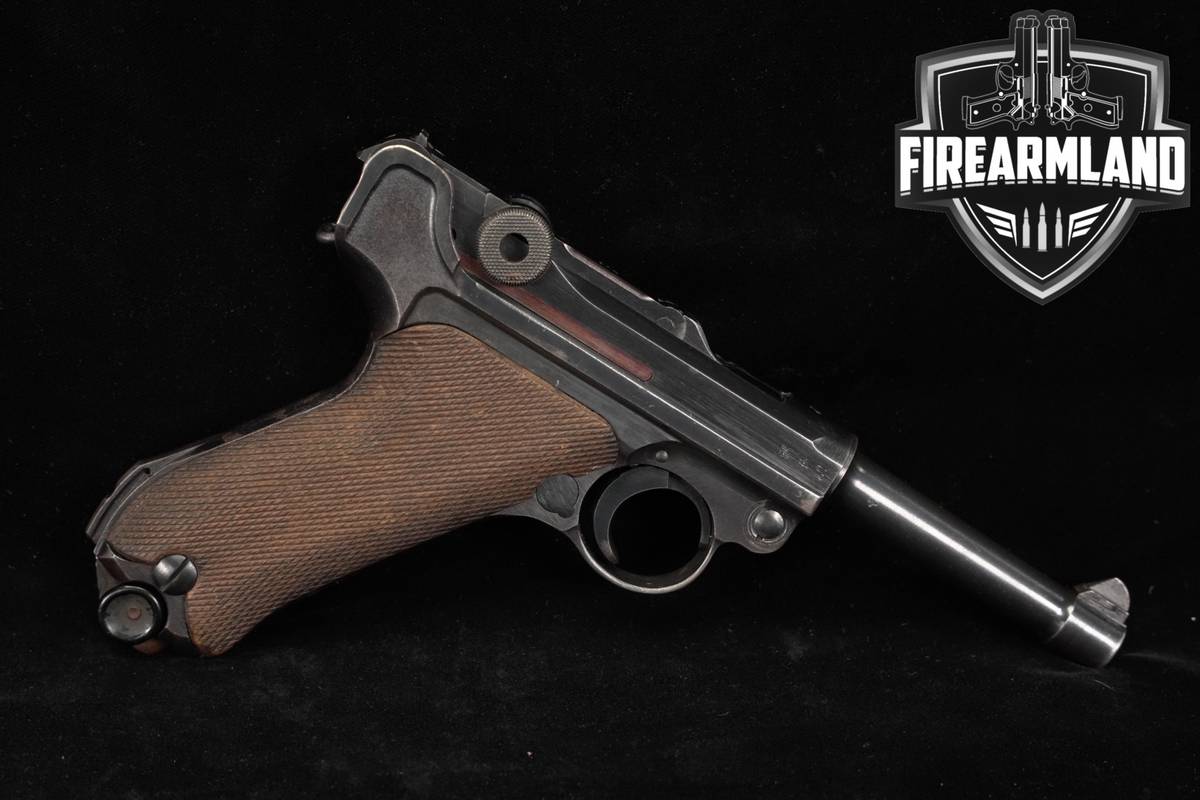
Mauser P.08 Luger byf 42 9mm, 4-inch, WWII German, Blued, 8+1, Fixed Sights, Wood Grips
This Mauser P.08 Luger is a wartime "byf 42" example, chambered in 9mm Luger with the standard 4-inch barrel and 8+1 capacity. It carries the byf manufacturer code on the toggle, a 42-dated chamber, and eagle inspection stamps, aligning it with 1942 Mauser-Werke production during WWII. Its extractor functions as a loaded-chamber indicator, and it retains classic features such as checkered wood grips and a blued carbon steel finish.
Condition
Overall Condition: Fair condition, showing extensive signs of prior use and handling.
Bore Condition: Good - Clean, well-maintained, minor wear marks.
Bore Rifling: Excellent Rifling - Sharp lands and grooves.
Specific Condition Notes: Visible finish wear is present along with small blemishes and scratches, and there are areas of pitting.
What’s Included
- Mauser P.08 Luger byf 42 pistol
- 1x 8-round P.08 pattern single-stack steel magazine with floorplate retention disc
Produced in 1942, this example represents the final main wartime production year for Mauser P.08 Lugers before the widespread transition to the P.38. It bears the correct byf manufacturer code on the toggle and a 42 chamber date, with eagle inspection stamps on the toggle and receiver.
The pistol follows the standard Army pattern: a 4-inch barrel, 8+1 capacity, and the short-recoil, toggle-locked action. The extractor doubles as a loaded-chamber indicator, and disassembly is via the left-side takedown lever. The push-button magazine release supports the single-stack 8-round magazine included with this pistol.
Fixed iron sights consist of a front blade and a rear V-notch integral to the toggle. The frame and receiver are carbon steel with a blued finish, and the grip panels are the correct checkered two-piece wood type for this pattern.
Numbered parts observed include 3253 on the frame and barrel extension; 53 on multiple small parts (e.g., sear bar); 73 on the takedown lever; 55 on the sideplate; and 45 on the rear toggle pieces. These markings, combined with the wartime proofs and date, provide clear period identification for collectors and historians of WWII German sidearms.