
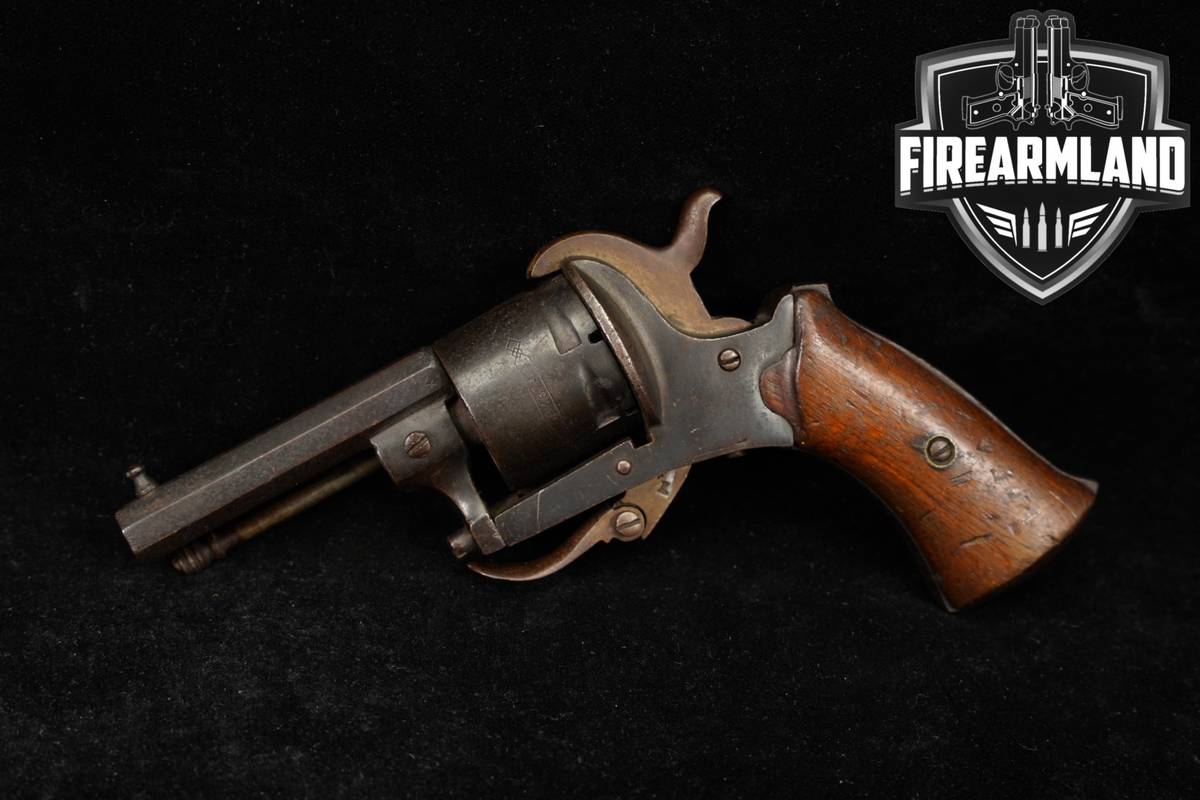
The Guardian – American Model of 1878 7mm Pinfire Pocket Revolver, Belgian Liège, 2.5 in Octagonal Barrel, DA/SA, 6-Shot, Antique
This late 19th-century Liège trade-made pocket revolver is a compact 7mm pinfire marketed under the trade name "The Guardian – American Model of 1878." It features an open-top frame, folding trigger, and a short octagonal barrel designed for discreet carry. Antique status, Belgian proof/inspection stamps, and a hand-stamped numeral on the barrel flat add period character for collectors.
Condition
Overall Condition: Poor condition.
Bore Condition: Poor - Noticeable dirt, stains, significant corrosion or damage.
Bore Fouling: Severe Fouling - Extensive corrosion, pitting, or erosion.
Bore Rifling: Poor Rifling - Rifling heavily worn or filled with fouling or debris.
Specific Condition Notes: There are significant handling marks and signs of use on metal and grips. The cylinder is out of time and free-spins. This revolver is a gunsmith special and should not be fired in its current condition. The bore shows rust and pitting. Please refer to the photos for a close look at the surfaces and markings.
What’s Included
- The Guardian – American Model of 1878 7mm pinfire revolver
Built in Belgium for the global trade, this micro-size 7mm pinfire revolver reflects the compact defensive designs popular in the late 1800s. It was marketed as "The Guardian – American Model of 1878," aligning with contemporary pocket-carry trends while retaining European pinfire operation.
The revolver uses a double-action/single-action mechanism with an exposed spur hammer and a 6-shot steel cylinder. Its folding trigger streamlines the profile when carried, and the open-top frame keeps the design light and compact.
An approximately 2.5-inch octagonal steel barrel and a fixed small front sight post give the gun its distinctive profile. A manual under-barrel ejector rod provides case removal without an integrated star ejector.
Metal construction includes a steel frame and cylinder paired with smooth birdshead hardwood grips. Period details include proof/inspection stamps (illegible) and a single hand-stamped numeral "4" on the right barrel flat, consistent with Liège trade practices of the era.