
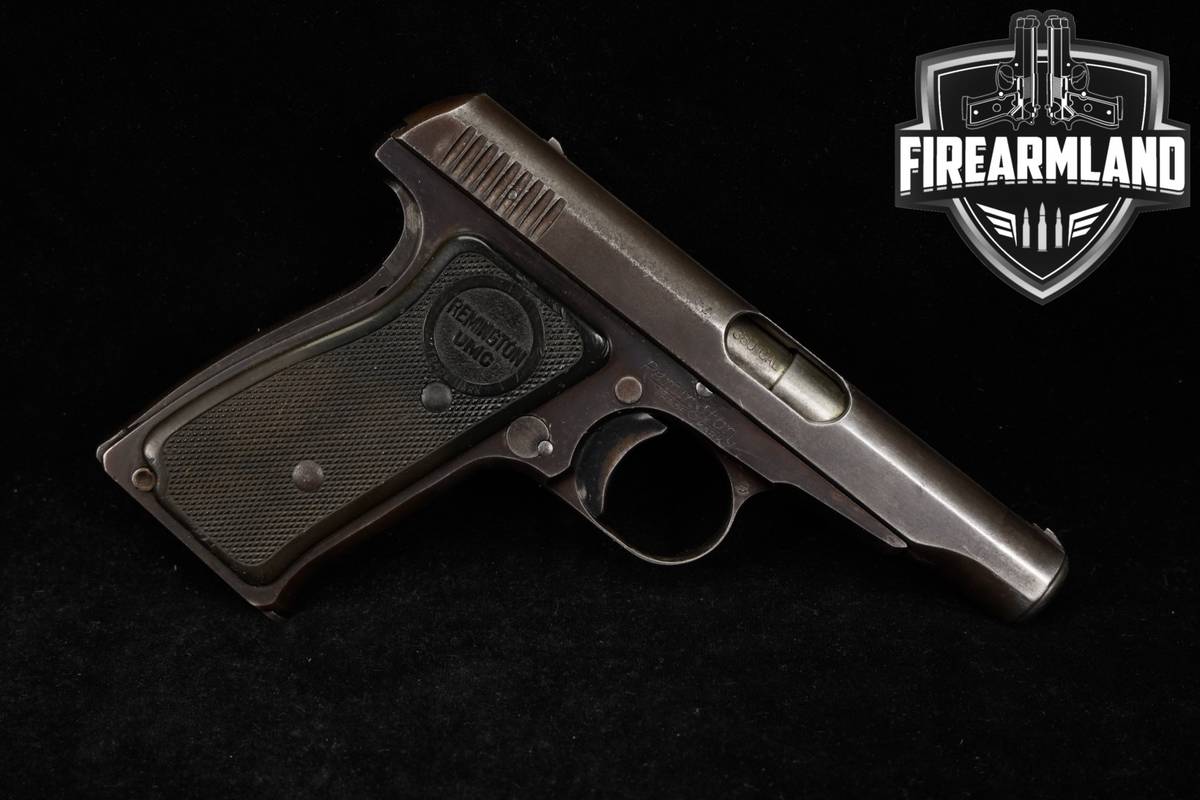
Remington Model 51 Type II .380 ACP Micro Pistol – Pedersen Hesitation-Locked, 3.25 in Barrel, 7+1
This Remington Model 51 Type II in .380 ACP showcases the distinctive Pedersen hesitation-locked system with a fixed barrel and concealed hammer, built in the United States during the 1918–1927 era. It features multiple safeties, clean control ergonomics, and classic slide and sight details that define this compact, steel-frame design.
Condition
Overall Condition: Fair condition, showing extensive signs of prior use and handling.
Bore Overall Condition: Fair - Generally clean, some residue or smudges, slight corrosion.
Bore Rifling: Fair Rifling - Worn rifling, slight loss of definition.
Specific Condition Notes: The firearm shows significant finish loss and rust throughout. The grips show discoloration. The bore shows visible lands and grooves.
What’s Included
- Remington Model 51 Type II .380 ACP pistol
- One 7-round single-column steel magazine with elongated witness slots and a toe-style baseplate
The Type II configuration retains the Model 51’s hallmark operating system: a Pedersen hesitation-locked action with a separate breechblock and a fixed barrel. Its concealed hammer and single-action trigger combine with a grip safety and manual thumb safety for a feature-rich, period-correct setup.
Controls are straightforward and familiar. A left-side, thumb-operated button magazine release manages the single-column 7-round magazine, giving a total capacity of 7+1. The slide does not lock open on an empty magazine but can be locked back using the safety when needed.
Slide and sighting details include rear vertical serrations and a longitudinal anti-glare rib. The sights are fixed, with a small front blade and a rear notch, consistent with the pistol’s compact profile and intended use.
The steel frame provides a solid foundation for this micro-size handgun. Black checkered hard-rubber grips with Remington UMC medallions complete the classic look and feel that collectors and enthusiasts associate with the Model 51 line.
Field maintenance is notably convenient. Tool-less disassembly uses the magazine base to start the takedown pin, reflecting the practical engineering of the period and making routine cleaning straightforward.