
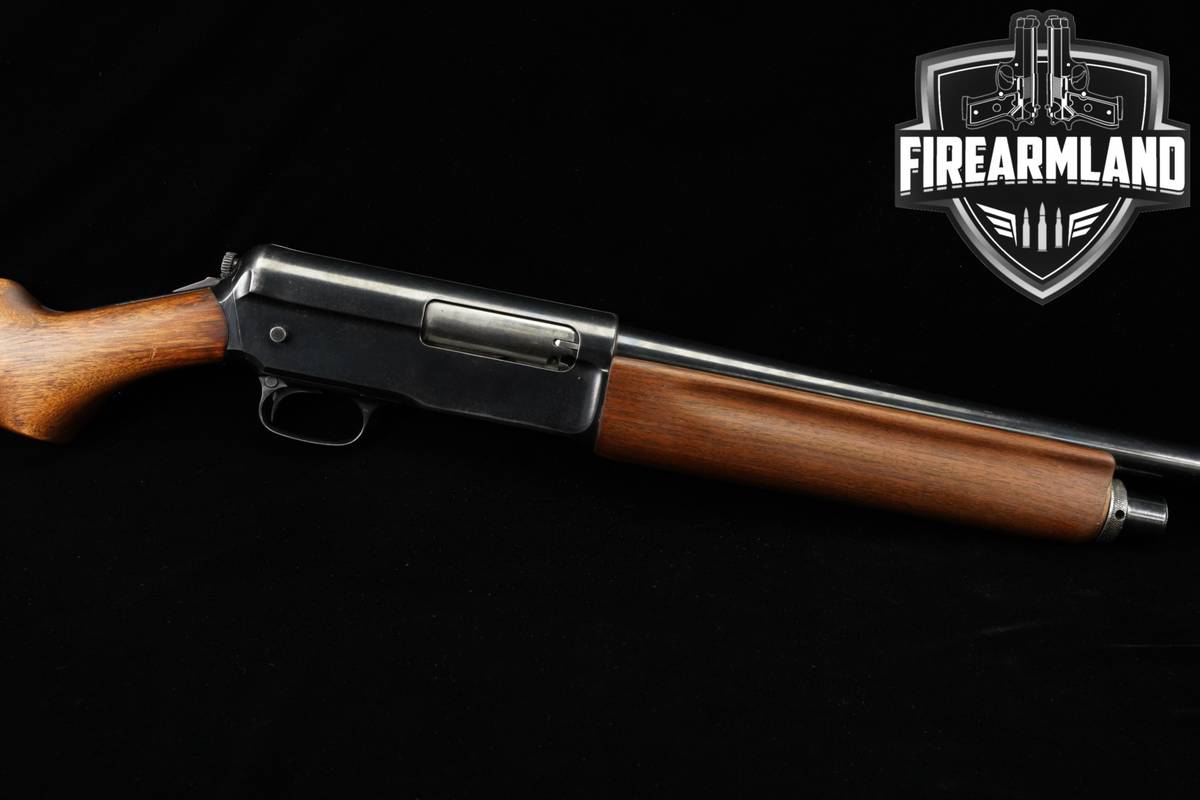
Winchester Model 1911 S.L. 12 Gauge Long-Recoil Semi-Auto, 26 inch Cylinder-Bore, Blued, Collectible
Winchester’s first autoloading shotgun, the Model 1911 S.L., was designed by T.C. Johnson and built with a distinctive long-recoil system and a barrel-retraction charging sleeve in place of a bolt handle. This 12-gauge example features a 26 inch cylinder-bore barrel, a 4+1 tubular magazine, and classic blued steel with wood furniture from the 1911–1925 production era. It is also historically known by the “Widowmaker” nickname and has a small diamond inspector’s mark.
Condition
Overall Condition: Poor condition.
Bore Overall Condition: Good - Clean, well-maintained, minor wear marks.
Specific Condition Notes: The firearm presents well overall with some scratches and blemishes. The receiver and barrel show patches of pitting and finish wear. The bore is clean and shiny. The shotgun is inoperable; the bolt is unable to lock to the rear, and the trigger does not reset or actuate. Gunsmithing will be required to restore function.
What’s Included
- Winchester Model 1911 S.L. 12 gauge semi-automatic shotgun
The Model 1911 S.L. uses a long-recoil action and a unique barrel-retraction charging sleeve, eliminating an external bolt handle. It ejects to the right and loads through a bottom port, reflecting the design innovations Winchester introduced with this platform.
The shotgun is configured with a 26 inch steel barrel in cylinder bore, paired with a matted receiver-top sighting plane and a small front sight. There is no rear sight, keeping the sight picture simple and period-correct.
Construction is all steel with a blued finish, matched to wood furniture. The stock has a straight comb and smooth grips, capped by a checkered steel buttplate, and the forend is a smooth wooden piece. Length of pull is 14.0.
Capacity is 4+1 in a tubular magazine. As Winchester’s first autoloading shotgun, designed by T.C. Johnson, the Model 1911 S.L. holds a notable place in firearms history. Approximately 82,774 were produced, primarily between 1911 and 1925.
This example also bears a small diamond inspector’s mark.