
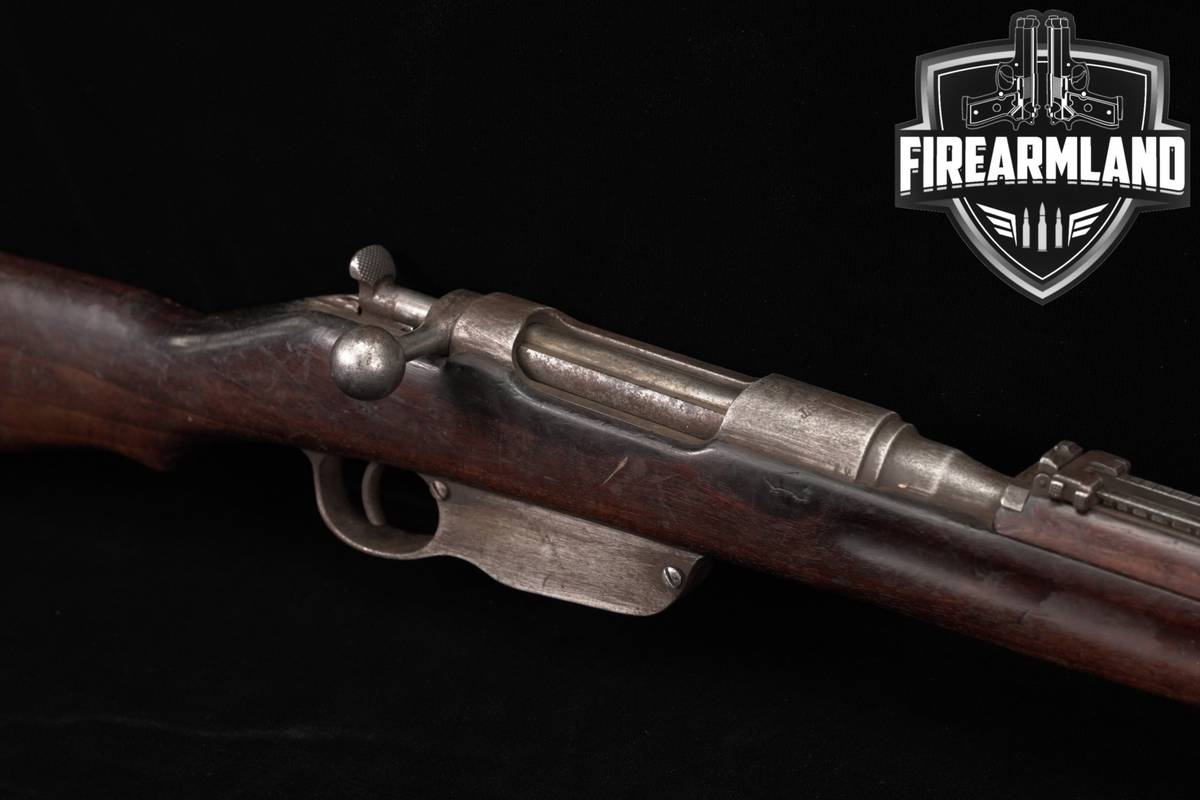
FEG Budapest Mannlicher M.95 Infantry Rifle, 8x50mmR, 30.1 in Barrel, Straight-Pull, WWI-Era
This Budapest-manufactured Mannlicher M.95 long infantry rifle stands out as a World War I–era straight-pull design in its original 8x50mmR configuration, with no visible "S" conversion stamp. It features the full-length rifle pattern with a 30.1-inch barrel, classic tangent ladder sights, and a robust hardwood stock set, making it a solid representative of FEG's wartime production.
Condition
Overall Condition: Fair condition, showing extensive signs of prior use and handling.
Bore Overall Condition: Poor - Noticeable dirt, stains, significant corrosion or damage.
Bore Fouling: Severe Fouling - Extensive corrosion, pitting, or erosion.
Bore Rifling: Poor Rifling - Rifling heavily worn or filled with fouling or debris.
Specific Condition Notes: The exterior shows significant markings and finish loss from prior handling and use, with the receiver, barrel bands, and nosecap worn to a gray patina and little to no original bluing remaining. The bore displays heavy rust and pitting.
What’s Included
- FEG M.95 Infantry Rifle chambered in 8x50mmR Mannlicher
Built at Budapest, this M.95 is the long infantry rifle variant with FEG's straight-pull bolt action and a 5-round en-bloc clip system that ejects through the bottom port. Its configuration aligns with service-pattern features of the period, including a full-length stock and no upper handguard; the barrel is exposed and the tangent rear sight sits directly on the barrel.
The rifle remains in its original 8x50mmR chambering with no visible "S" conversion stamp. It carries a 30.1-inch barrel and iron sights consisting of a tangent ladder rear with sliding notch and a protected front blade/barleycorn with integral ears for durability and alignment.
Stock furniture is hardwood with a steel buttplate, two barrel bands, and a bayonet-mount nosecap. Sling hardware includes a front band swivel and a left-side rear loop. The length of pull measures 13.25 inches, and the metal components show a worn gray patina over steel with little to no original bluing remaining.
Markings include "BUDAPEST" and "M.95." Components appear to show mixed serials, and no crest or acceptance year is visible on the barrel shank. This WWI-era example reflects production from the 1897–1918 timeframe and presents features collectors expect from Budapest-made long rifles.