
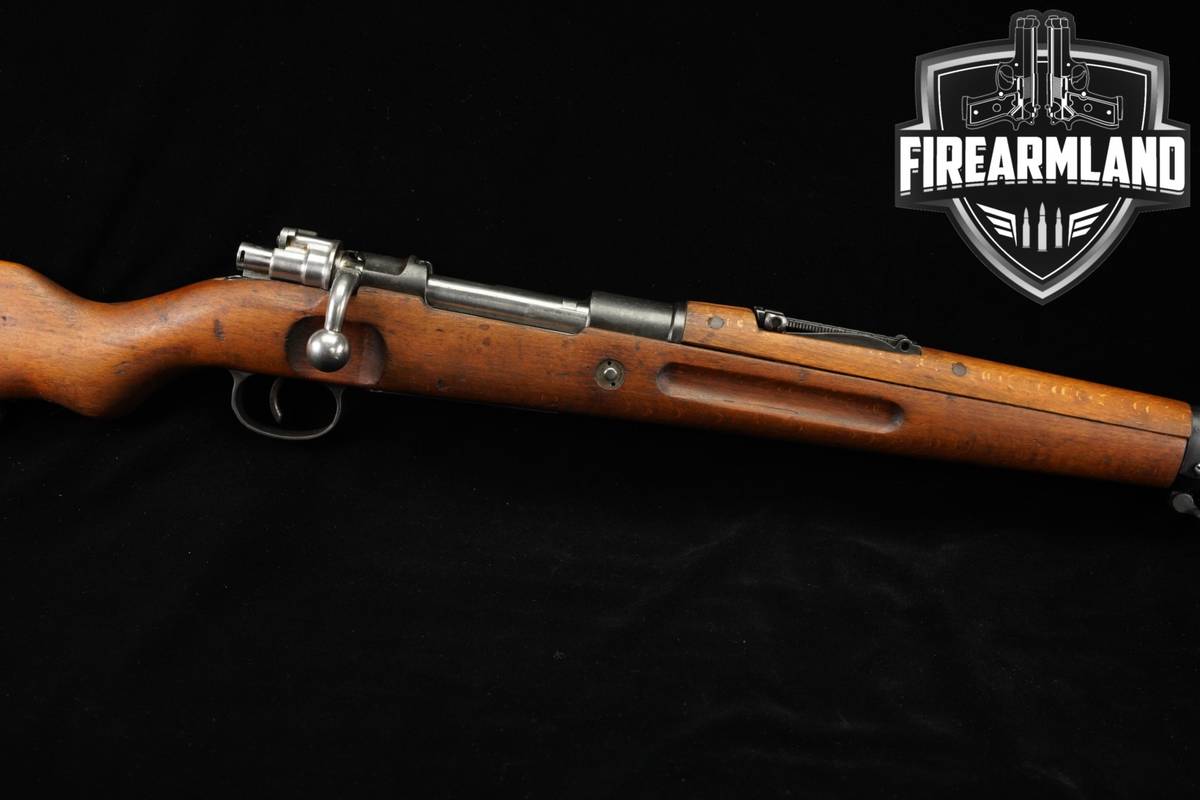
PFK Warszawa Karabinek wz. 1898 Mauser, 7.92x57mm, Polish 1920s Production, No-Crest Receiver, 23.6 in Barrel
Made in Poland by PFK Warszawa in the 1920s, this Karabinek wz. 1898 is a Polish Mauser-pattern carbine marked "K 98" on the receiver wall with a receiver ring that lacks a national crest. It retains classic Mauser features with a 23.6 in barrel, turned-down bolt handle, and full-length stock. It is most likely a rifle imported to Spain and used in the Spanish Civil War, and it is non-parts-matching with a non-matching stock serial.
Condition
Overall Condition: Good condition, showing some signs of prior use and handling.
Bore Overall Condition: Good - Clean, well-maintained, minor wear marks.
Bore Rifling: Good Rifling - Intact, well-defined lands and grooves.
Specific Condition Notes: The rifle shows various cosmetic imperfections, scratches, blemishes, and areas of finish loss on the metal and wood. The bore remains clean and shiny.
What's Included
- Mauser 98-pattern cleaning rod (shown installed and removed)
Produced by PFK Warszawa, this example carries the Polish "K 98" roll-stamp on the receiver's left wall and a small triangular cartouche on the right butt. The receiver ring has no national crest, aligning with known Polish production practices of the period. Steel receiver construction and period-correct markings support its 1920s origin.
The rifle follows the Mauser pattern with a turned-down bolt handle, an internal 5-round staggered-column magazine, and a three-position wing safety. The 23.6 in barrel, steel hardware, and bayonet lug on the nose cap reflect a service-ready configuration. A cleaning-rod channel is present, and a Mauser 98-pattern rod is included; it is shown installed under the nose cap and also removed.
Stock features include a full-length wood stock with grasping grooves, a side sling slot with bar, a bottom rear sling swivel, a cross-bolt for reinforcement, and a steel buttplate. These details combine durability with the handling traits associated with interwar Polish carbines.
Sighting equipment consists of a protected blade front sight with integral ears and a tangent-leaf rear sight with ramp/ladder adjustment. The configuration is consistent with Mauser-pattern military rifles of the era and supports precise elevation changes across typical service distances.
This rifle is most likely a Spanish Civil War import, a path taken by many Polish Mauser-pattern arms in the 1930s. It is non-parts-matching, including a non-matching stock serial, which is common for rifles that saw arsenal or field service over time.