
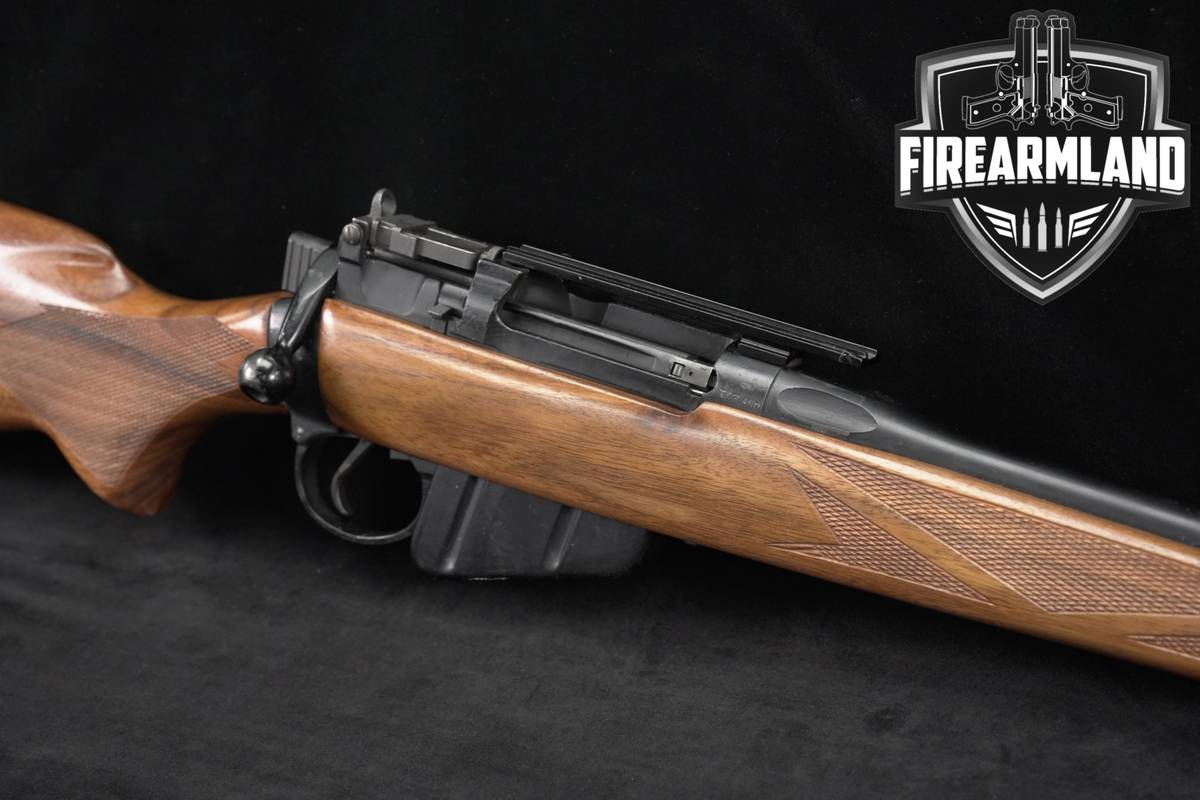
BSA Lee-Enfield No.5 Mk I Jungle Carbine .303 British, 1947 BSA‑Shirley (M47C), 18.7 in Barrel, Sporterized Walnut
This 1947 BSA‑Shirley (factory code M47C) Lee‑Enfield No.5 Mk I Jungle Carbine is a .303 British bolt action with the lightened receiver and 18.7 in barrel specific to the model. It retains the integral conical flash hider with No.5 bayonet interface and charger bridge, and bears British commercial proofs including the ENGLAND export stamp, "18.5 TONS," and "7.7mm 2.22." It has been sporterized with commercial walnut furniture, offering a distinctive, clean presentation.
Condition
Overall Condition: Good condition, showing some signs of prior use and handling.
Bore Overall Condition: Good - Clean, well-maintained, minor wear marks.
Bore Rifling: Excellent Rifling - Sharp lands and grooves.
Specific Condition Notes: Minor, superficial scratches and blemishes are present on the exterior. The bore is clean and shiny.
What’s Included
- One 10-round detachable Lee–Enfield pattern steel box magazine for .303 British
Built at BSA‑Shirley in 1947, this No.5 Mk I reflects the Jungle Carbine pattern with its lightened receiver. Chambered in .303 British, it feeds from a detachable 10-round magazine for a 10+1 capacity and uses the Lee‑Enfield bolt system with cock‑on‑close operation.
The 18.7 in barrel features the model’s integral conical flash hider and a bayonet lug with the No.5 bayonet interface. A charger bridge allows efficient stripper‑clip loading to keep the magazine topped off.
Iron sights include a protected front blade with sturdy ears and a receiver‑mounted aperture ladder rear sight with sliding elevation, providing a precise and familiar No.5 sight picture.
The rifle has been sporterized with commercial walnut furniture. The stock has cut checkering and a checkered pistol grip, omits the upper handguard, and is fitted with sling swivels and a black checkered hard‑rubber buttplate. Length of pull measures 13.75 inches.
Proof and export marks include ENGLAND, crown/BNP, "18.5 TONS," and "7.7mm 2.22," confirming British commercial proofing and export. These markings align with the postwar commercial paths taken by many No.5 rifles.