
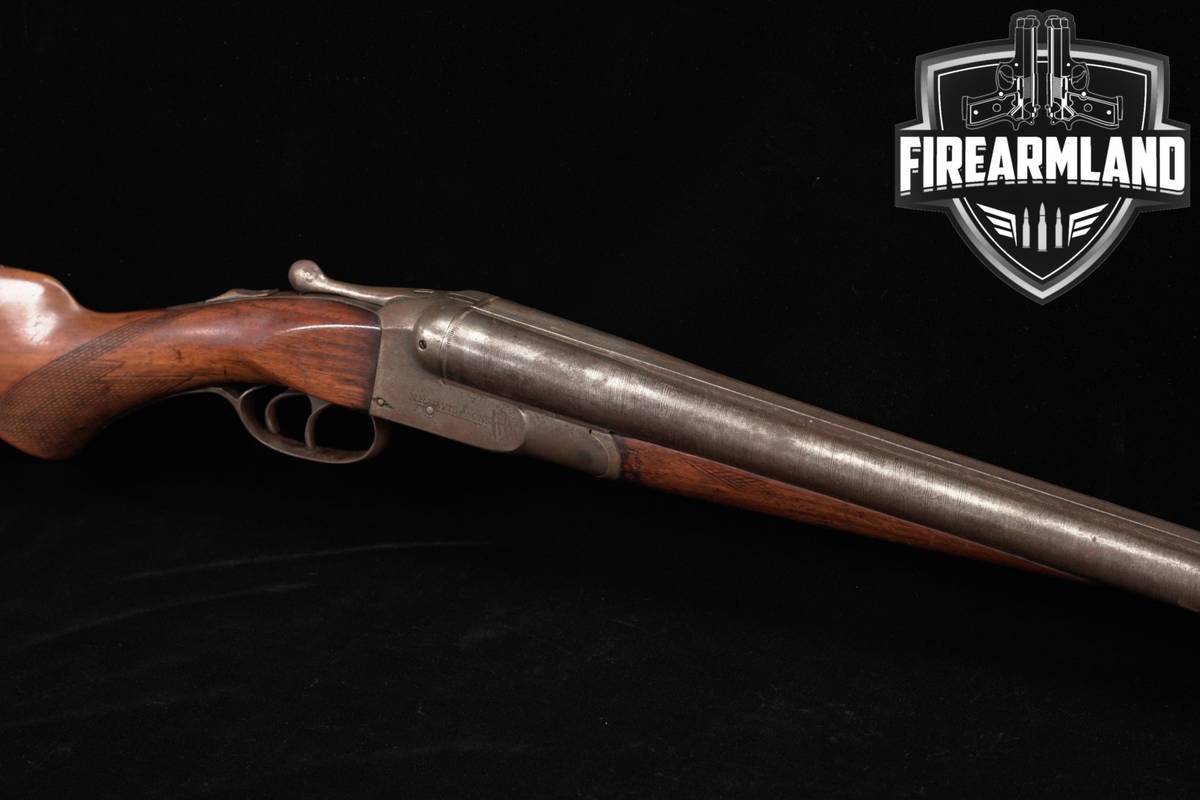
N. R. Davis & Sons Hammerless Double 16 Gauge SxS, 26 inch Damascus Barrels, Boxlock, Circa 1900–1925
This N. R. Davis & Sons Hammerless Double is a U.S.-made, boxlock, hammerless side-by-side in 16 gauge with 26 inch Damascus steel barrels. It features a solid matted rib with a doll's head rib extension, double triggers, and a top-tang manual safety. Period details such as the splinter forend with a Deeley-style latch, walnut stock with a checkered wrist, and a one-piece extractor (non-ejector) place it squarely in the circa 1900–1925 era.
The receiver flats are marked "N.R. DAVIS & SONS," underscoring its heritage and collector appeal.
Condition
Overall Condition: Poor condition.
Bore Overall Condition: Good - Clean, well-maintained, minor wear marks.
Specific Condition Notes: There is loose fitment between the barrels, receiver, and handguard. There is widespread rust and pitting across metal surfaces. The finish shows widespread pitting and a patinated appearance.
What’s Included
- N. R. Davis & Sons Hammerless Double 16 Gauge side-by-side shotgun
The Hammerless Double combines a reliable boxlock action with classic 16 gauge configuration and double triggers, offering the control and balance expected of an early 20th-century American field gun. The top-tang, manual safety provides familiar operation for period doubles, and the hammerless design keeps the profile clean.
Its 26 inch Damascus steel barrels are set with a solid matted rib and a doll's head rib extension, a traditional locking feature that adds engagement at the breech. A single front bead provides a straightforward sighting reference, and the gun uses a one-piece extractor rather than ejectors.
The walnut stock features a pistol grip with a checkered wrist and a hard buttplate, paired with a slim splinter forend secured by a Deeley-style latch. Length of pull measures 14.0 inches, delivering a classic fit and handling profile for this era.
Markings on the receiver flats read "N.R. DAVIS & SONS," tying it to a respected maker from the period. Built with a steel receiver and configured for two rounds, this side-by-side reflects construction and styling consistent with circa 1900–1925 production in the United States.