
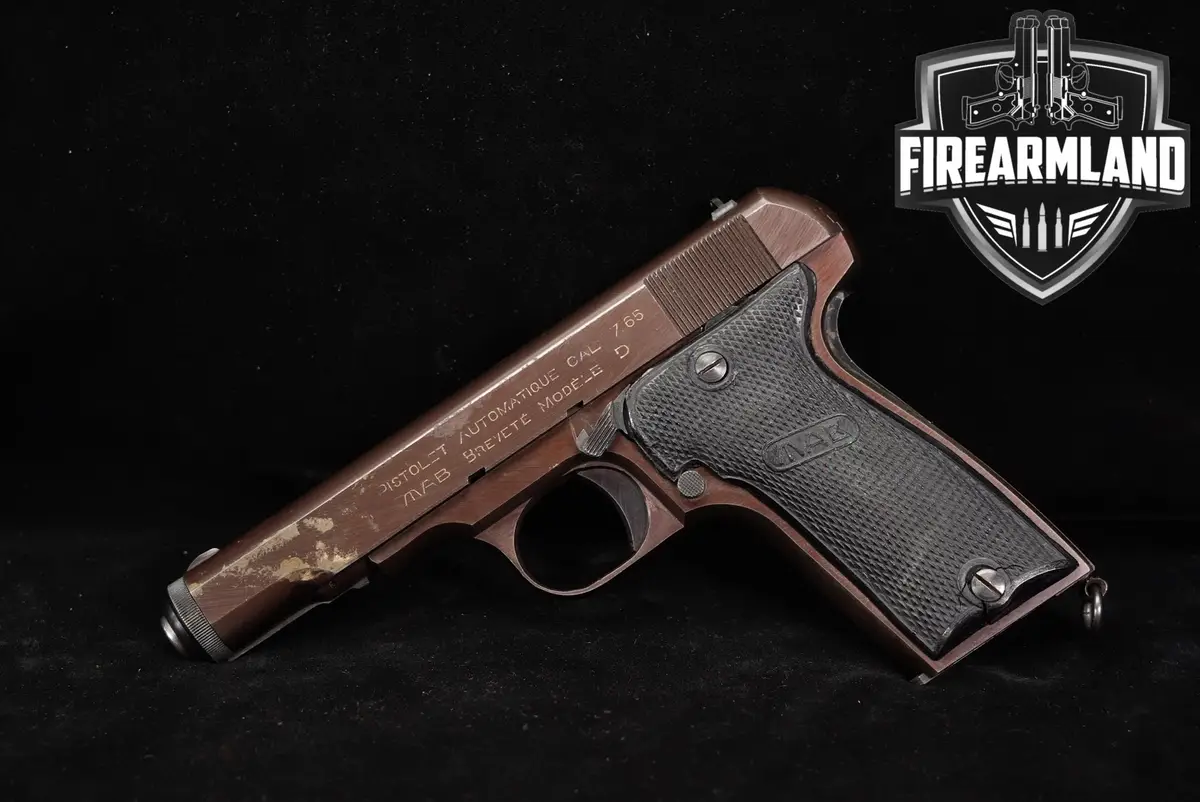
MAB Modèle D .32 ACP, WWII German Army Accepted (WaA251), 4" Barrel, Blued, 9+1, 1 Magazine
This French-made MAB Modèle D is a WWII-era, German-occupation Army-accepted pistol marked with the eagle over WaA251. Chambered in .32 ACP with a 4-inch barrel and a 9+1 capacity, it features its correct wartime slide legend and period markings. Collectors will note the blued steel construction, fixed sights, and MAB-logo grips that define this model.
Condition
Overall Condition: Fair condition, showing extensive signs of prior use and handling.
Bore Condition: Good - Clean, well-maintained, minor wear marks.
Rifling: Good Rifling - Intact, well-defined lands and grooves.
Specific Condition Notes: The pistol shows scratches and blemishes throughout, with patches of pitting visible. The safety lever, which is intended to also function as a slide stop, slips easily; the slide cannot be manually locked open.
What’s Included
- 1 unmarked 9-round steel single-column detachable magazine compatible with the MAB Modèle D (.32 ACP)
Built on a blued steel frame and slide, this Modèle D uses a simple blowback, single-action system with an internal striker. It is chambered in .32 ACP and pairs a 4-inch barrel with a published 9+1 capacity, aligning with the period configuration of the model.
Wartime acceptance is confirmed by the eagle over WaA251 Waffenamt marking, and the left slide legend reads: "PISTOLET AUTOMATIQUE CAL 7.65 / MAB BREVETÉ MODÈLE D." The right-side frame ahead of the trigger bears the MAB monogram, consistent with factory markings from this era.
Controls and safety features include a heel-type magazine release, a manual thumb safety, a grip safety, and a magazine safety. The design also employs a rotating muzzle bushing and vertical rear slide serrations for basic handling and disassembly functions.
It retains fixed notch-and-blade sights for a straightforward sight picture. External features include checkered black synthetic grips with molded MAB logos and a lanyard ring at the left-rear of the grip frame—details often sought by collectors evaluating completeness and period correctness.