
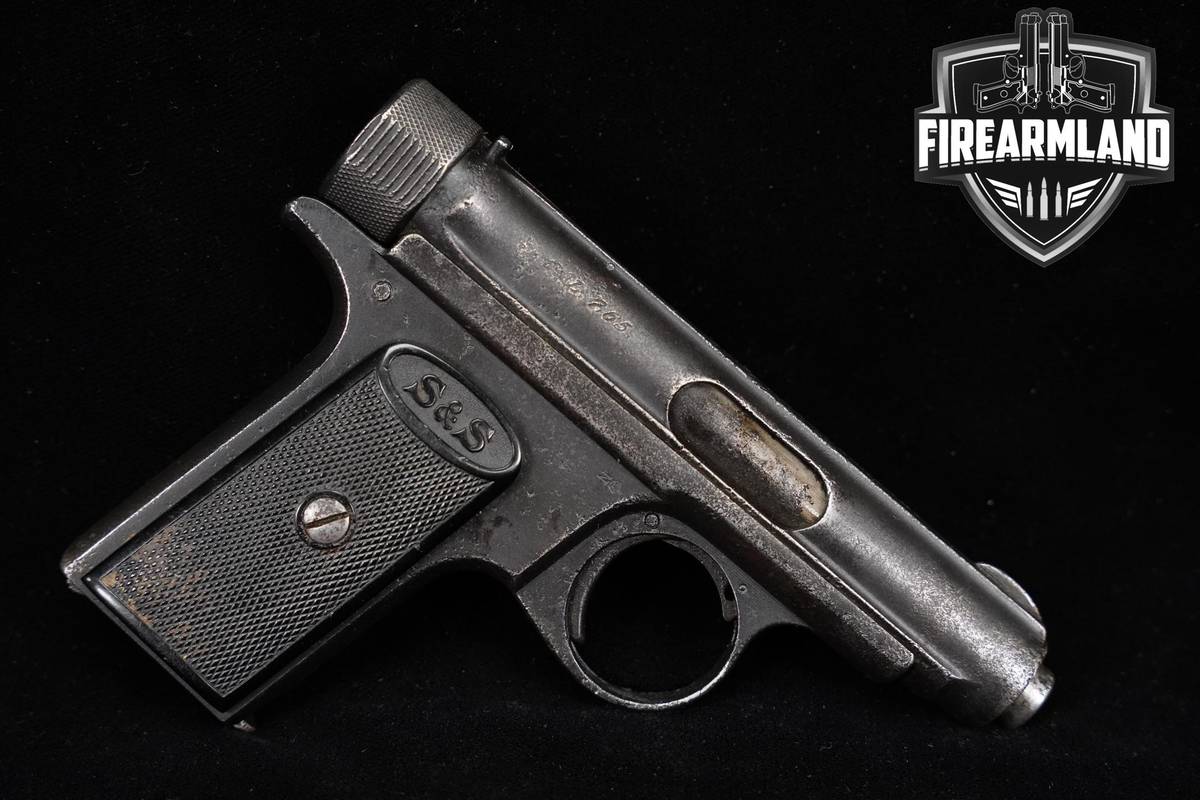
J.P. Sauer & Sohn Model 1913 Second Variant .32 ACP, 3 in Fixed Barrel, 7+1 Capacity, WWI German Pocket Pistol
This J.P. Sauer & Sohn Model 1913 Second Variant is a WWI-era German pocket pistol in .32 ACP with a fixed 3-inch barrel and 7+1 capacity. It features the distinctive tubular slide with knurled rear cap and fixed sights integral to the barrel band and rear cap. Approximately 10,000 were procured by Germany during WWI, and the Second Variant is noted for the deletion of the magazine safety.
Condition
Overall Condition: Poor condition.
Bore Overall Condition: Poor - Noticeable dirt, stains, significant corrosion or damage.
Bore Rifling: Poor Rifling - Rifling heavily worn or filled with fouling or debris.
Specific Condition Details: This firearm shows signs of wear and handling throughout. Scratches and blemishes are visible across the surfaces. Surface pitting and areas of finish loss are present in several locations.
What's Included
- 1x J.P. Sauer & Sohn S&S 7,65 steel 7-round magazine with twin elongated witness slots (Model 1913 pattern)
The Model 1913 Second Variant is a micro-size, simple blowback, striker-fired design with a fixed barrel, chambered in .32 ACP. It retains a manual safety and uses a 7-round magazine for a 7+1 capacity. The Second Variant followed the deletion of the magazine safety found on earlier examples.
Distinctive engineering cues include a tubular slide and a knurled rear cap that retains the breechblock, with right-side ejection. The fixed sighting system consists of a front blade integral to the barrel band and a rear notch integral to the rear cap.
Construction is all steel, including the frame, receiver, and barrel. Black checkered hard-rubber grips with S&S medallions complete the classic Sauer pocket-pistol profile.
Dimensions are compact, with an approximately 3-inch (about 78 mm) barrel and an overall length of about 5.7 inches. The magazine is marked "S&S 7,65" and features two elongated witness slots on each side, consistent with the Model 1913 pattern.
Country of origin is Germany, and approximately 10,000 examples of this model were procured during WWI, adding clear historical context to this Second Variant pistol.