
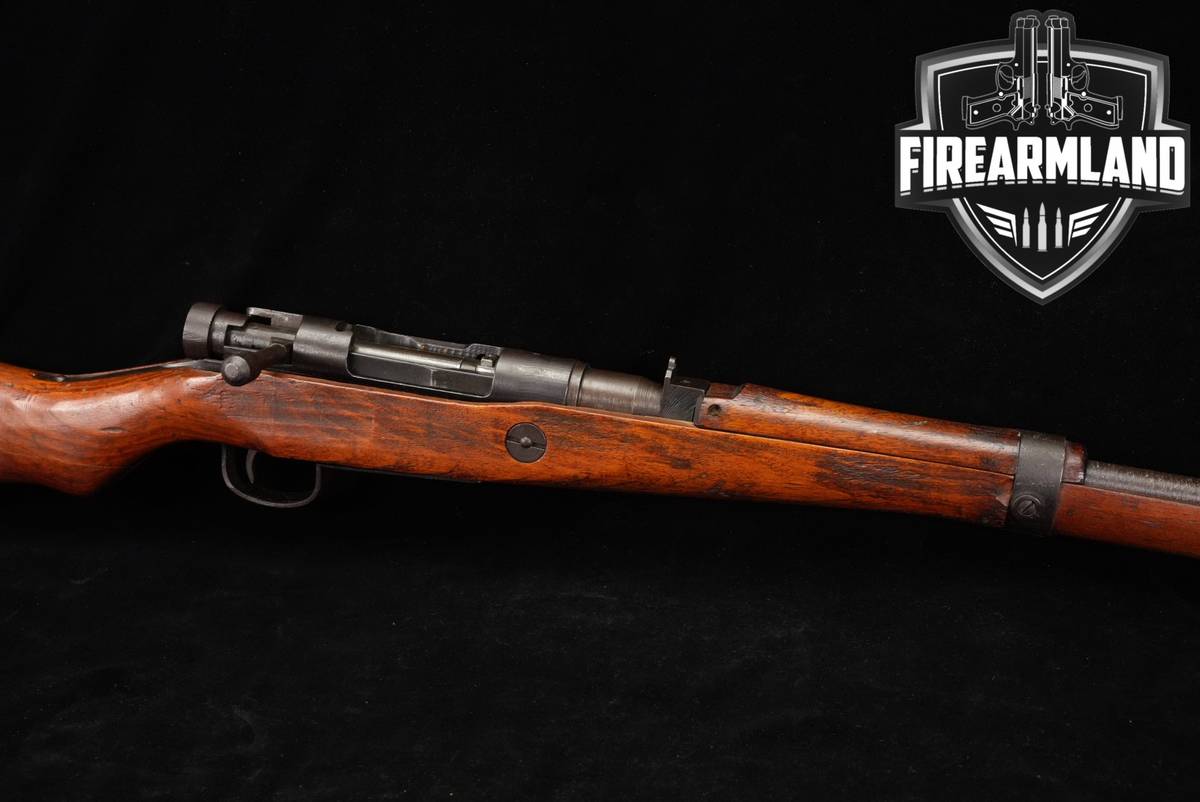
WWII Japanese Type 99 Short Rifle, Late-War Last-Ditch, 7.7 Japanese, 26 Inch Barrel, Bolt-Action
This WWII-era Japanese Type 99 Short Rifle is a late-war "last-ditch" configuration with the simplified features characteristic of final-production rifles. Chambered in 7.7 Japanese with a 26 inch barrel and an internal 5-round box magazine, it retains period-correct details including a bolt-mounted rotating safety knob, plain iron sights, and arsenal/series symbols on the left receiver wall.
Condition
Overall Condition: Good condition, showing some signs of prior use and handling.
Bore Overall Condition: Good - Clean, well-maintained, minor wear marks.
Bore Rifling: Good Rifling - Intact, well-defined lands and grooves.
Specific Condition Notes: There is a crack in the butt of the hardwood stock.
What’s Included
- Japanese Type 99 Short Rifle (Late-War Last-Ditch) chambered in 7.7 Japanese
This rifle reflects the streamlined manufacturing of late WWII production. It features the hallmark last-ditch elements: squared barrel bands, a simplified floorplate and trigger guard, and a plain wood buttplate secured with two fasteners. The two-piece, full-length hardwood stock uses a scarf joint at the wrist and includes left-side sling loops on the stock and rear band.
The sighting system is straightforward and durable, with a plain blade front and a fixed notch rear. As expected for this configuration, it was produced without a dust cover, monopod, or cleaning rod provision. A gas-escape port is located on the left side of the receiver, and arsenal/series symbols are present on the left receiver wall.
Chambering is 7.7 Japanese, fed by an internal 5-round box magazine. The action is bolt-operated with a bolt-mounted rotating safety knob, consistent with Type 99 design. The 26 inch barrel complements the short rifle format and maintains the pattern’s established handling qualities.
The stock layout supports practical field use, with a 12.5 inch length of pull that pairs with the rifle’s compact military profile. Hardware and furniture are aligned with late-war expediencies, making this a representative example of a last-ditch Type 99.