
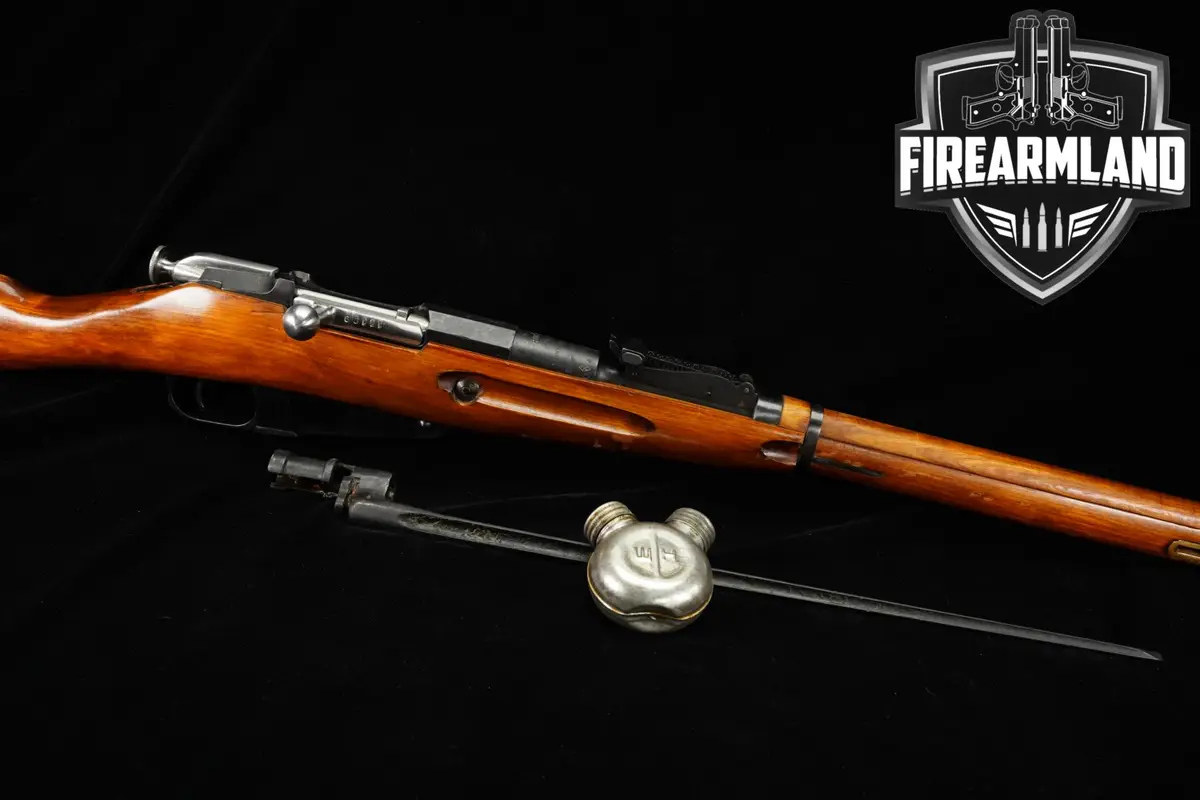
Izhmash Mosin-Nagant 1891/30 Ex-Dragoon, Hex Receiver, 7.62x54R, 29 in Barrel, 1926 Izhevsk, KO-91/30 Marked
This 1926-dated Izhmash Mosin-Nagant Model 1891/30 is a pre-1928 Izhevsk hex-receiver rifle that was arsenal-converted from a Dragoon configuration to the 91/30 standard. It bears KO-91/30 commercial/export markings along with original Izhevsk factory crests, combining a desirable early receiver style with later-standardized features and clear, verifiable markings.
Condition
Overall Condition: Good condition, showing some signs of prior use and handling.
Bore Condition: Good - Clean, well-maintained, minor wear marks.
Bore Rifling: Good Rifling - Intact, well-defined lands and grooves.
Specific Condition Notes: It is in good shape for its age.
What’s Included
- Mosin–Nagant socket spike bayonet (four-edge)
- Two-spout metal oil/solvent bottle
- Cleaning rod (installed)
Produced at Izhevsk in 1926, this rifle features the pre-1928 Izhevsk bow-and-arrow crest and Ижевский оружейный завод barrel-shank marking, along with the Izhevsk triangle-arrow. It is an ex-Dragoon arsenal conversion to the 91/30 standard, retaining the sought-after hex receiver while adopting 91/30 sighting updates.
The rifle is chambered in 7.62x54R and configured with a 29 in barrel and an internal 5-round magazine. The bolt has a straight handle, with bolt components left in the white, and the metalwork carries a blued finish.
Sighting equipment includes a 91/30 hooded post front sight and a 91/30 tangent leaf rear sight with meter graduations, providing the standardized sight picture associated with later 91/30 configuration.
The hardwood stock has a finger-groove fore-end, sling slots with metal escutcheons, a steel buttplate, and a full-length handguard. Length of pull is 13.5 in. Markings include KO-91/30 and MADE IN RUSSIA export/commercial stamps, aligning with its documented configuration and origin.
This is a collectible pre-1928 Izhevsk example from the 1920s, built on the Mosin-Nagant platform and configured to the 91/30 standard while preserving its early hex receiver heritage.