
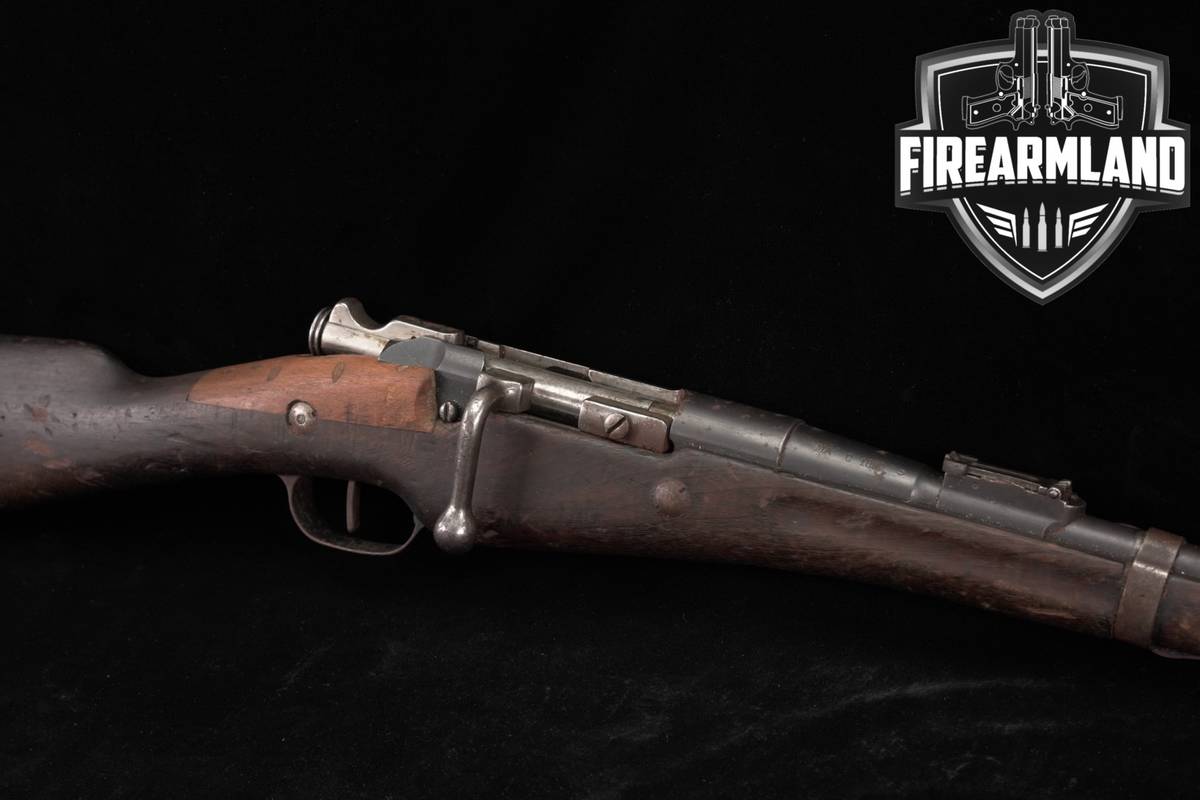
French MAC Mousqueton d'Artillerie Modèle 1892 8mm Lebel Bolt-Action Carbine, 17.37 in Barrel, Antique
This antique French artillery carbine stands out as an early-pattern 1892 example made at the state arsenal in Châtellerault (MAC). It retains its flush magazine configuration and Mannlicher-type en-bloc system, shows clear MAC markings, and in the provided views no large "N" conversion stamp is observed. Made in France, it offers a historically correct configuration and features that collectors look for in a Mousqueton d'Artillerie Mle 1892.
Receiver script "Châtellerault Mle 1892" and barrel-shank "MA C 1892" markings confirm MAC manufacture in 1892. While some shorthand references group these carbines under the broader MAS label, this example is explicitly MAC-marked.
Condition
Overall Condition: Poor condition.
Bore Overall Condition: Poor - Noticeable dirt, stains, significant corrosion or damage.
Bore Rifling: Poor Rifling - Rifling heavily worn or filled with fouling or debris.
Specific Condition Notes: The firearm exhibits heavy rust and cracks in the stock. A qualified gunsmith should verify it is safe to shoot before any attempt to fire. It could make a strong candidate for restoration.
What’s Included
- Mousqueton d'Artillerie Modèle 1892 bolt-action rifle (8mm Lebel)
Made in France by Manufacture d'Armes de Châtellerault (MAC), this carbine carries period-correct markings: receiver script "Châtellerault Mle 1892" and "MA C 1892" on the barrel shank. The 1892 production year places it squarely in the antique category and aligns with early features sought after by collectors.
The configuration reflects the original artillery pattern: a 17.37-inch barrel; as issued, there is no upper handguard (barrel exposed along the top), a stacking rod/hook under the muzzle, a left-side sling bar and ring, and a metal buttplate. External metal shows a blued finish, while the bolt body is left in the white with a straight handle and round knob.
Feeding is via the Mannlicher-type en-bloc clip system that automatically ejects the empty clip. This example retains the flush magazine profile without the later M16 extension, preserving the early-pattern look and handling.
Sighting equipment includes a protected blade front sight and a tangent/ladder rear sight with a knurled elevation slide. Inspector and proof markings observed include an inspector "p" and letters JH, C, and S, consistent with French arsenal practice of the period.
In the provided views, no large "N" conversion stamp is observed. Additional details include a 13.0-inch length of pull, steel receiver with blued finish, and wood furniture; no upper handguard (as issued).